Dyeing Easter Eggs ©
‘Easter Eggs’ are special eggs given to celebrate Easter. They were traditionally chicken’s eggs, but in more modern times, chocolate eggs have also been introduced.
Eggs in general are a symbol of fertility and rebirth.
The dyeing of Easter eggs is an ancient tradition and in the Orthodox Church they are painted red, representing the blood of Christ, shed at his Crucifixion. The giving of Eggs on Easter day symbolizes the rebirth of Christ and marks the end of Lent, during which period no meat nor dairy produce is eaten for 40 days.
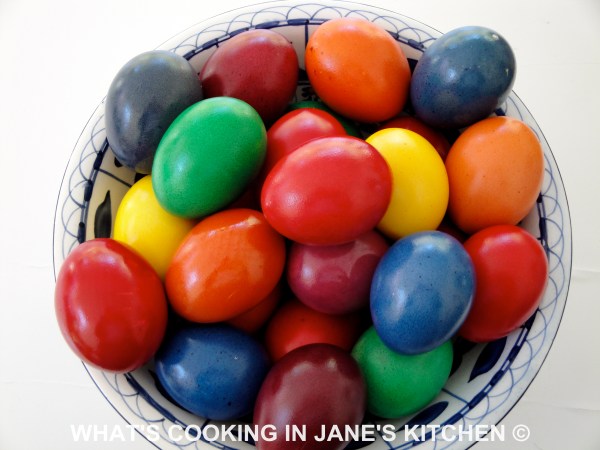
The dyeing of the Easter Eggs in our family, has now been taken over by my dear daughter and she enjoys using several colors, making up a lovely bowl of eggs.
Another very pretty way to dye eggs is to use natural vegetable dyes, Onion or Turmeric for yellow, beetroot juice for red, spinach for green and red cabbage for blue! The colors come out much paler, but they look very nice too. The link below explains.
Especially for H. J. and I.
This was a request from Mette, Kali Epitihia!
Happy Easter to you all !
Kαλή Αναστάση kai Καλό Πάσχα !
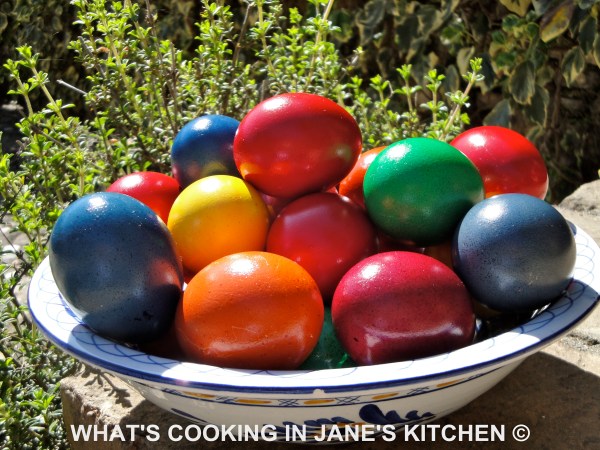
Easy
Ingredients
As many eggs as you wish to dye.
Special ‘cold dyes.’ Anatoli or Metaxa
3 tbs Vinegar
1.5 liters cold water for 30 eggs per sachet
Olive oil for rubbing over the dyed eggs
Instructions for Dyeing Your Easter Eggs :
Every one has their own special method of dyeing Easter Eggs and this method works very well.
1. Wash eggs thoroughly, using soft brush. Use eggs at room temperature, this is important so that they do not crack when boiling. Boil gently, until ‘hard boiled.’ 8-10 minutes.
2. Pour off water carefully and leave under cold running tap for two minutes. This prevents the sulfur ring forming around the egg yolk.
3. Measure out “Cold” water as per instructions on packet and add vinegar.
4. Pour dye into small glass and add a half ladle full of the prepared water. Mix very well with a teaspoon, especially the blue dye.
5. Pour the above dye, into the prepared water and mix well.
6. Using a slotted spoon, lower eggs into dye gently and leave until desired color is acquired. This is usually about five minutes.( Be careful not to knock the eggs with the spoon.) The Yellow and Blue Dyes sometimes need longer.
7. Lift out onto a plate covered with kitchen paper.
8. Once the eggs have dried thoroughly,( I leave mine for 1/2 hr.) gently rub over with olive oil, using a piece of cotton wool. Wipe off any excess oil with kitchen paper. ( I never use the special oil provided in the packet, it is sticky and not as good!)

“Cold water egg dyes.” With these dyes you must boil the eggs first (as apposed to boiling the eggs together with the dye.)
Anatoli and Metaxa are the usual makes of dye on the market in Greece.
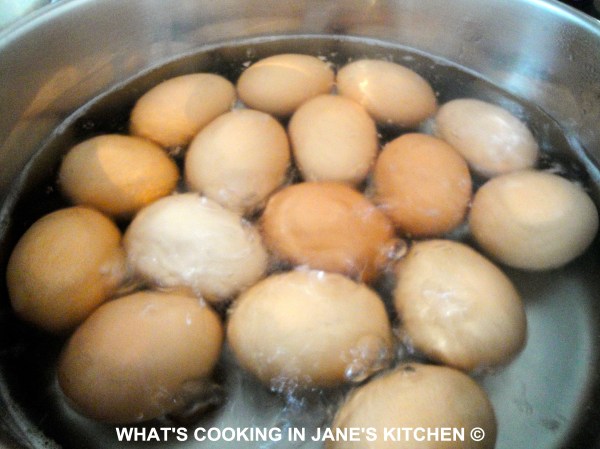
Having removed eggs from the refrigerator at least an hour beforehand,( this is important! )wash eggs well using a soft brush.
Boil the eggs for 8-10 minutes on a gentle boil, so that the eggs don’t crack. Turn the eggs during cooking time, using two
small tea-spoons, so that the yolks settle in the center of the whites.
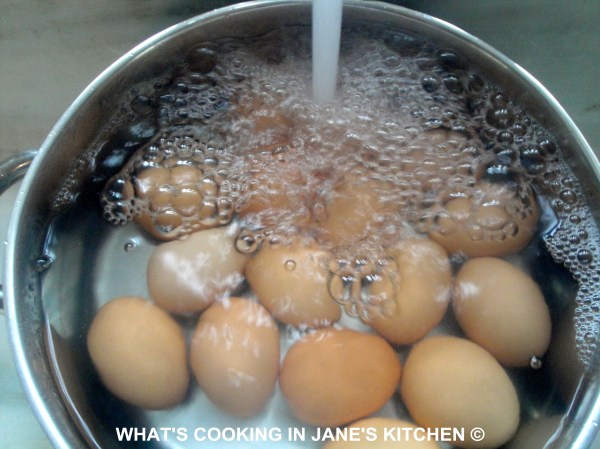
Once cooking time is finished, place under cold running water for 2-3 minutes. This stops the sulfur ring forming round the yolk.
Now follow instructions on reverse of packet.
The ‘Anatoli’ brand says, measure out 1.5 liters of water into glass bowl, add 3 tbs vinegar, pour dye into glass, mix with a little of the water and vinegar in your glass bowl, stir thoroughly, especially the blue dye, which dissolves with more difficulty and add dye to glass bowl. See pictures below.


Repeat the process with different colors. Save the red dye to mix with other colors to produce orange,( a dash of red in
your yellow dye,) a dash of blue in your red dye to produce purple and so on.
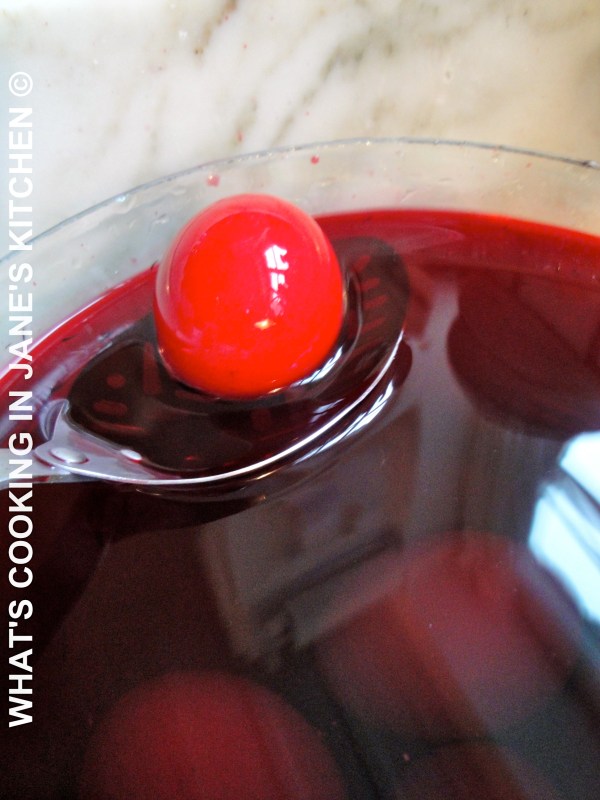
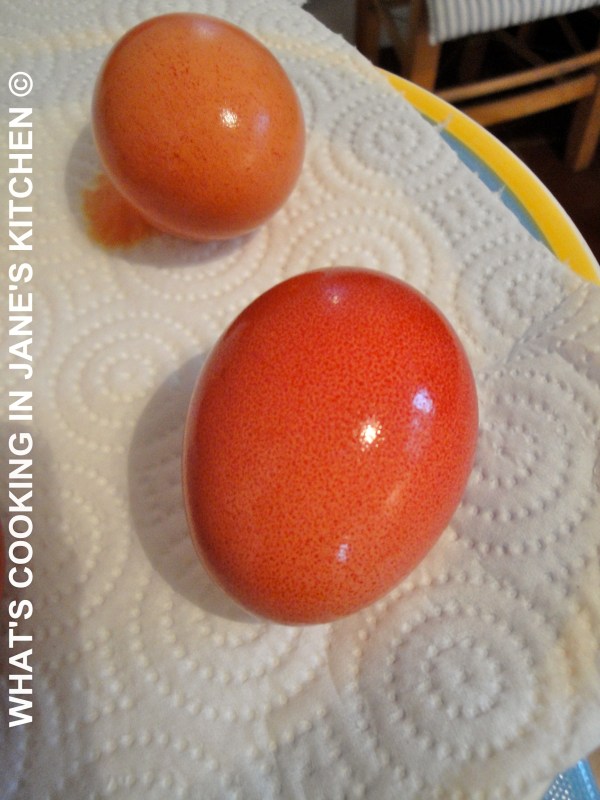
The traditional red Easter Egg.

Leave to dry on kitchen paper for about half an hour.

Potato Masala
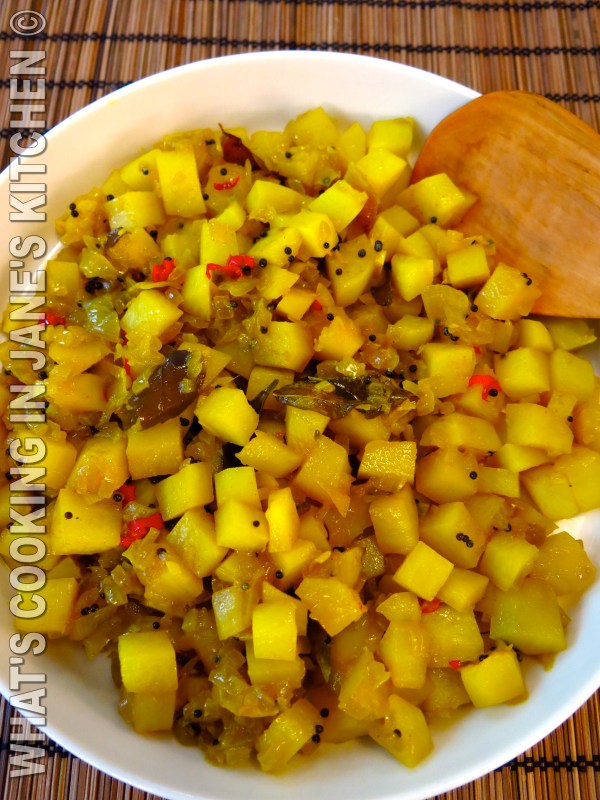
Continuing on the “Curry Theme,” here is another vegetarian curry which is easy and delicious and can also be part of your ‘Indian Feast,’ which I will be continuing on after the period of lent and Greek Easter.
This is especially for a friend, who I bumped into at my local market a few days back and who told me she had cooked nearly all the recipes and how much her family were enjoying it. She said she had picked up many tips along the way! This made my day!
Easy
Serves 4
Ingredients
2 tbs oil
1 tsp black mustard seed
10 curry leaves
1/4 tsp ground Turmeric
1 cm piece grated ginger
2 green chillies finely chopped
2 onions chopped
500 g waxy potatoes, peeled and cut into two cm cubes
1 tbs tamarind purée or if you don’t have any tamarind, use a few drops of lemon
Method
1. Heat the oil in a heavy-based frying pan, add the mustard seed, cover and when it begins to pop, add curry leaves, turmeric, ginger, chilli and onions and cook, uncovered until onions are soft.
2. Add potato cubes and toss in curry mixture. Add 250ml of water to the pan, bring to the boil, cover and cook until potatoes are almost breaking up. This takes about 10-15 minutes, more than one expects! Try a cube,before switching off the heat, it should be really soft. If it needs more liquid, add a little more, before serving all the liquid must be absorbed and the sauce thick.
3. Add the tamarind and season with salt.
Serve as a meal or as part of an “Indian Feast.”

Cube your potatoes and reserve in cold water.

Measure out your mustard seeds.

Prepare the rest of your ingredients before you start cooking. Here I have used red chillies, which I have de-seeded. If
you don’t want your potatoes too chilli hot, omit or add less.

Place oil in frying pan, add mustard seeds, cover with lid and wait until they start popping. Then add the rest of the ingredients
and fry until onions are soft.
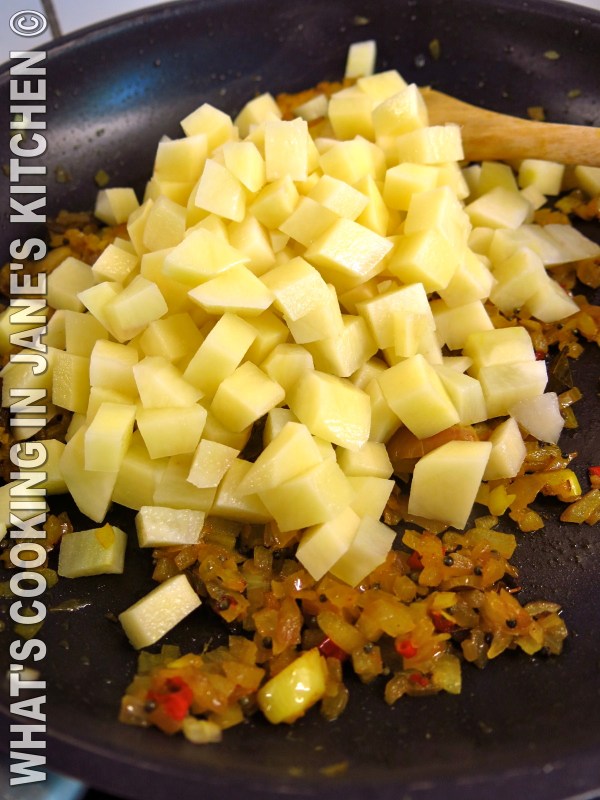
Add cubed potatoes, toss in spices and add 250 ml of water. replace lid and simmer for 10-15 minutes, until potatoes
are almost breaking up and very soft.
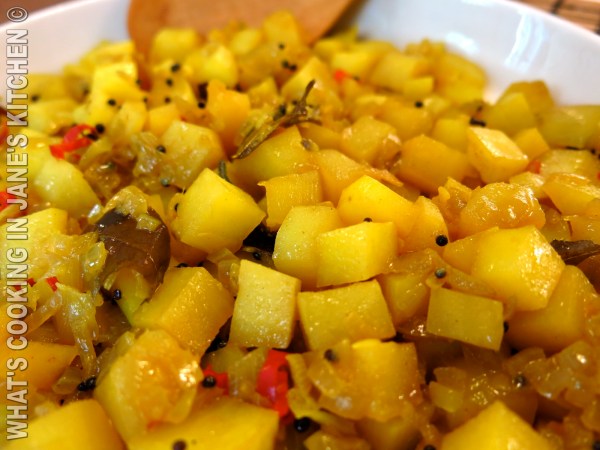
Final result!
Spicy Aubergine ©
This is a delicious recipe and makes a good alternative to your usual lenten dishes. With Greek Easter just over a week away, I thought I would include some vegetarian curries.
In Greece, curry is not always very popular, because of the spiciness and the heat, but one can always add less chilli and a lot less oil and create a light fragrant result, using the great variety of vegetables that grow here.
If you have the time, whole spices, which you roast for a minute or two, with out oil in a frying pan and then grind in a spice/coffee grinder, give the best results. Alternatively make sure your pre-ground spices have not passed their expiry date and have been kept in an air-tight jar with the lid screwed on tightly. When you open your jar to use the spices, they should smell fragrant, if not buy fresh. Cooking curries usually involves heating the spices briefly in oil and this is essential, so that the spice oils are released and give a wonderful fragrance.
I love spices and especially buying them in the ‘Spice Market.’ The main ones you want to have in your store cupboard are listed below and it is the combination of these, that makes up the different curry spice mixtures. If you don’t have a good ‘Spice Market’ near you will find most of these spices, whole or pre-ground in your local food store.
A special request from dear friends in America!
Essential Spices to have, when starting out your Spice Cupboard!
Cinnamon, Cloves, Star Anise, All Spice Berries
Cumin, Coriander, Turmeric, Cayenne Pepper (Hot) Sweet Paprica
Fennel Seeds, Mustard Seeds
Garam Masala ( Specific mixture of spices )
Saffron ( Real saffron is expensive )
Ginger used fresh, peeled and finely grated
Fresh chillies, red or green. Alternatively Chili powder ( Hot!)
Spices are not expensive at all, so always ask the price before buying, especially in a Spice Market!
***(1euro should buy you at least 11 g of spice)
** When buying from a ‘Spice Market’ always store in air-tight jar straight away, label and add date of purchase.
Easy
6 persons
Ingredients
800g Aubergine/ Egg Plant/ Melitzana
400g ripe tomatoes or 400 g tin cubed tomato
2.5 cm piece of ginger finely grated
6 cloves garlic, crushed
200 ml Olive oil
1 tsp Fennel Seeds
1/2 Nigella Seeds, if available
1 tbs ground Coriander
1/4 tsp ground turmeric
1/2 tsp cayenne pepper
1 tsp salt
Coriander leaves for garnish
Method
1. Wash and cut aubergines into 4-5 cm wedges. Taste each aubergine for bitterness. If very bitter discard. This happens towards the end of the season, when the seeds are also larger. Place in colander and sprinkle with salt. Leave for 30 minutes, during which time any bitter juices will run out. Rinse and squeeze out any excess water and dry with kitchen paper.
2. If using fresh tomatoes, skin by cutting a small cross in the skin at the top of your tomato, plunging into boiling water for 5 seconds, peeling and chopping into cubes. Otherwise use tinned cubed tomatoes.
3. Clean and crush your garlic, peel and finely grate your fresh ginger. Take one third of your tomato and blend together in blender.
4. Heat 100 ml of your oil in a large deep frying pan or saucepan and add as many pieces as you can fit in a single layer. Cook over a medium heat, until brown on both sides, then transfer to a sieve lined with kitchen paper to drain from any excess oil. Add remaining oil and fry the rest of your aubergines. ( ALWAYS FRY WITH LID BESIDE YOU!)
5 . Once you have finished frying your aubergines, fry in the remaining oil, your Fennel Seeds and Nigella Seeds. Cover and allow to pop for a few seconds. Add the remaining ingredients, except the aubergine and simmer gently for 5-6 minutes. If the sauce gets too thick, add 3 tbs water. You want your sauce thick, but you don’t want it to catch on the bottom of the saucepan.
6. Add the aubergines, don’t stir, because you want your aubergine wedges to stay whole, just shake the pan from time to time. Cover and cook over a gentle heat, mark 3 for 10 minutes.
7. Serve hot or cold. This goes excellently served as part of an Indian Feast. Over the next few weeks I will be posting the rest of my recipes for the Feast!
N.B. Cook’s Tip : Always fry with a saucepan lid next to you, or use a flat sieve cover, this stops the fat from spitting over your cooker, which could be a fire risk!
Taste each aubergine as you cut it open for bitterness. If too bitter discard. Sometimes, especially towards the end of the season, when the seeds are also larger, the aubergine becomes bitter. The sprinkling of the salt and leaving the aubergine to drain, also helps the bitter juices run out.
*Frying really brings the best out in aubergine, but alternatively you could bake the wedges in the oven, but it is not quite the same.
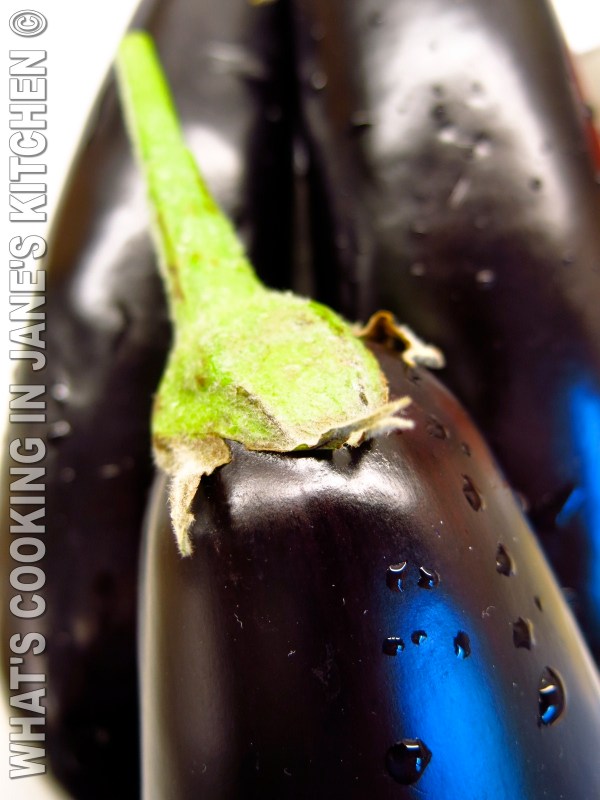
Choose good firm aubergines.

Gather together your ingredients, before starting to cook.
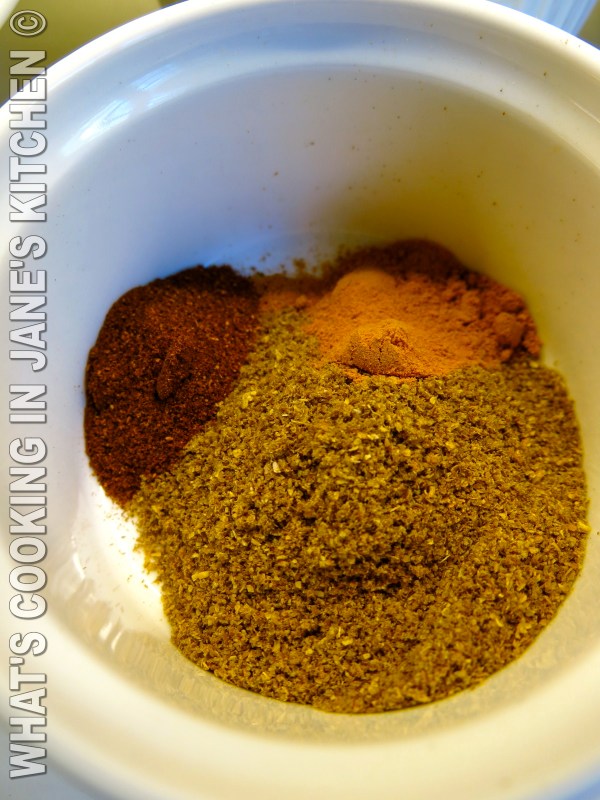
Use freshly ground spices. If you are using whole spices, toss in a hot frying pan (no oil) continuously for 2 minutes, with out
burning them and then grind in spice/coffee grinder for the freshest and most flavorsome results.

Cut your aubergines into wedges.

Sprinkle with salt and leave 30 minutes to drain.
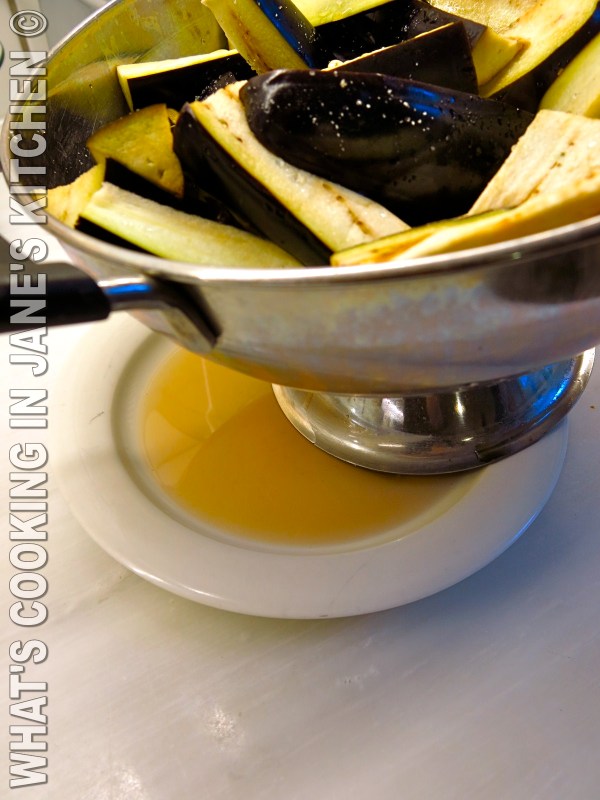
Any bitterness will drain out during this time. It is important to taste a piece from each aubergine, because some are
so bitter, they should be discarded. Always buy a few extra!
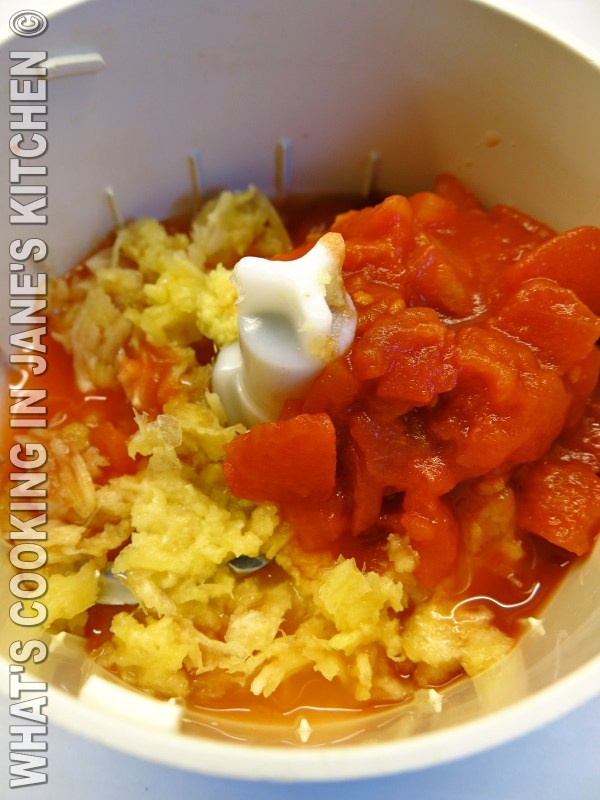
Peel and finely grate your ginger and garlic, mix with 1/3rd of your tomato and blend together in blender.
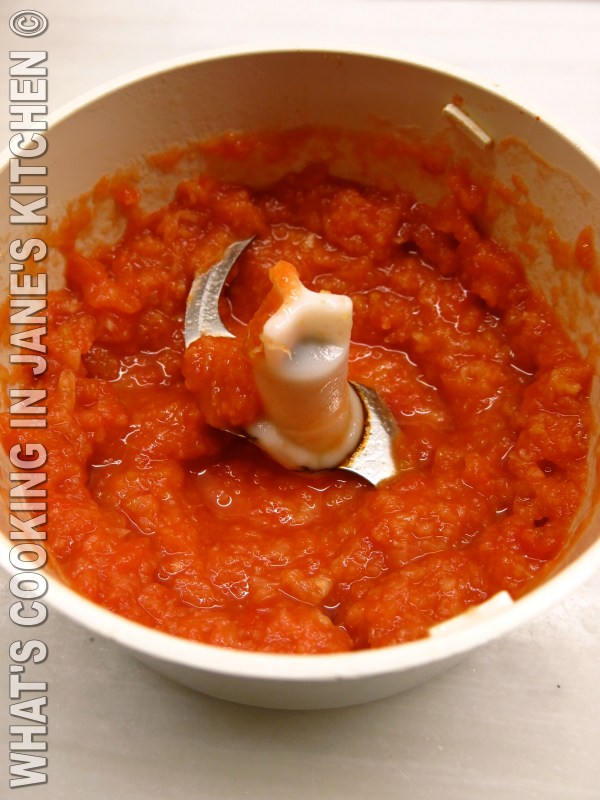
Blended mixture.
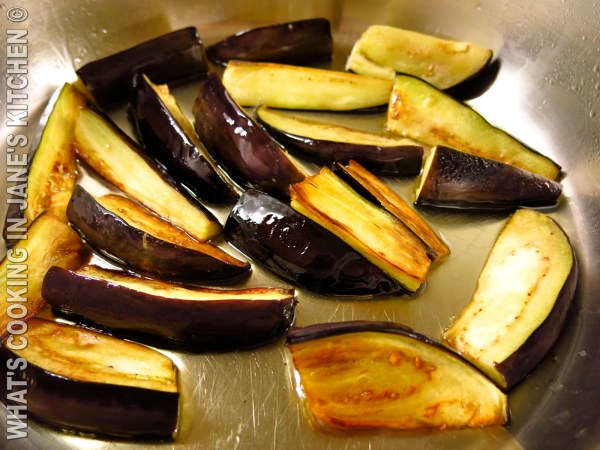
Fry aubergine wedges in oil until brown on both sides.
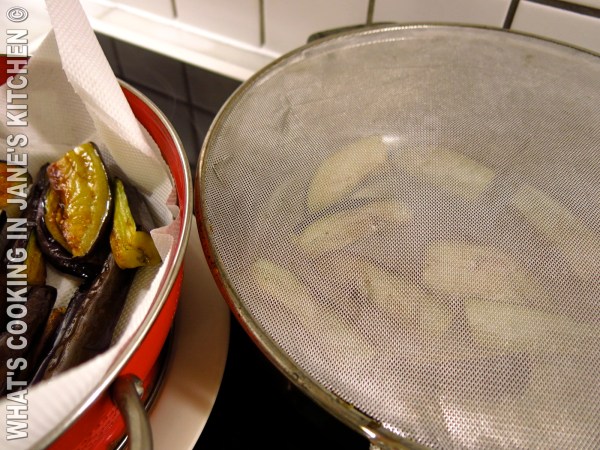
Drain fried aubergine on kitchen paper in colander. Use ” Flat Sieve Cover,” while frying. This stops the oil spitting
over your cooker which is a fire risk and at the same time allows the steam to escape.

Once aubergines are fried, remove and fry first Fennel and Nigela seeds until they pop and then fry spices until fragrant.
1-2 minutes over a medium heat, don’t burn! ( If they do by chance burn, discard and start over, or your curry will be bitter.)
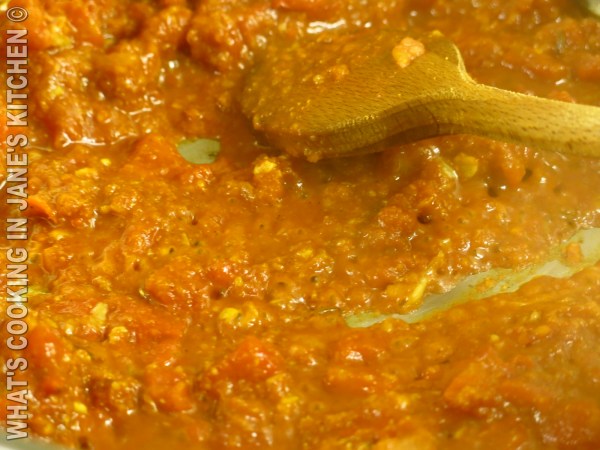
Add the rest of your ingredients and simmer over a gentle heat for 5-6 minutes. Add 3 tbs of water if getting too dry and there
is danger of it sticking.

Gently lay your aubergines over the sauce, with out stirring, so as not to break them up and leave to gently simmer over
a low heat for ten minutes lid on, giving the saucepan a twisting shake from time to time.

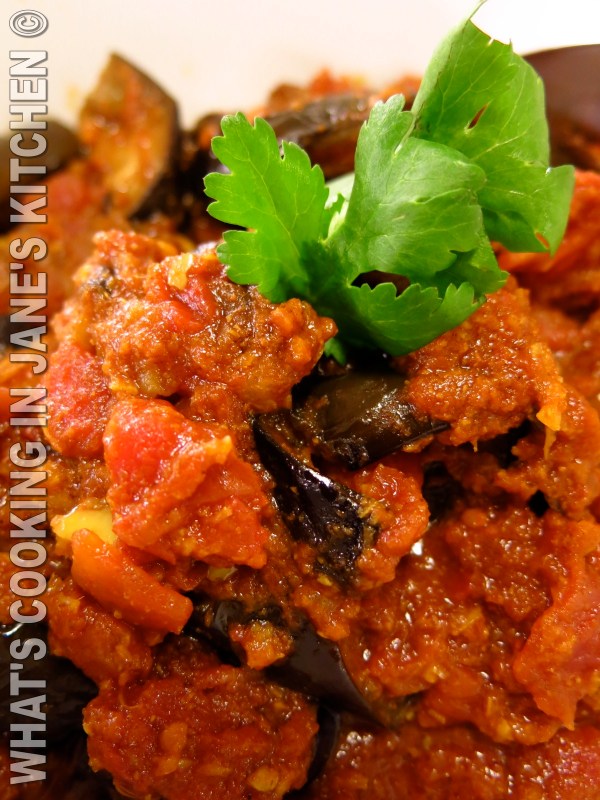
Serve hot or cold, as meal of its own, as part of an Indian Feast or as a spicy accompaniment.
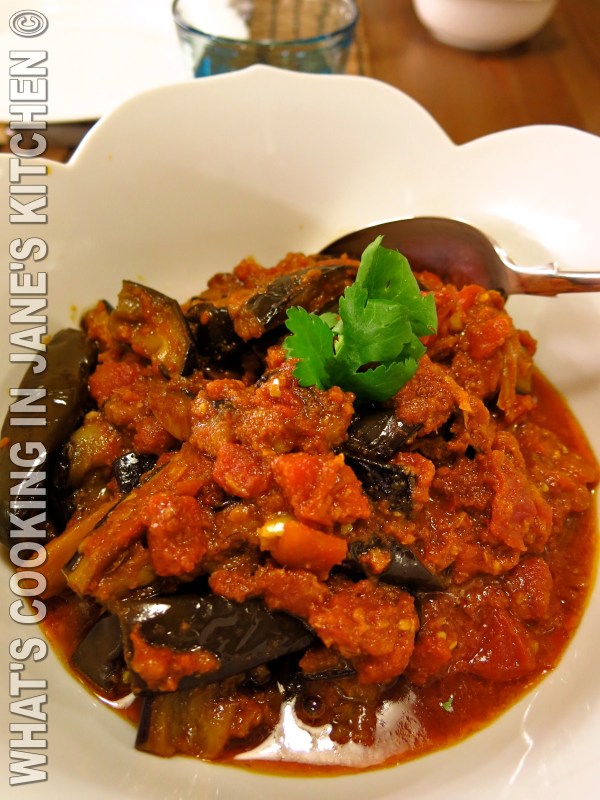
Final result !
 What's Cooking In Jane's Kitchen