My Italian Sig.ra’s Best Tomato Sauce ©
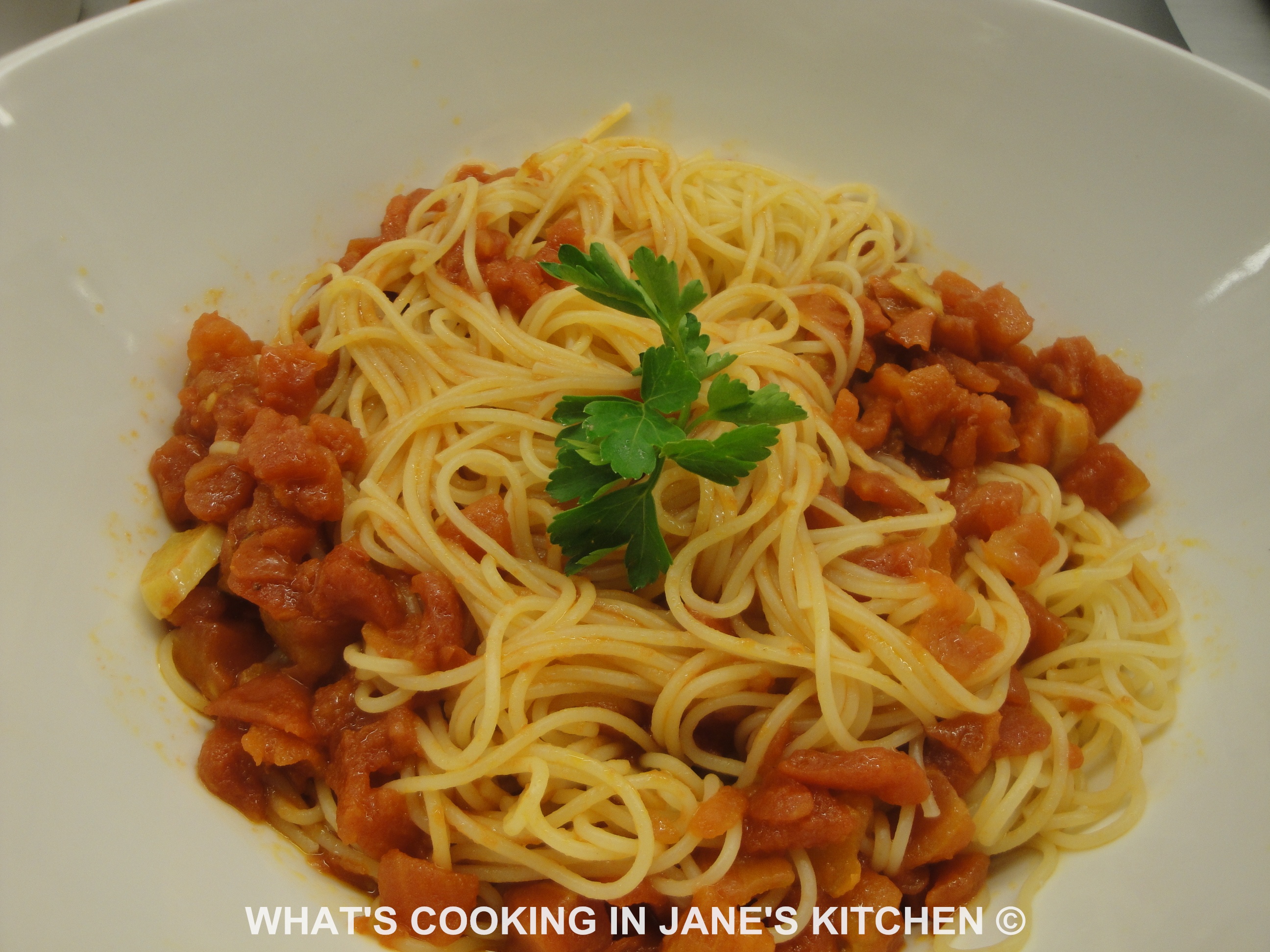
Easy, but excellent !
Ingredients : 4 persons
400g Tin chopped tomatoes or fresh tomatoes
250g Spaghettini No 3
3 tbs olive oil
4 cloves of garlic sliced
3 small dried Chilli
1.1/2 level tsp salt for tomato sauce
1 tsp heaped for pasta water
1 sprig parsley for decoration
Method
1. Put a large saucepan of water onto boil adding 1 heaped tsp of salt.
2. Into a small saucepan add oil, chilli and sliced garlic.
3. Heat garlic and chilli, on medium heat until “Just” beginning to turn colour. ( If you burn it, throw it away and start again! )
4. Immediately add tomatoes and salt. Add a little water,4 tbs, place lid on and leave to gently simmer until pasta is ready. Stir from time to time to make sure tomatoes are not going dry. Minimum cooking time 15 minutes.
5. Add pasta to rapidly boiling water, turn heat down a little, so that it does not over-boil and test after 8 minutes. The pasta is ready when it is ‘al dente,’ still a little firm.
6. Drain and place straight away into warmed serving dish.
7. Pour sauce immediately over the top and mix in. Decorate with a sprig of parsley, or rosemary.
8. Serve straight away, pasta does not wait, along with a little freshly grated parmesan.
This is so simple, but excellent! Henry’s Favourite!
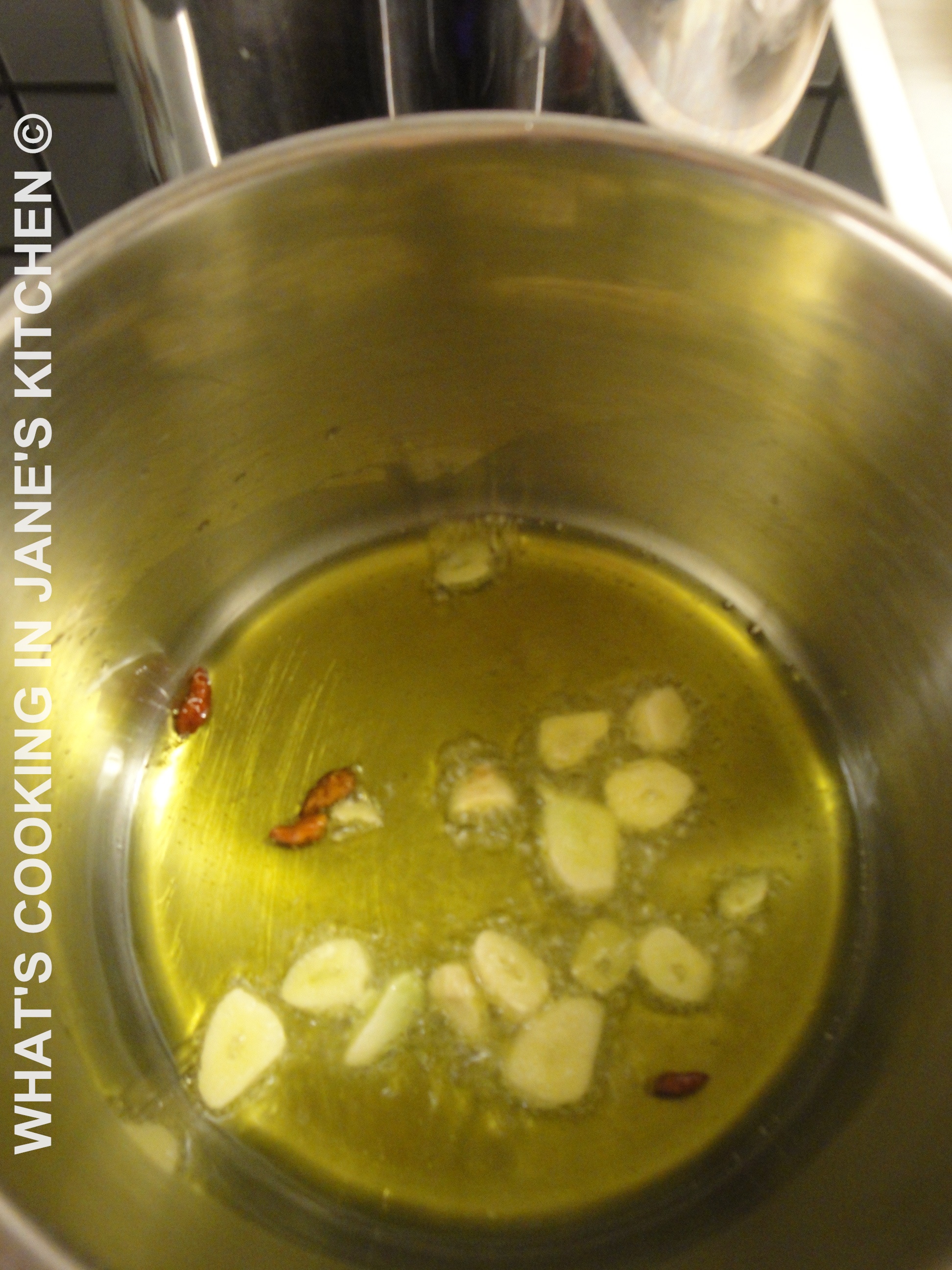
Fry garlic and chilli in oil, until just turning colour, not more. This happens quickly, so stay with it!

Ingredients.

Add tomatoes to oil, garlic and chilli, adding the maximum amount of salt and a little water.
Leave to simmer at least 15 minutes.
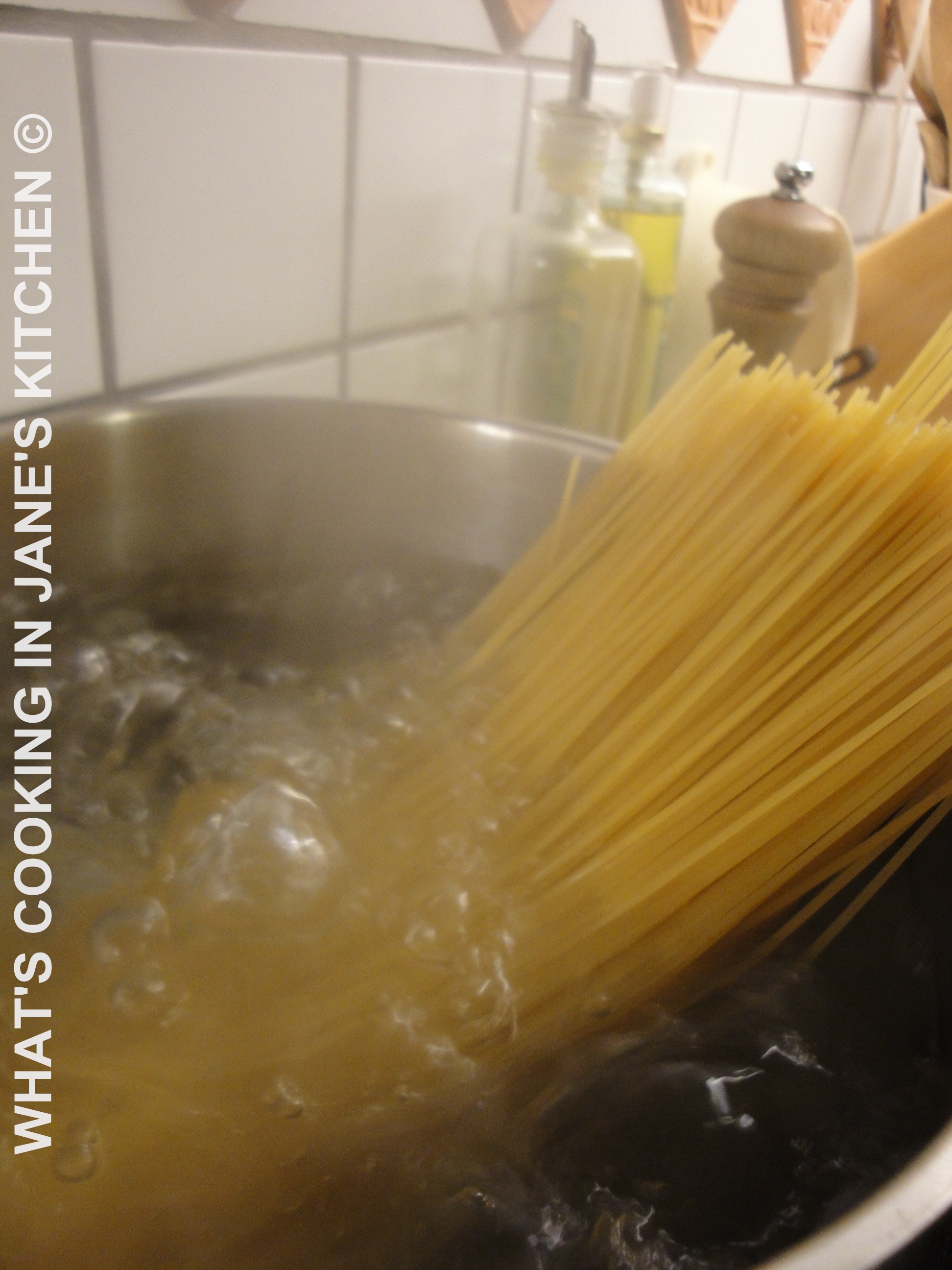
Put pasta onto boil in salted water.

Stir pasta to separate pieces and boil on the roll, so that pasta does not stick together.

Drain in Colander.
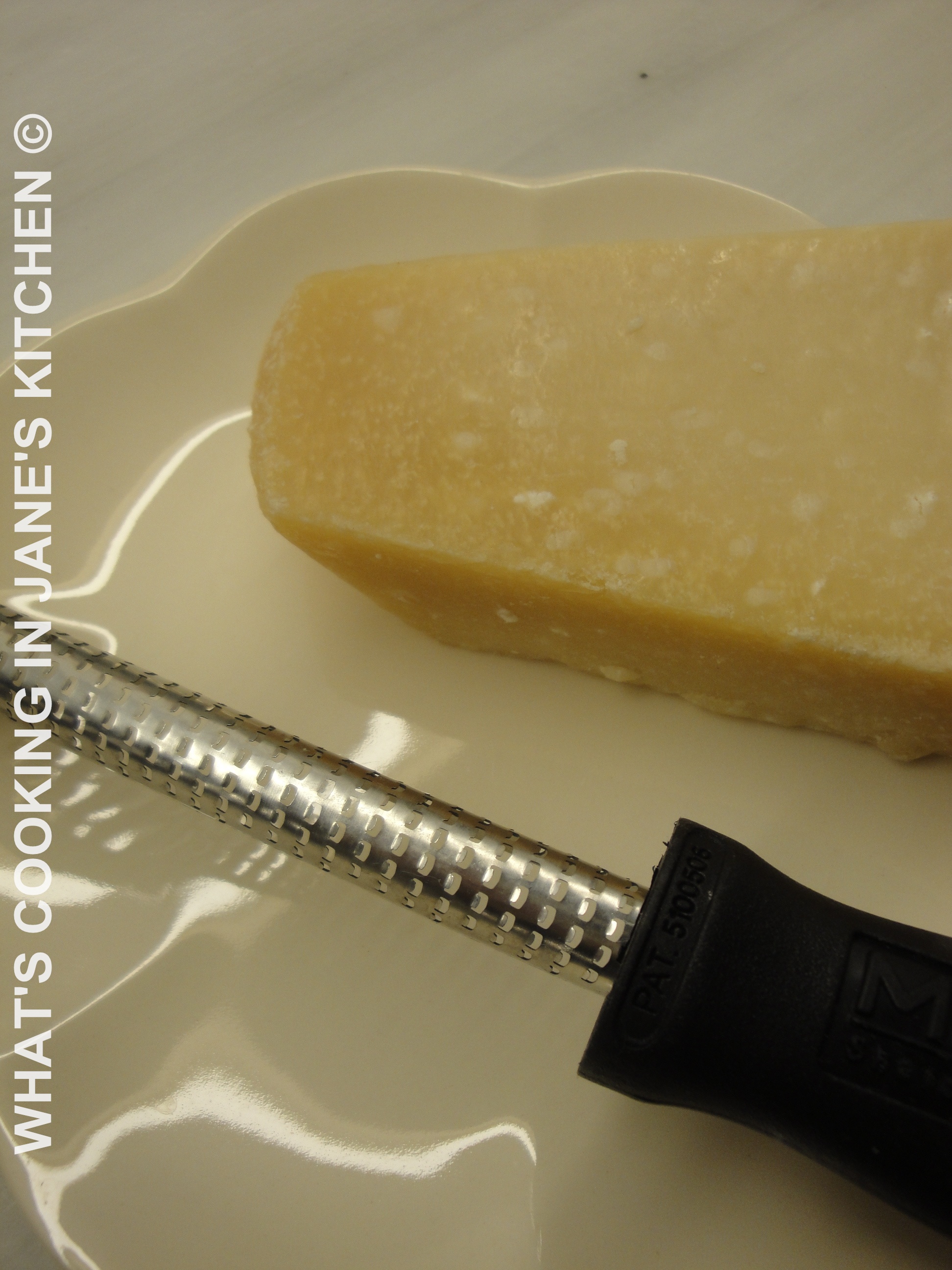
Serve with freshly grated parmesan.
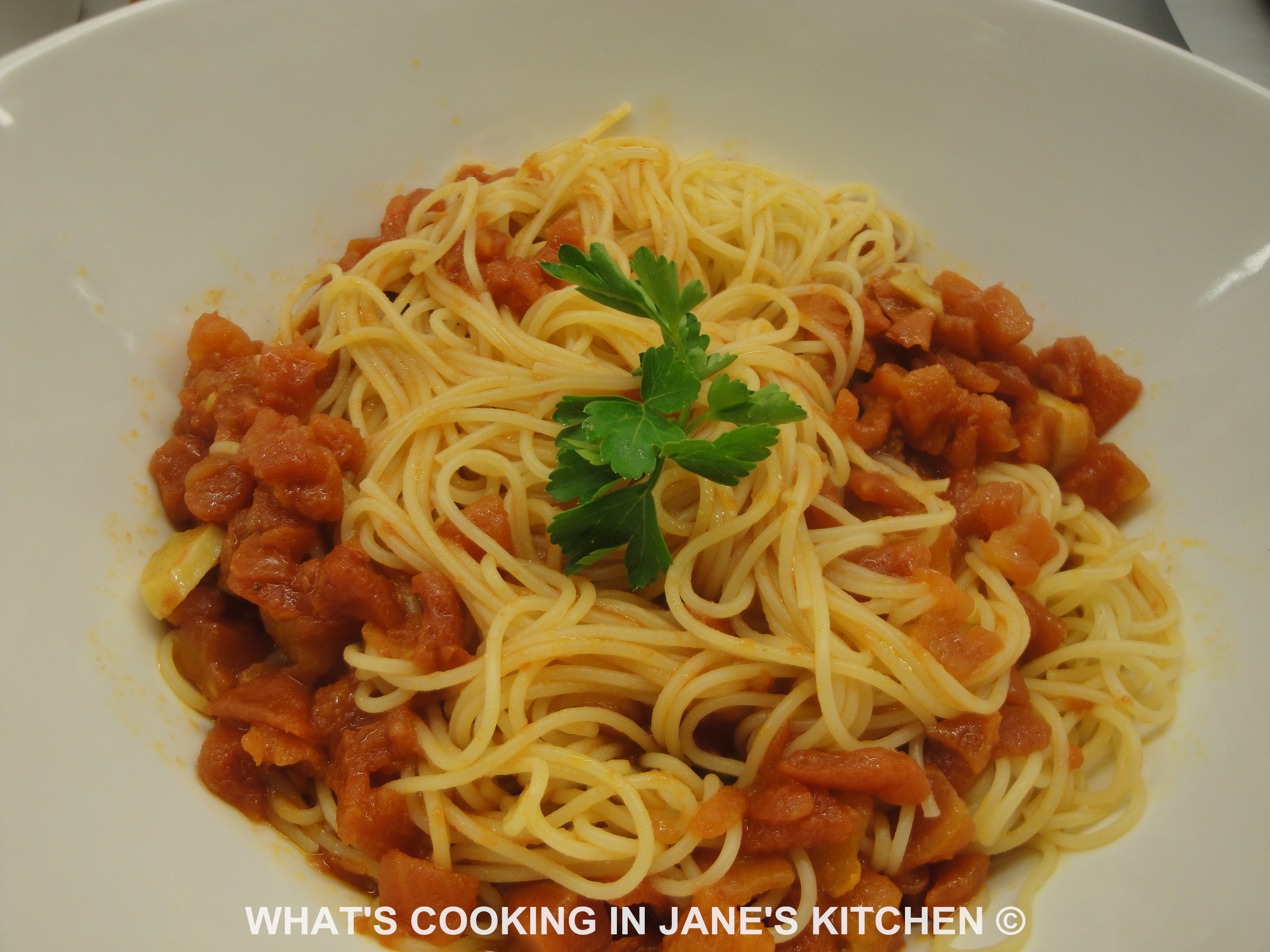
Final Result. Decorate with Parsley.
Fava Dip ©
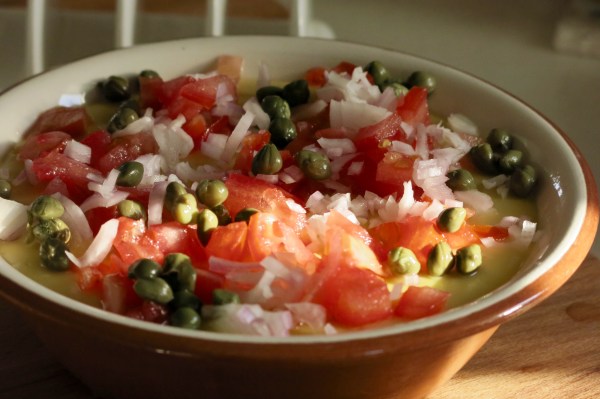
Fava with chopped tomato, capers and diced onion.
Easy.
6 Persons
Ingredients
2 cups fava yellow split peas
5-6 cups water
2 tsp salt
1/2 cup olive oil
1 small onion peeled
2 bay leaves
1 onion sliced or diced
1 tomato cubed
2 tbs capers
1 lemon cut into segments
Method
The best fava peas you can buy, are from a ‘Mill’ in Greece, whole sale. Otherwise buy organic from your local health food shop.
1. Measure out your fava peas onto a tray and look through them carefully for any small stones, as one would do for lentils. Place in sieve and rinse.
2. Place in a medium saucepan and cover with 4 cups of water.
3. Bring to the boil and simmer. Remove with a slotted spoon any froth that forms on the surface and once the boiling water is clear, add a whole onion, salt and 1/4 cup olive oil.
4. Simmer for at least 45 mins with the lid on. Check periodically that the peas are not sticking to the bottom of the saucepan and add a little more water if becoming too thick. You want to achieve the consistency of mashed potatoes.
5. Once the peas have become soft, remove bay leaves and put into blender, or alternatively use a Mouli, using smallest holes or just serve as it is. Pour into serving bowl.
6. Check for seasoning and drizzle with the remaining olive oil.
7. Garnish with sliced onions and wedges of lemon or cubed tomato, capers and diced onion.
Excellent served warm or cold, along with fresh crusty bread.
N.B. Your dip should be the consistency of mashed potato, add water to thin or cook a little more to thicken.
In Greece this is served as a Meze or as part of a meal. It makes a good lenten dish.
The Greek word fáva (φάβα) does not refer to broad beans, but to the yellow split pea and also to the legume Lathyrus sativus, either of which are boiled with salt to the local variety ofpease pudding, also called fáva. This creamy fáva is then served hot or cold, sprinkled with olive oil and garnished with a variety of condiments and seasonings such as diced onion, capers, parsley, pepper, lemon juice, etc.

Look carefully through the fava peas for any stones. Place in sieve and rinse.

As you boil the fava peas a froth will form on the surface of the water. Remove with a slotted spoon.
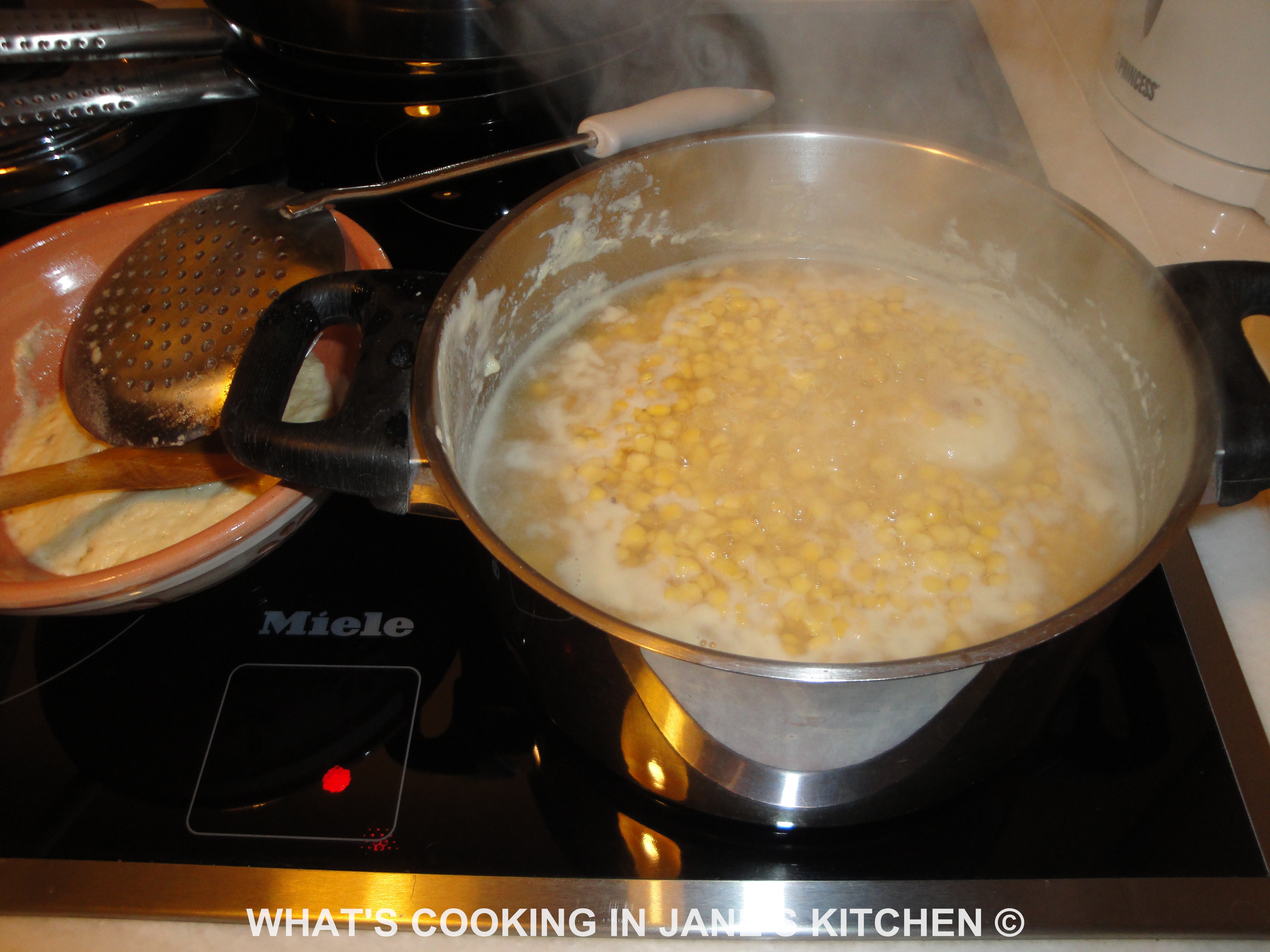
After removing the froth, the water will remain clear. Add whole onion and olive oil and salt and bay leaves.
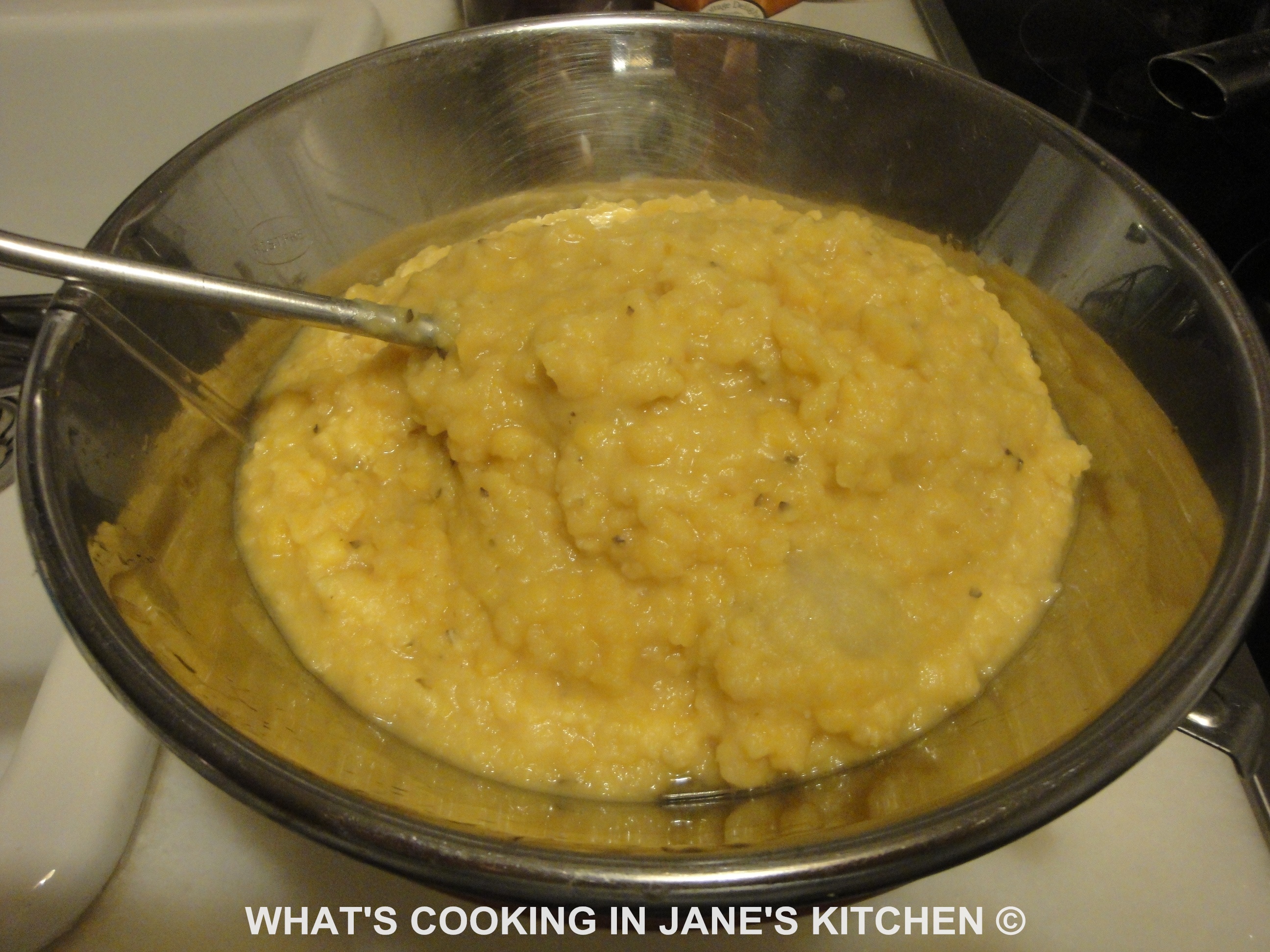
Pass fava peas and onion through Mouli, (small holes,) or blend in blender. If you have neither, push through sieve using a wooden spoon.
This produces a smoother result, but you can also enjoy it just as it is.
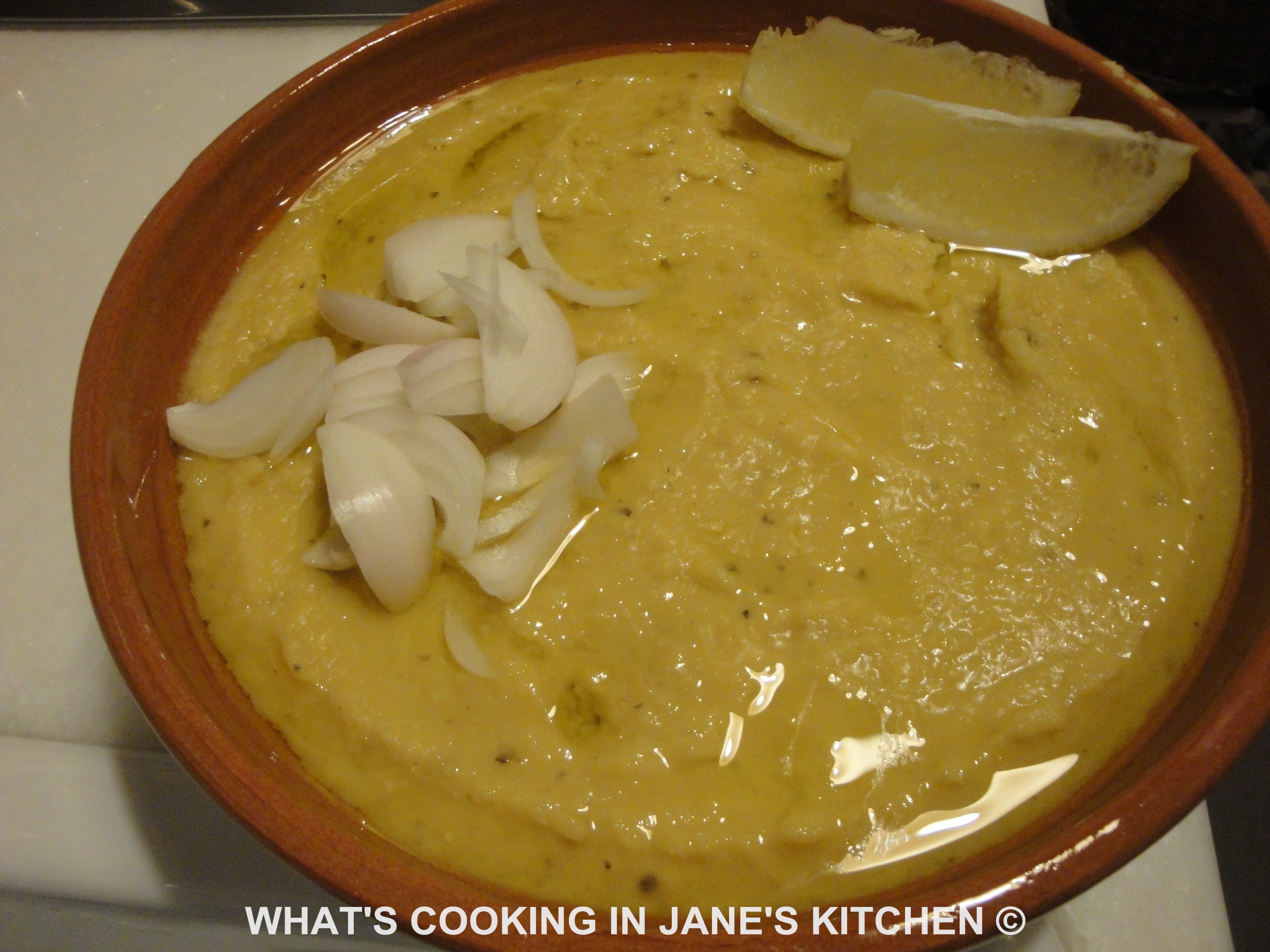
Drizzle with a little olive oil and sprinkle with freshly sliced onions. Also delicious garnished with cubed tomato, capers and finely diced onion.
Fava with chopped tomato, capers and diced onion.
 What's Cooking In Jane's Kitchen
Happy Happy Easter !
This is wishing you all a very Happy Easter, Kali Anastasi and have fun roasting your Lamb!
Tomorrow we will be roasting a whole lamb on the spit and the men are in charge!
Many people ask me if I take the photographs for my Blog? The answer is ‘Yes.’ I have always enjoyed
photography and a dear friend kindly ‘Water Marks’ them for me, for which as always I send him,
many many thanks.
Apologies for my famously bad spelling, it adds a little spice and keeps you all on your tows, Ooooops, toes….ha ha!
Happy Happy Easter!
Share this: