Roast Lamb And Roast Potatoes ©
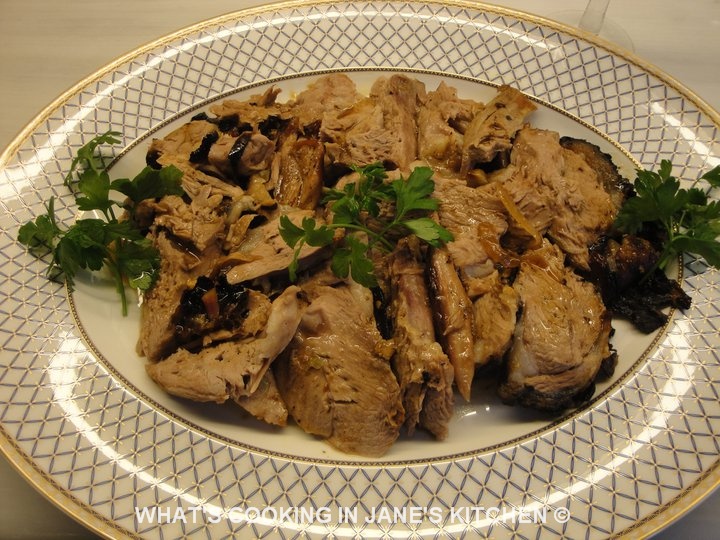
1 Leg of lamb
Juice of 1 large lemon
3-6 Cloves Garlic
3 Sprigs of Rosemary
2 tbs Dijon mustard ( only Dijon! )
2tbs brown sugar
1 tbs Flour
2-3 tsp Salt
1 tsp Black freshly ground pepper
1/2 Cup Olive Oil
2 Large onion halved and quartered
Potatoes 2-3 medium sized, per person
Parsley or Rosemary to garnish
Method
1. Pre-heat oven if cooking straight away. 250.C. Turn down to 200.C after half an hour.
If not cooking straight away, you can prepare your lamb the day before and leave to marinade in fridge.
2. Wash lamb under running tap. Dry with kitchen paper, remove any excess fat and butchers blue ink stamp, if it has not already been removed. Place in roasting tin.
3. Turn upside down, pour over lemon juice, cut deep crosses in the fleshy parts and insert wedges of garlic and if liked rosemary sprigs. Salt and pepper this side generously and turn over and repeat on the other side, as in the photograph.
4. Spread over the top side of the lamb, using a knife, a thick layer of “Dijon” mustard, sprinkle with light brown sugar and dust with flour using a sieve.
5. Drizzle all over with olive oil.
6. Place rosemary sprigs under lamb joint and surround with onions cut into quarters.
7. Peel the potatoes, leave in water if not roasting straight away so that they do not brown and reserve in fridge. Otherwise season well and drizzle with oil, together with onion wedges and place around lamb.
8. Place lamb in pre- heated oven 250.C. Turn down to 200.C after half an hour. (You should always be able to hear the oil around the lamb sizzling.) A young lamb will take 1.1/2 hrs and New Zealand frozen leg 2 hrs. (De- frost, from the day before in fridge if leg is frozen.)
9. As soon as lamb starts to brown on top, cover with a piece of tin foil, but do not cover potatoes as well.
To test if lamb is ready, pierce with a sharp knife in thickest part, juices should run clean, unless you prefer it a little pink in the middle.
Serve with French Seed Mustard, Mint Sauce, and Mint Jelly.
Carve lamb and arrange on warm serving dish, pour off juices, ladle off fat and reserve to drizzle over lamb and potatoes, just before serving. Serve the rest of the juices, in a sauce boat.
Decorate lamb just before serving with rosemary sprigs or parsley.
COOKERY TERM : Dredge : Liberally cover with flour using a sieve.
This is an all time favorite in my family and apart from at Easter, makes a lovely Sunday roast.

Once you have washed the lamb, under cold running water, pat dry with kitchen paper. Douse all over with
lemon juice. Place in roasting tin, the underside upper most first and using a sharp pointed knife, cut two,
2 cm deep cuts in the fleshy part of the lamb, in the shape of a cross. Repeat this all over the lamb.
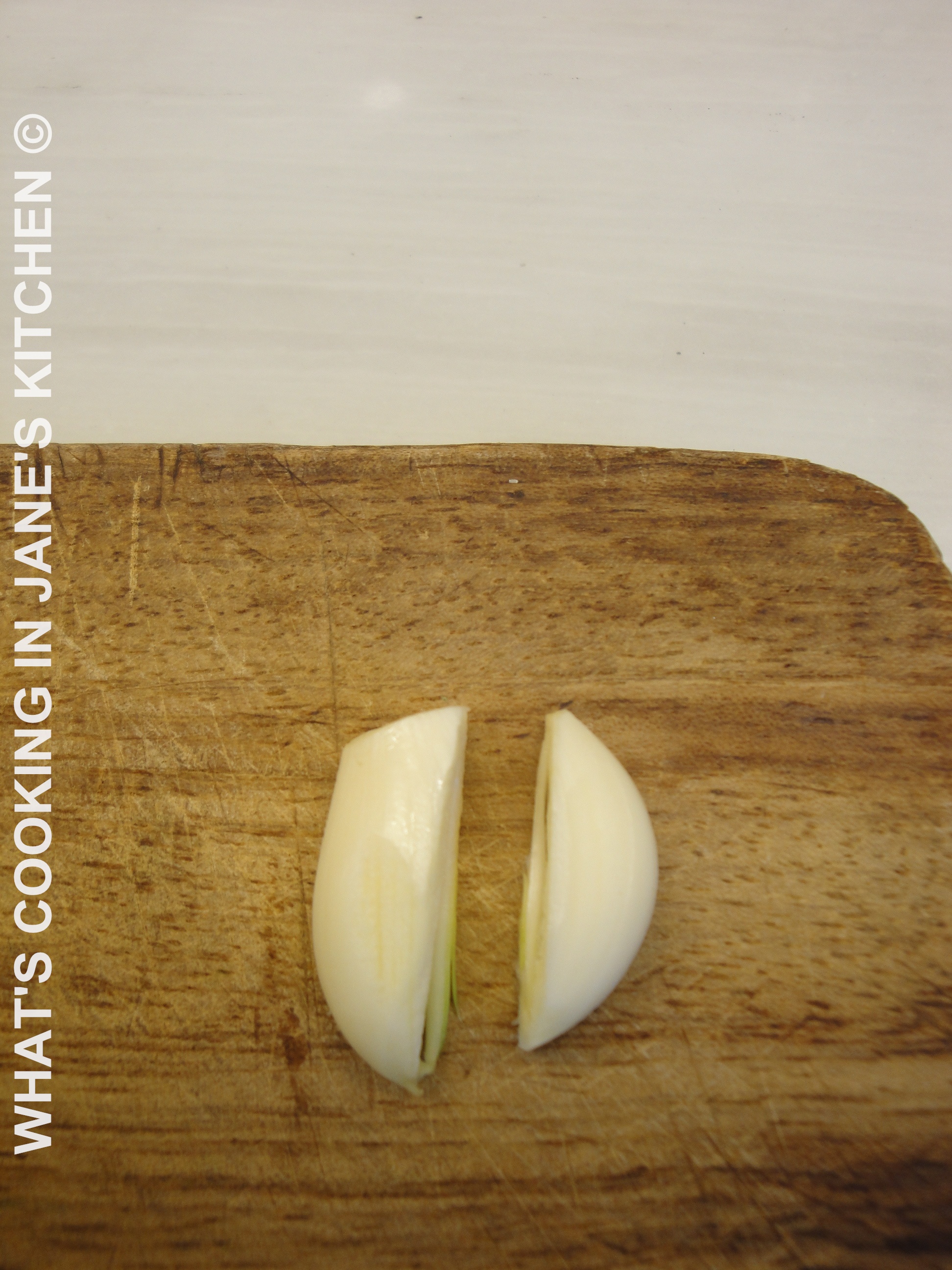
Cut garlic cloves into half, long ways and then into quarters. Push each quarter into the incisions you have
made all over the lamb. The more deeply the garlic goes the better.
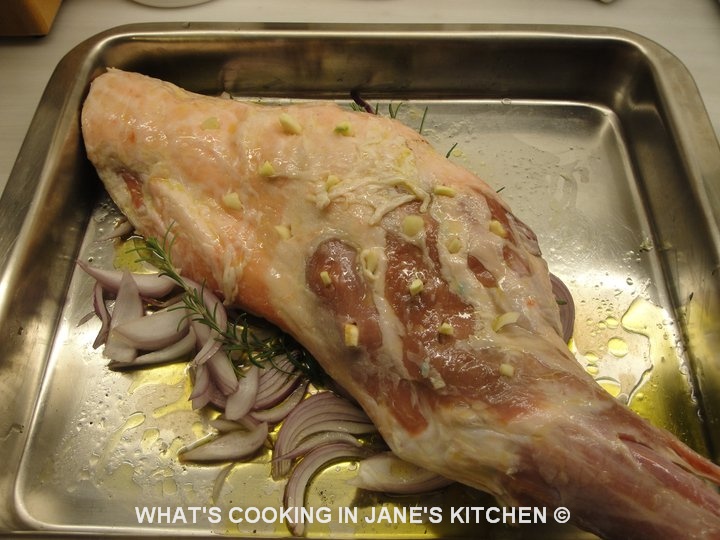
The lamb will end up looking like this. At this point you can either add a few sprigs of rosemary under the
lamb, or add sprigs into the incision with the garlic.
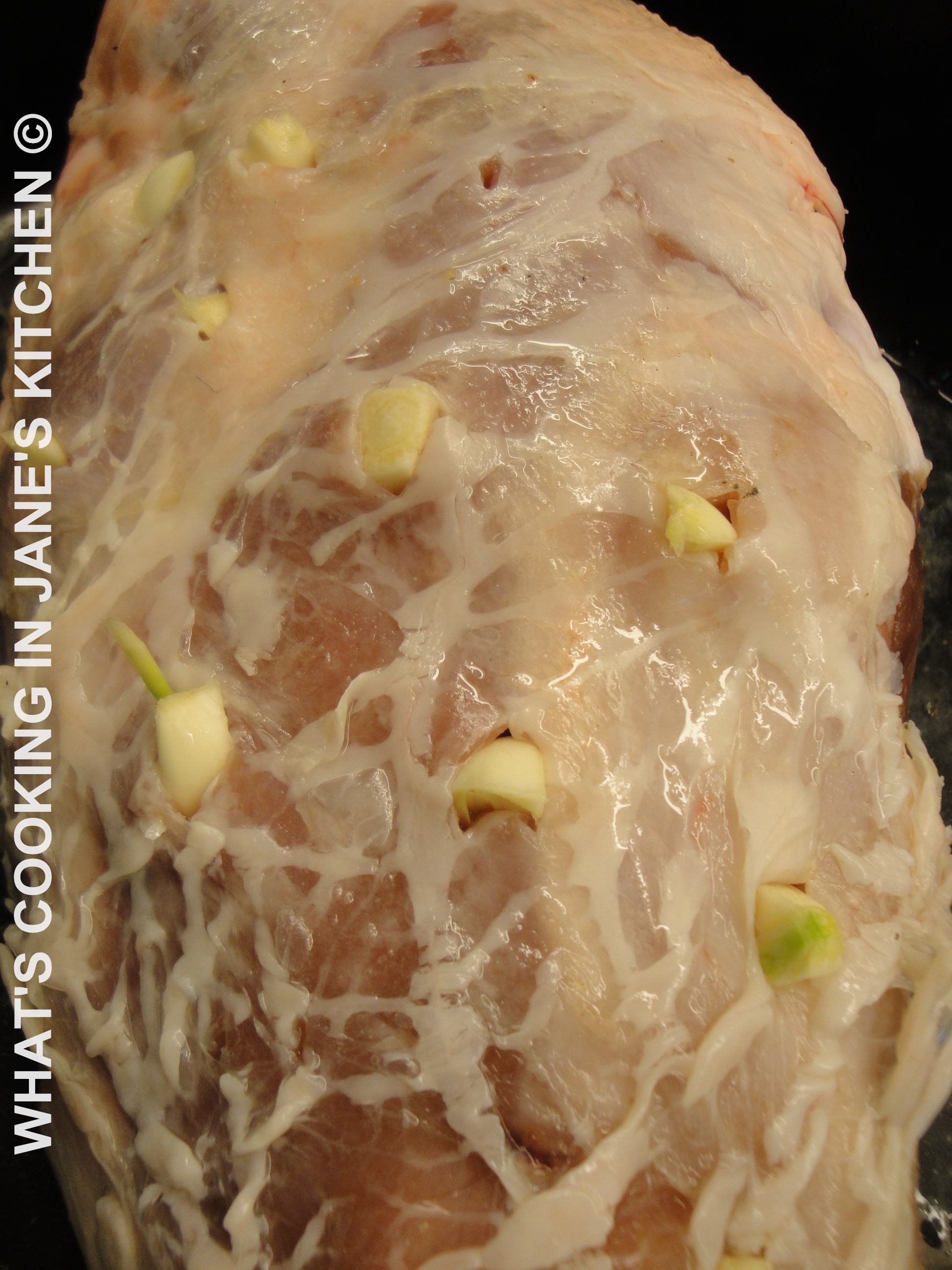
If you want to add sprigs of rosemary to the garlic continue as follows. Otherwise just place the rosemary
under the leg of lamb.
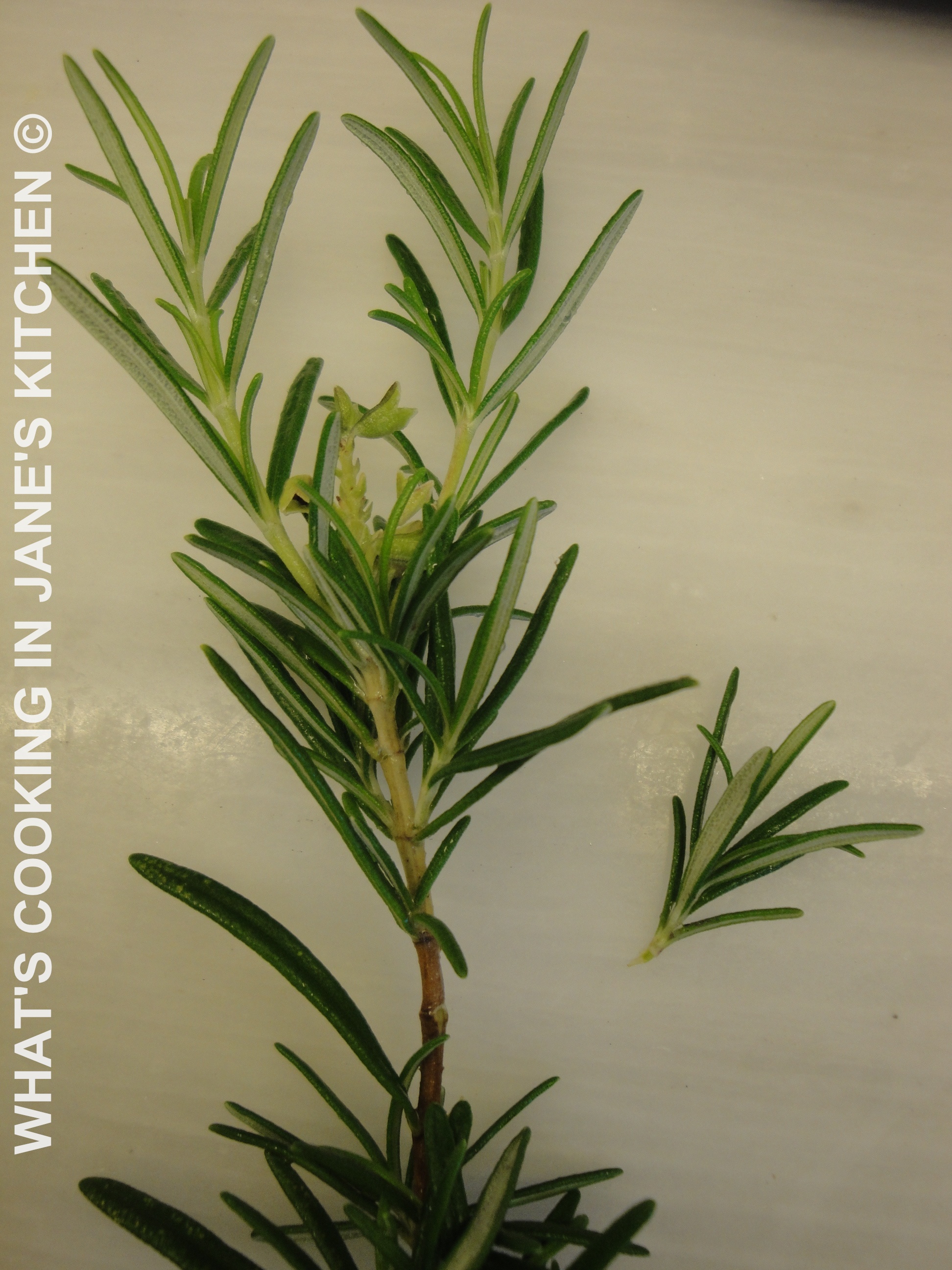
Pull off small sprigs and push in beside the garlic.
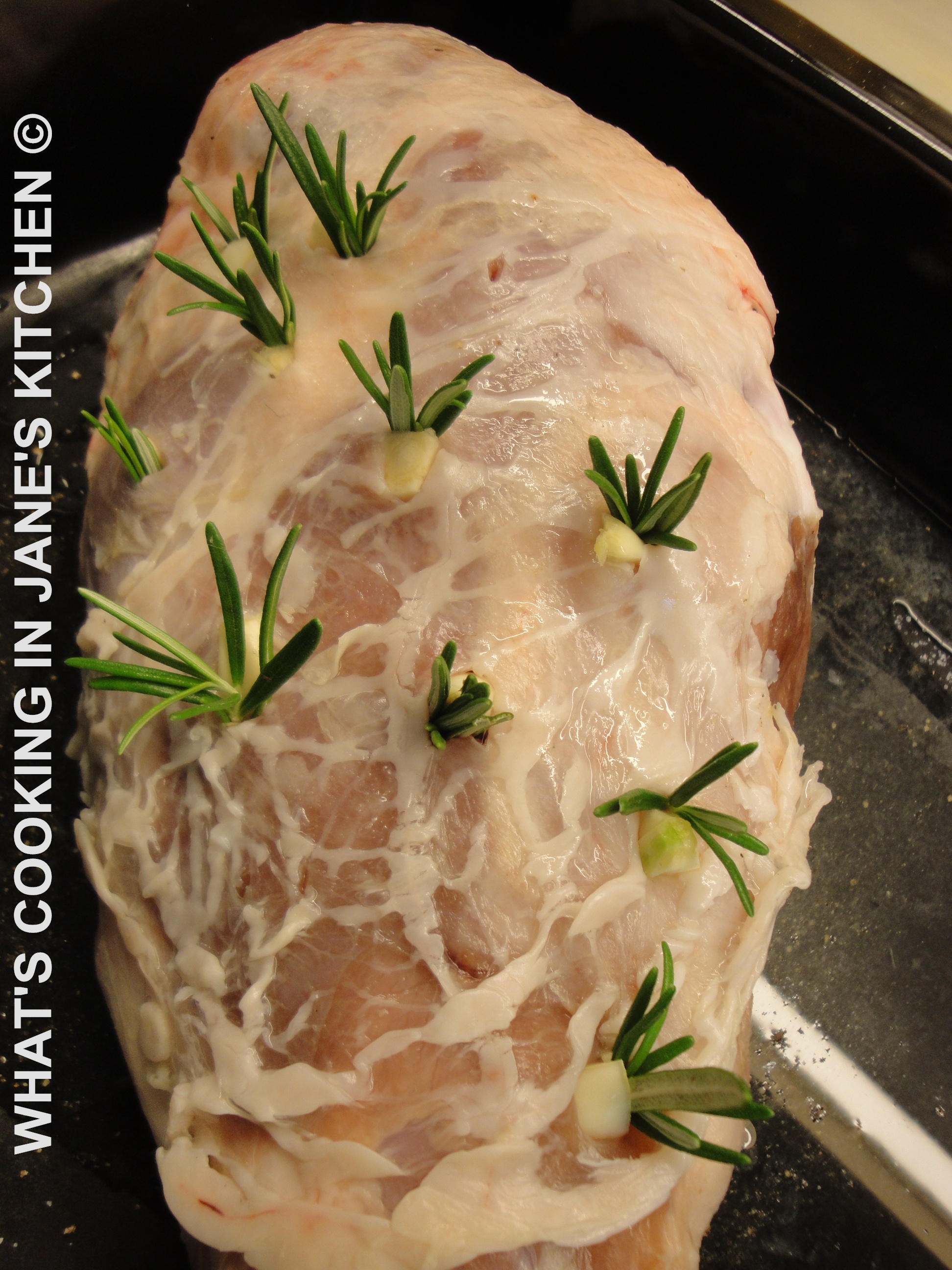
This is the option of the rosemary put in with the garlic.
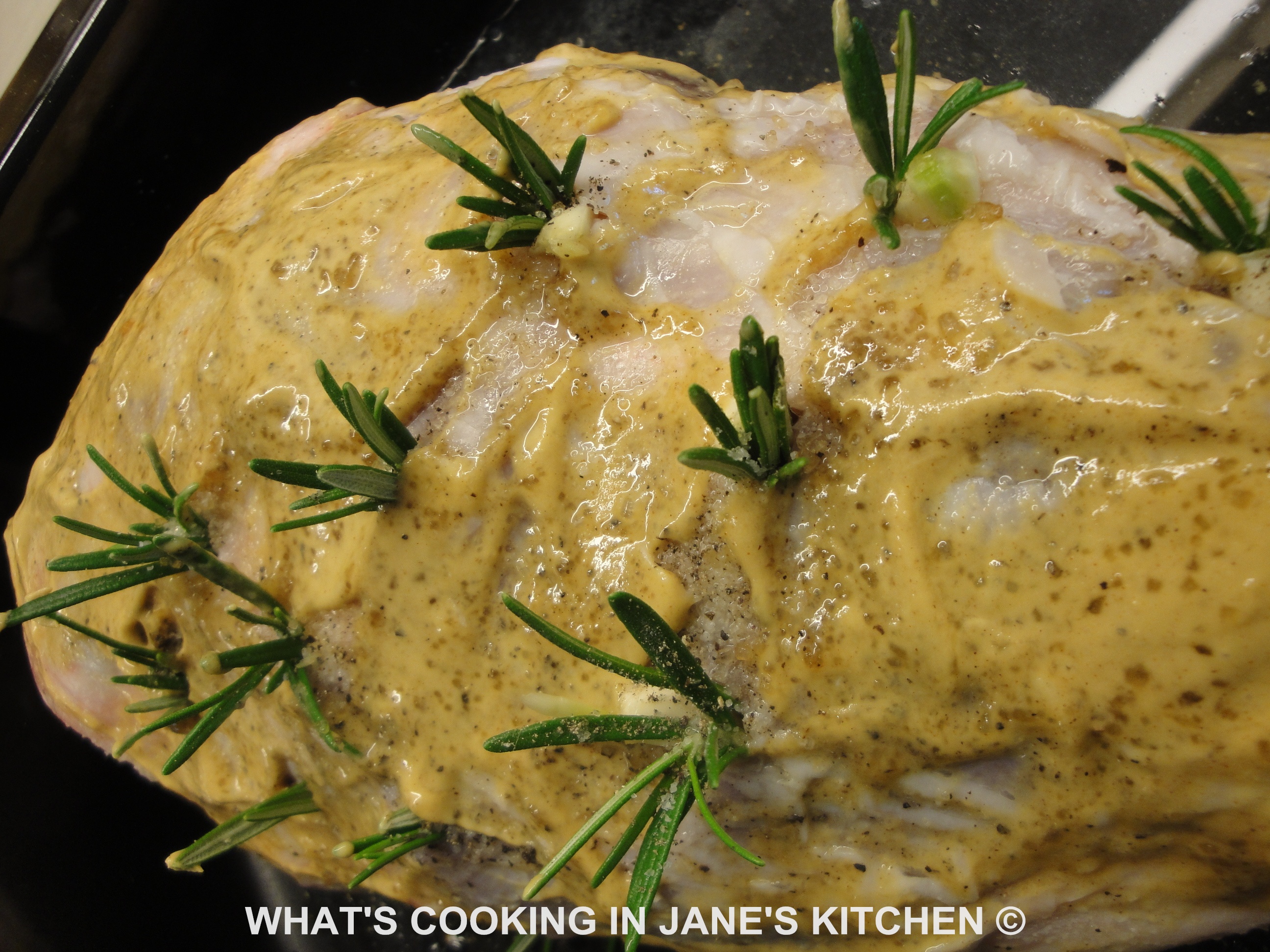
Add salt and pepper, dijon mustard and then sprinkle with brown sugar.
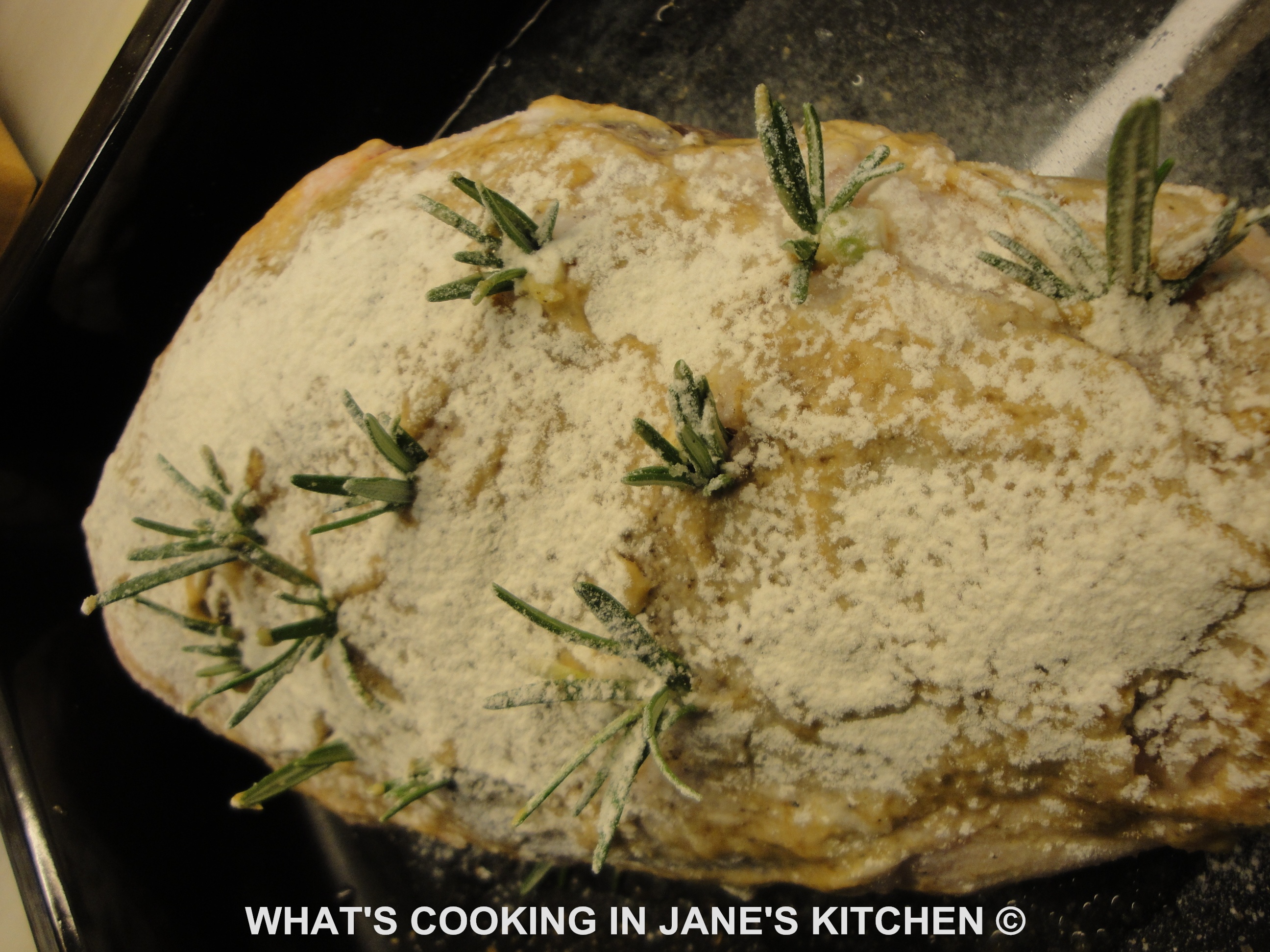
Sprinkle/dredge with flour, using a small sieve and drizzle generously with olive oil.

Surround with seasoned potatoes and onion wedges, together with any left over garlic.
ALTERNATIVE METHOD :

Alternatively, if you are just putting the rosemary underneath the lamb, salt and pepper and spread with dijon
and continue as above.
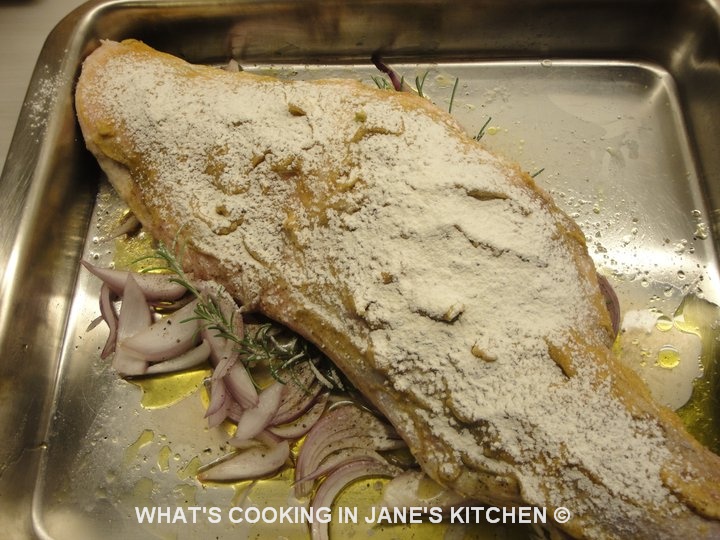
Sprinkle with golden sugar and using a small sieve, dredge with flour. Drizzle again with olive oil.
If cooking straight away, surround with seasoned potatoes and onion wedges and place in pre-heated oven.
Once nicely browned, after about half an hour, cover lightly the lamb only, with tin foil. The potatoes leave
uncovered to brown.
Baste and turn potatoes every half an hour add 1/2 cup of water if oven tray starts getting dry.
A fresh leg of Lamb, will usually cook in about 1.1/2 hrs, unless it is a large de-frozen New Zealand leg,
in which case it will take a good two hours.
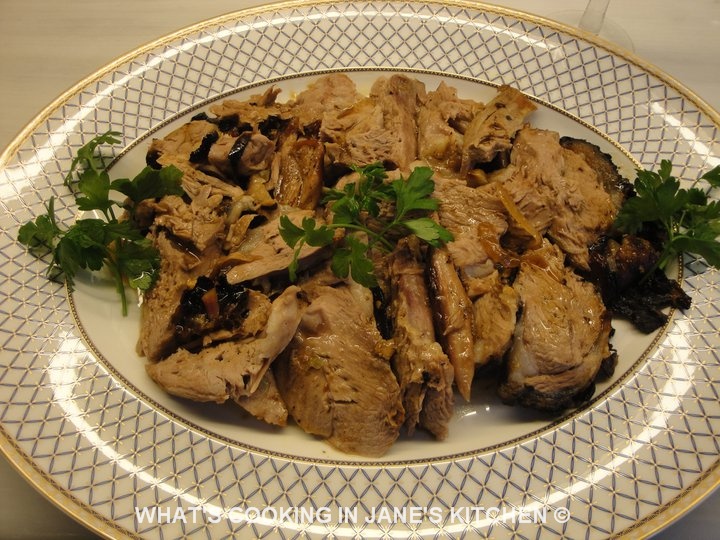
When cooked, carve and arrange on warm serving dish. Drizzle with a ladle of juices to keep the lamb moist.
Decorate with parsley or rosemary sprigs.

Arrange potatoes in serving dish and drizzle with a little of the oily juices to make the potatoes shiny.
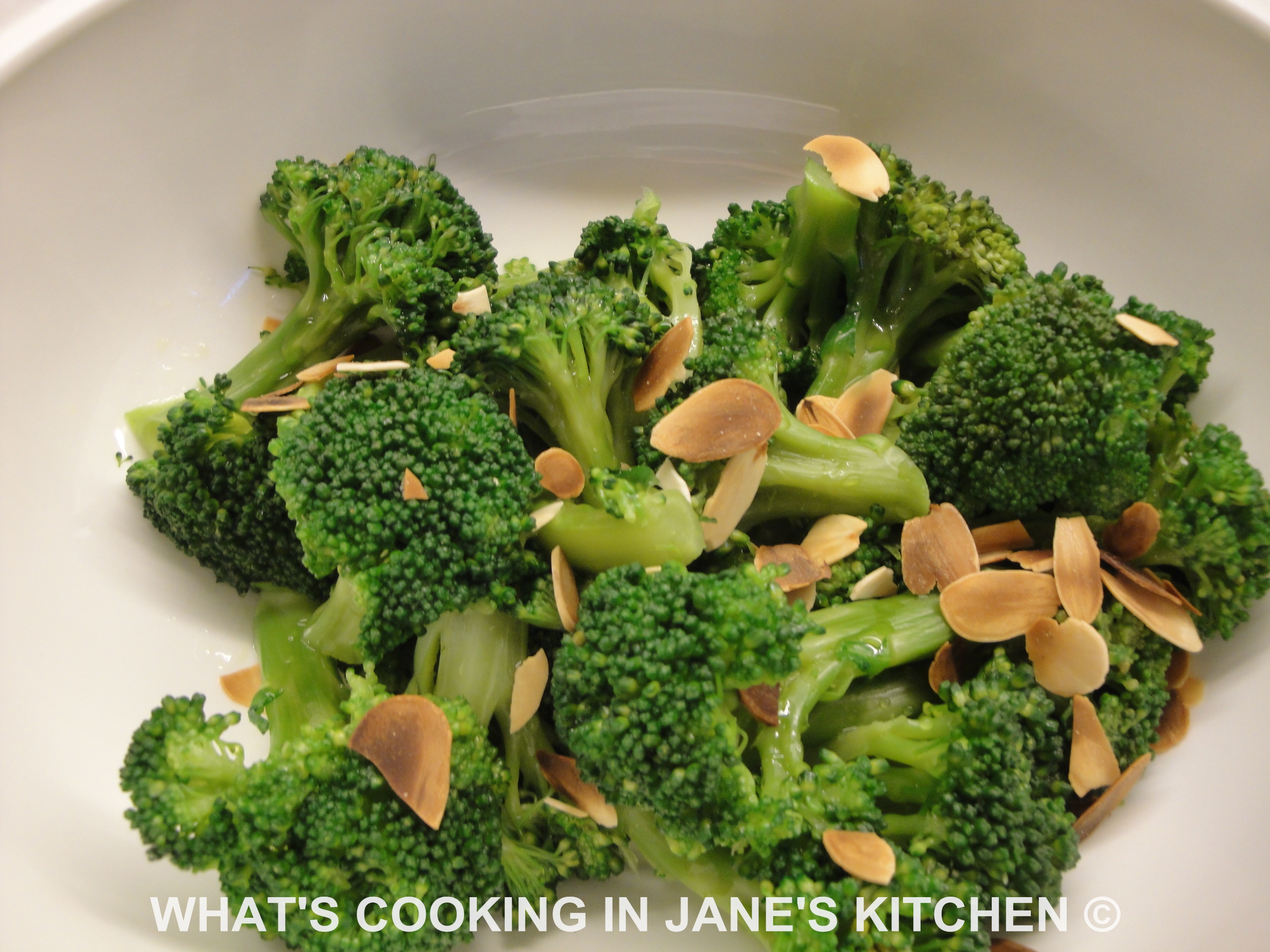
Cut Broccoli into Florets, plunge into salted boiling water and boil for 5-8 minutes, with out the lid on.
Drain and refresh in colander. Drizzle with a little olive oil, and sprinkle with toasted almonds.
Salt at last minute, or Broccoli discolors.
Avocado Vinaigrette ©

Ingredients
1/2 Avocado each
1 Lemon juice
Parsley leaves to decorate
My Vinaigrette!
1/4 tsp Salt, Freshly grated black pepper
2 tsp Dijon mustard
1/2 lemon Juice
A dash of vinegar (opt)
3 tbs or more of good quality olive oil
Method
1. Make up dressing by putting all the ingredients in a cup and mixing until combined and emulsified.
2. Chose nice ripe avocados. Press at the pointed end and at the base, they should yield gently……Over-ripe will be too soft all over, under ripe will be hard to the touch. Like choosing a ripe Pear, you use the same technique.
3.Half an hour before serving, cut open avocados, using a sharp knife and cutting round long ways through to the stone and prize open with the side of the knife. Remove stone by sticking knife into stone and extracting it from the cavity.
4. Immediately brush cut surface with lemon juice. This stops it discoloring.
5.Place halves in avocado bowls or on a serving plate.
6.Fill cavity with vinaigrette dressing and decorate with parsley.
The Avocado Pear is the most delicious fruit. Once it was a rarity, but now a days and especially if you have grown a tree in your own very garden, you can enjoy them every day!

Pick in season. In the Mediterranean , usually after Christmas. This is the tree in my kitchen garden….
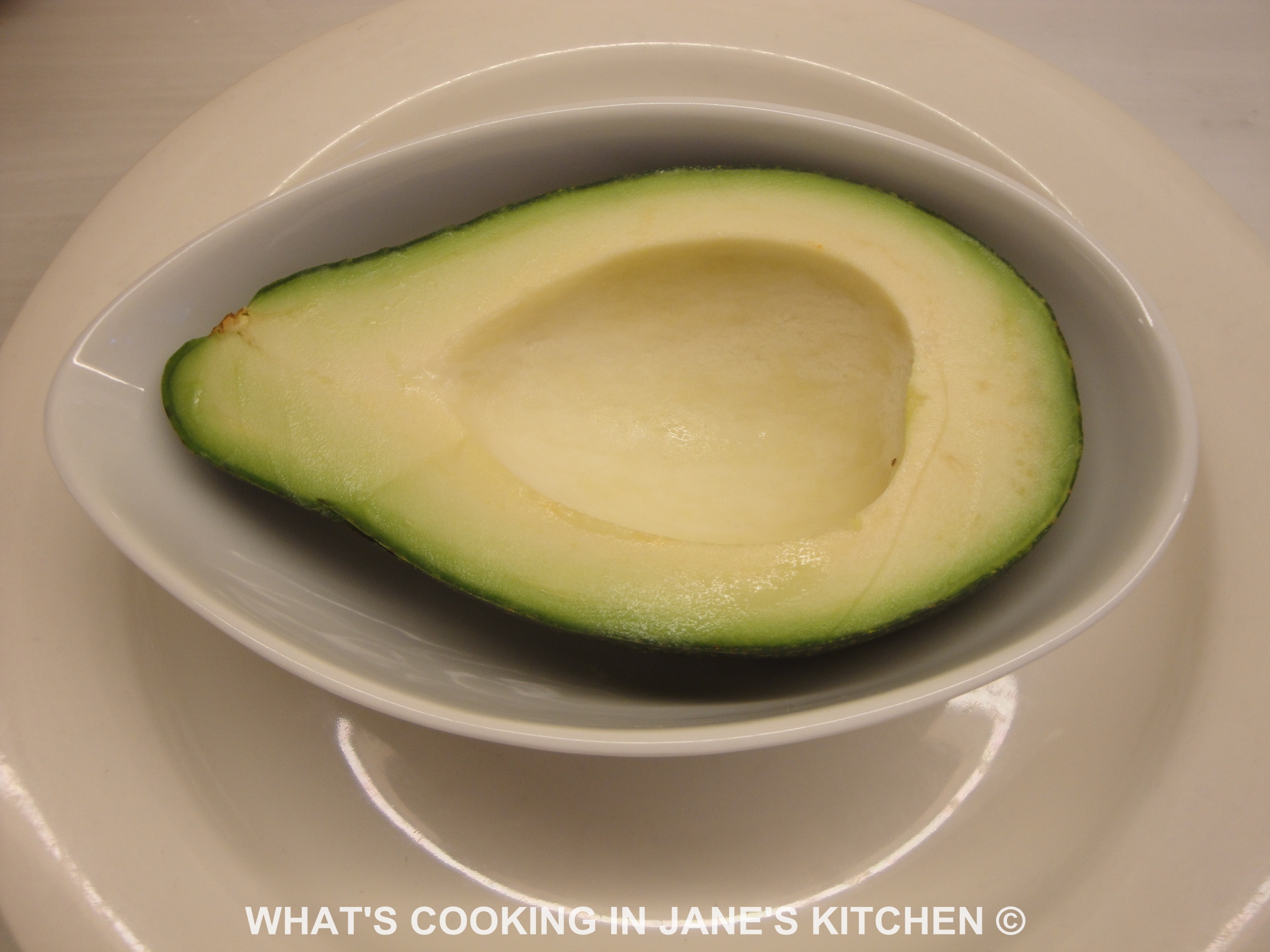
Half an hour before eating,cut in half and brush with lemon juice, so it does not brown.
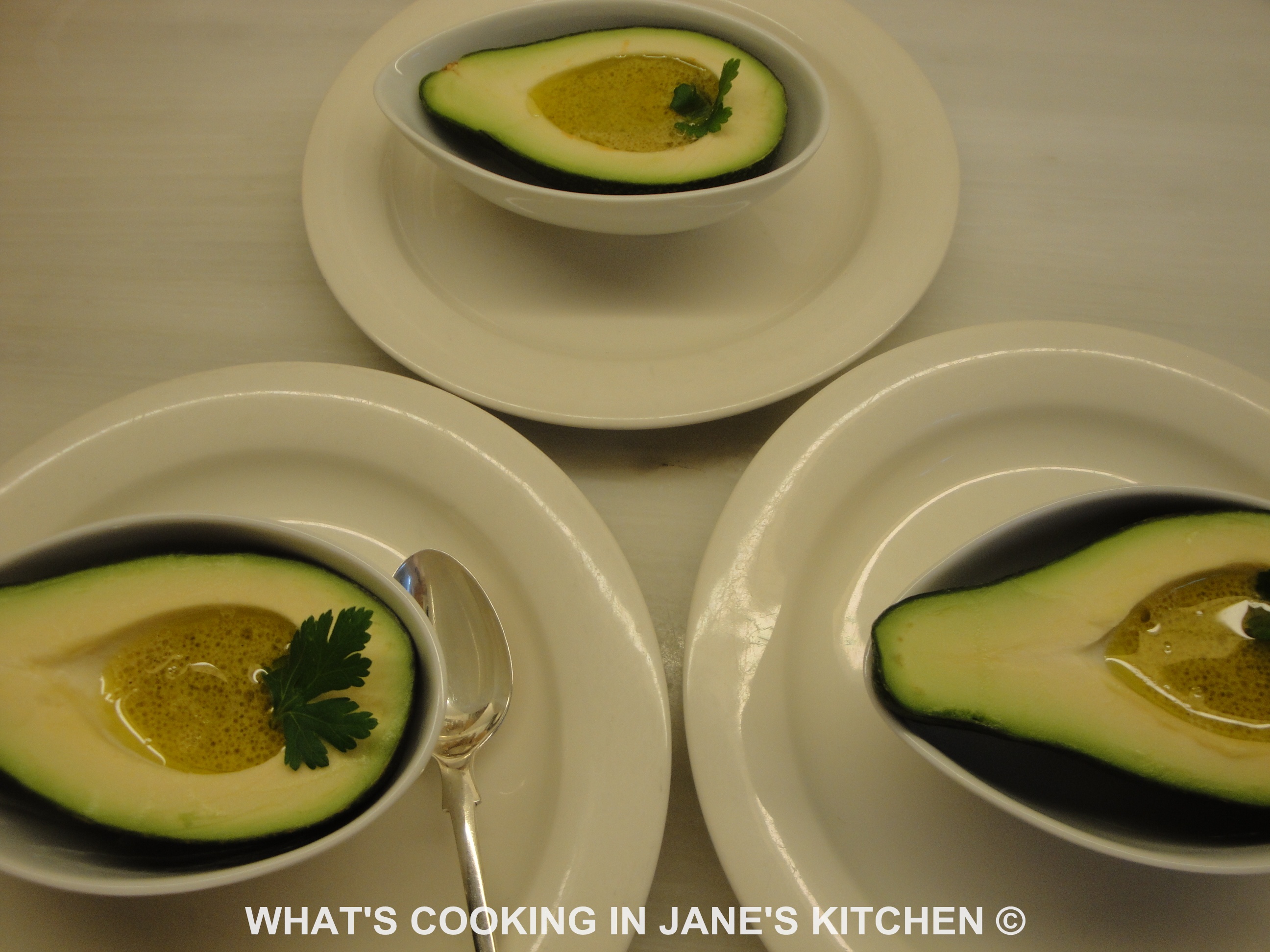
Remove stones and fill cavities with vinaigrette sauce.
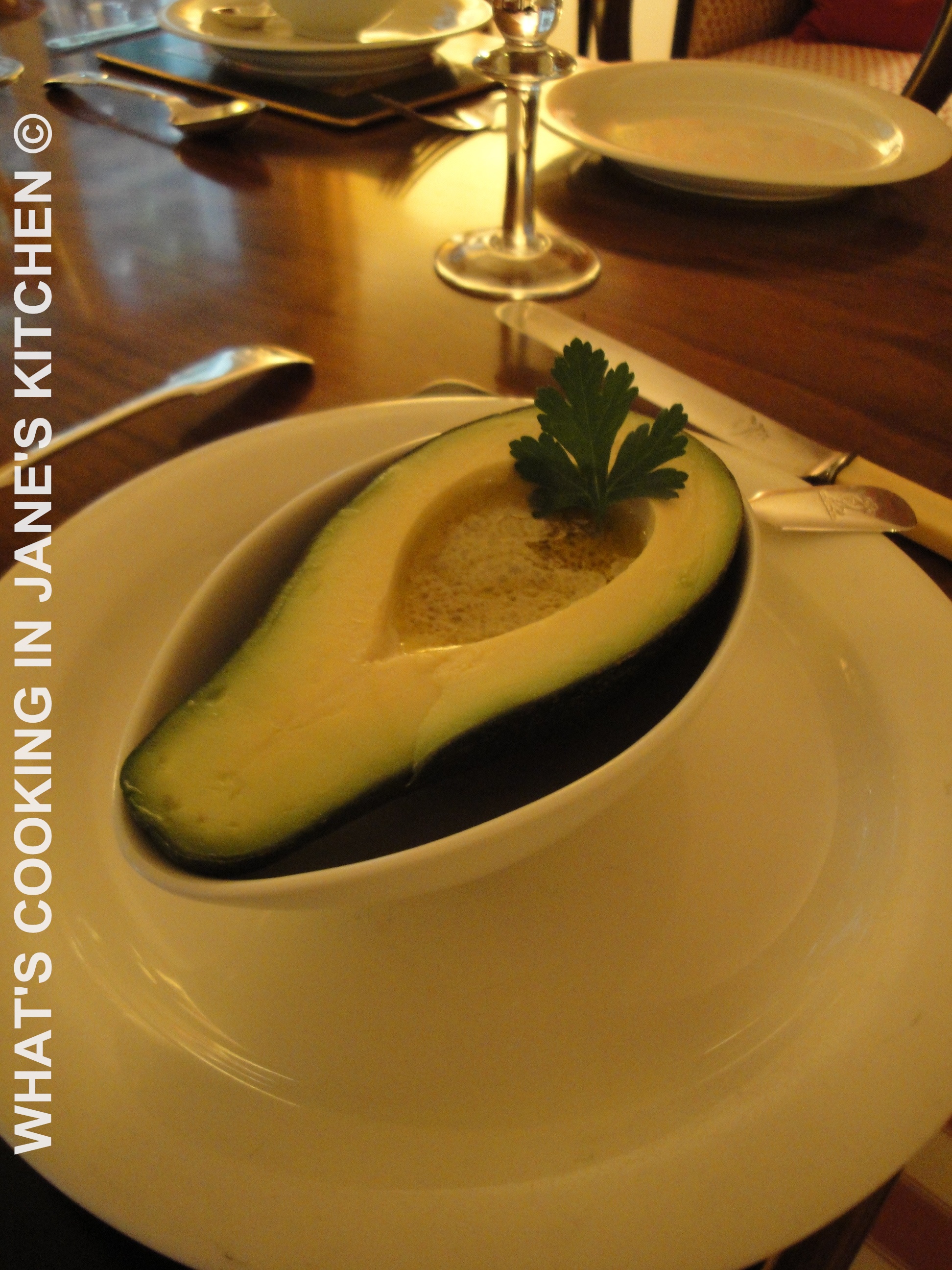
Serve as a starter. Delicious!
Avocados can also be filled with shrimps and mayonnaise, but I think little beats a good vinaigrette dressing.
The Avocado is a rich fruit and the vinaigrette reduces the richness.
Dolmades Avgolemono ©

Ingredients
200 g Vine Leaves, fresh or preserved
700 g Good mince meat ( no fat )
3 tbs chopped mint
2 tbs chopped fennel leaves ( anitho )
4 spring onions, finely chopped
100 g ‘ Glacé ‘ rice, pearly medium graine.
1 tsp or more salt and pepper
50g butter
1.5 lemon juice
2 tbs olive oil for mince
2 tbs olive oil for stock
300 ml chicken stock or water
Avgolemono Sauce
2 egg yolks
2 tsp corn flour
2 tbs cream
salt and pepper
Lemon juice to taste
Method
1. Blanch the vine leaves in boiling salted water for 2 mins and drain in colander, having refreshed under cold water.
2. Place mince meat in bowl together with the other finely chopped ingredients, rice, salt and pepper, and a little olive oil and mix together.
3.Line a wide based saucepan with the tougher looking leaves.
4. Place 1 tsp of the mince meat mixture onto the vine leaf, rough side up, fold as in the picture and end off with a gentle squeeze.
5. Arrange in saucepan, until all the leaves are used up, sprinkle with salt and pepper, lemon juice, olive oil and pieces of butter.
6. Place a large plate on the top to cover almost completely and pour over the stock or water until the dolmades are just covered.
(You want plenty of liquid for the sauce. )
7. Simmer ‘gently’ for one hour until the leaves are tender.
8. Once cooked and leaving the plate on top to hold the dolmades in position with the aid of oven gloves, pour off the liquid into a stainless steal saucepan, ready to make the avgolemono sauce. ( don’t use non-stick pan, it could colour sauce. )
Avgolemono Sauce
1. Mix together the corn flour and lemon juice, slaking it with a fork.
2. Add the above liquid slowly, to the beaten egg yokes.
3. Add one tbs at a time the liquid from the dolmades, 4 tbs. in all.
4. Return this to the saucepan and heat very gently, until thickened. DO NOT BOIL. Add cream. The sauce should coat the back of a spoon, dilute a little with stock so that it pours easily.
5. Just before serving, pour sauce over dolmades, which you have arranged on a warmed serving dish .
N.B. If you keep dolmades warm in oven, cover with tin foil, or leaves will blacken and dry out. The secret to them not bursting open is a) not to put more than a tsp of mixture in the leaf b) not to boil them to rappidly, simmer and c) a heavy plate on top while cooking.
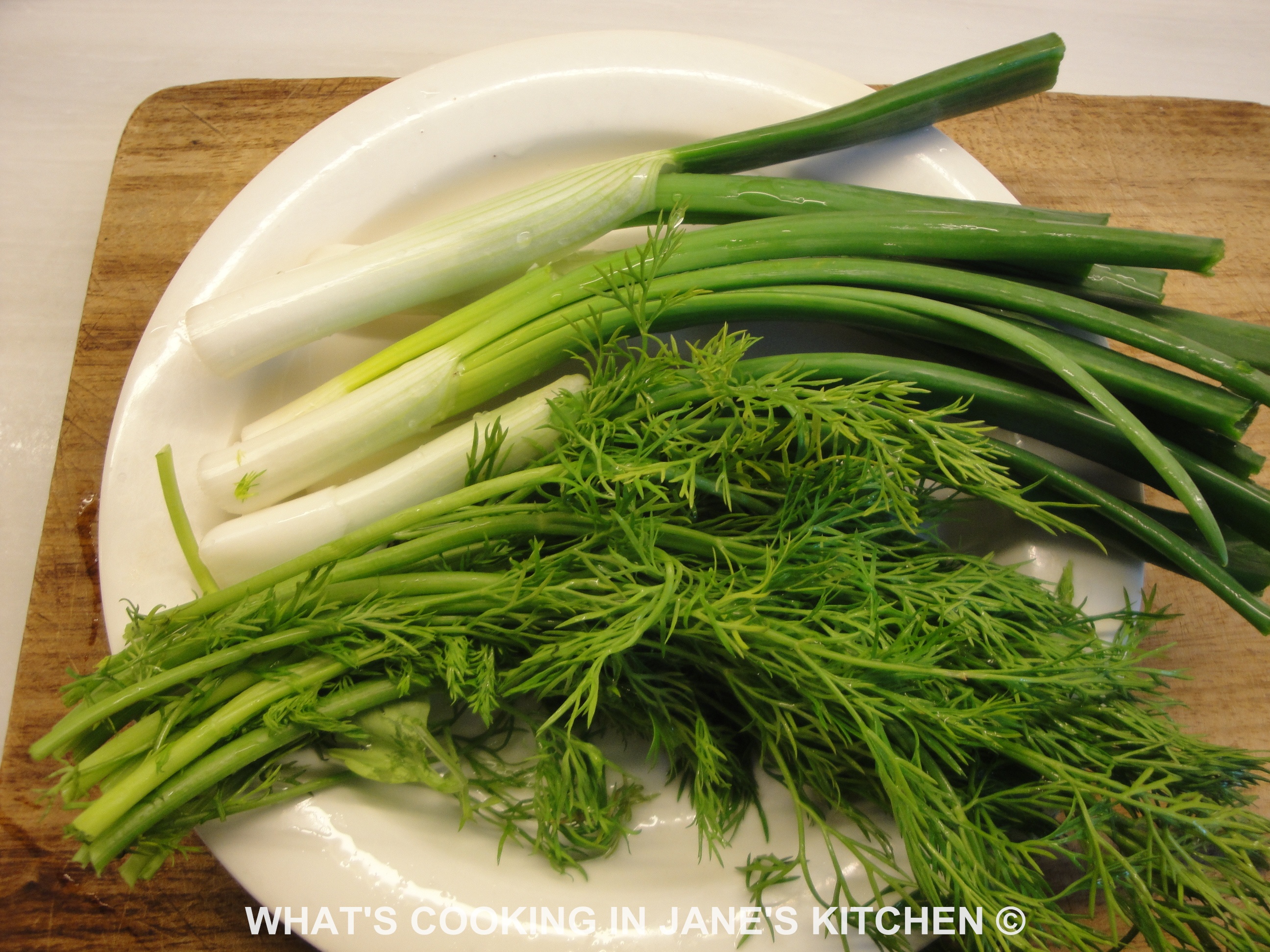
Wash thoroughly spring onions and fennel. This is best done by leaving any vegetable or herb in salted
water for 3 minutes and then rinsing with several waters. The salt kills any bugs!

Choose nice fresh mint leaves.
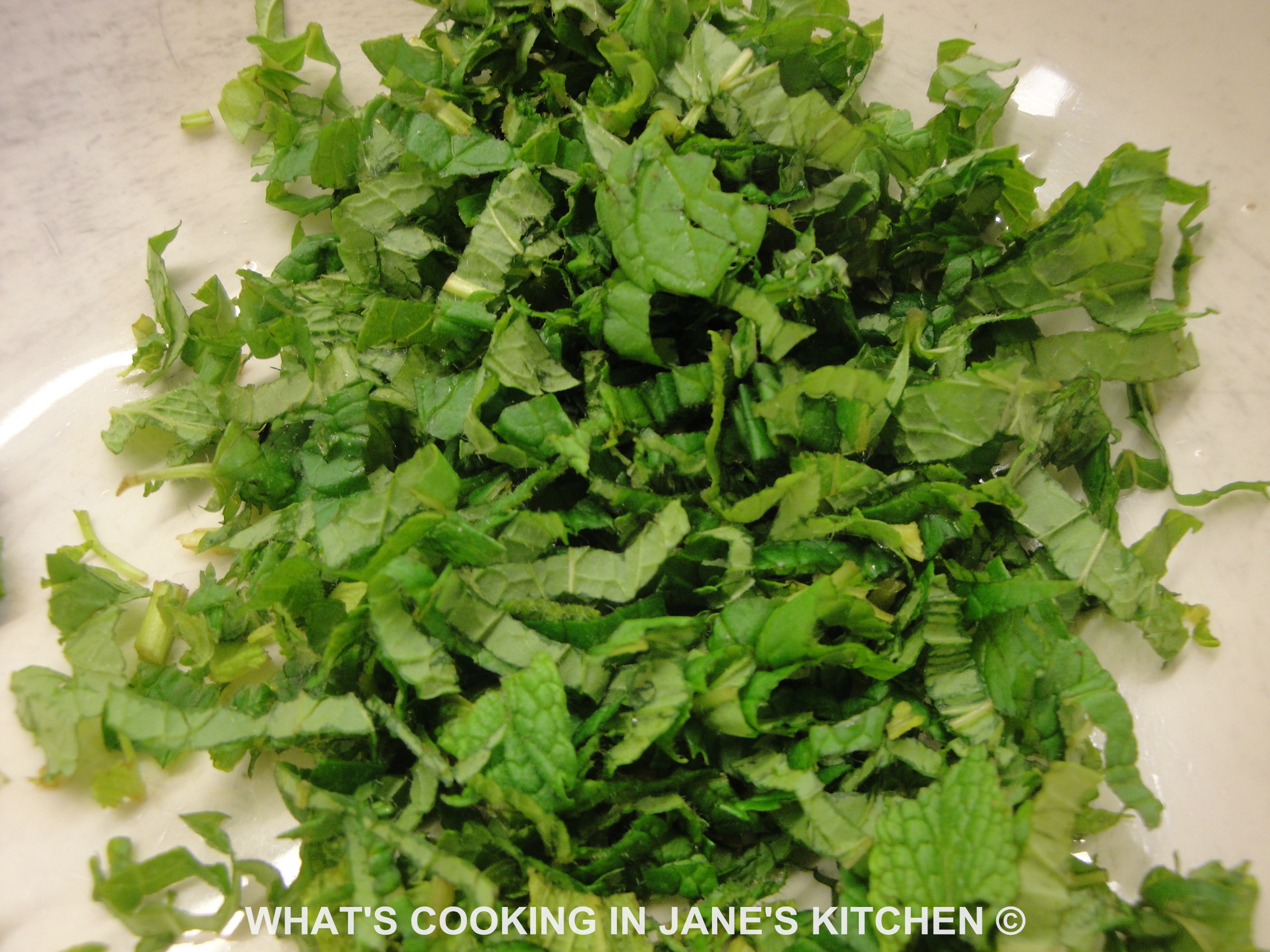
Chop mint.

Mix all your ingredients together.

When you don’t have fresh fine leaves off the vine or from the local market, this particular make, which are
preserved are excellent. It is important to choose the thinner leaves, if they are big with a large stalk, they
will be tough. Use the tough ones for lining the saucepan.

Blanch the leaves in boiling water for tow minutes. No more or they will disintegrate. Drain in colander
and refresh with cold water.
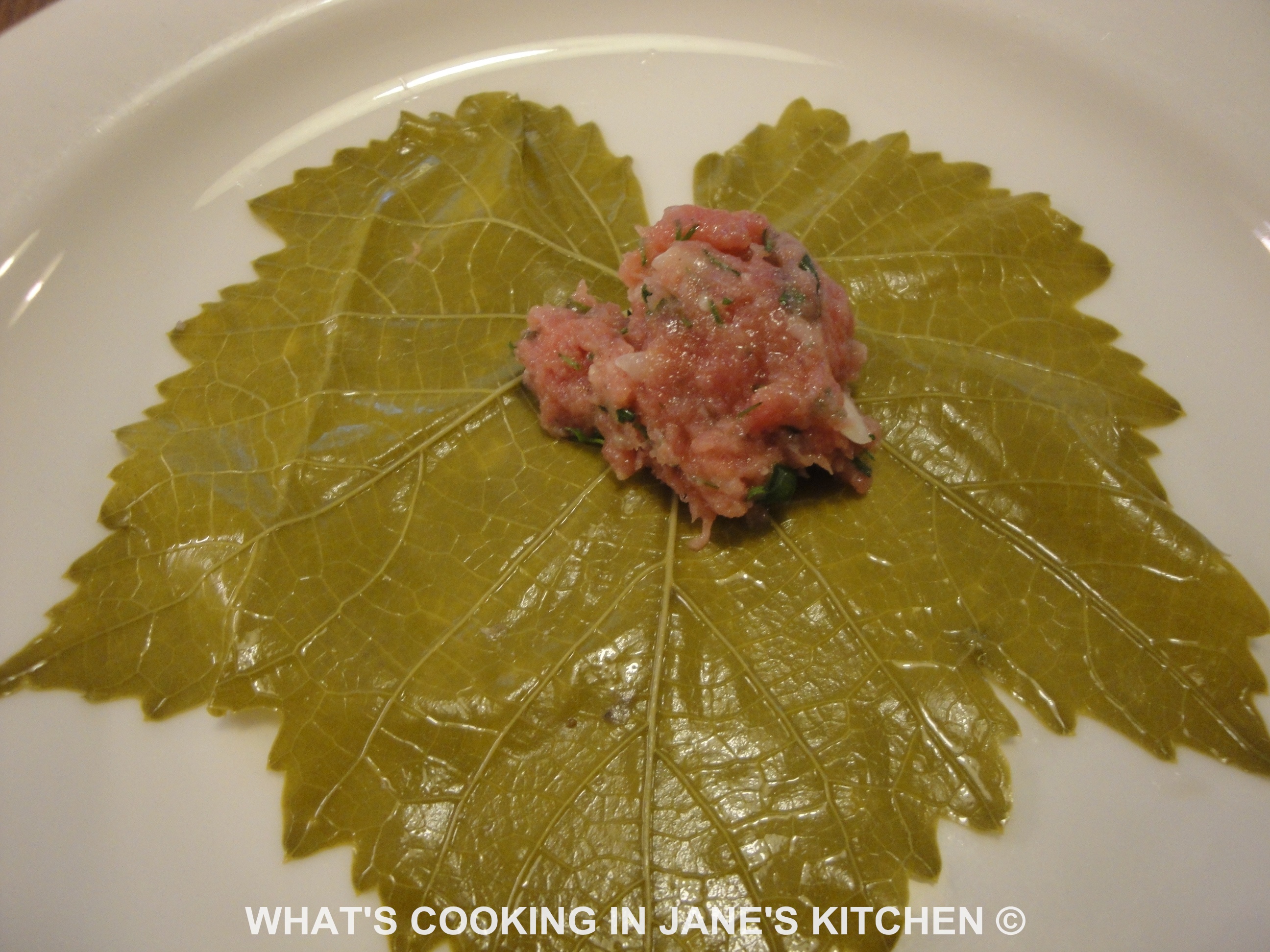
With the underside of your leaf upwards, place on plate and add a small tea spoon of filling.
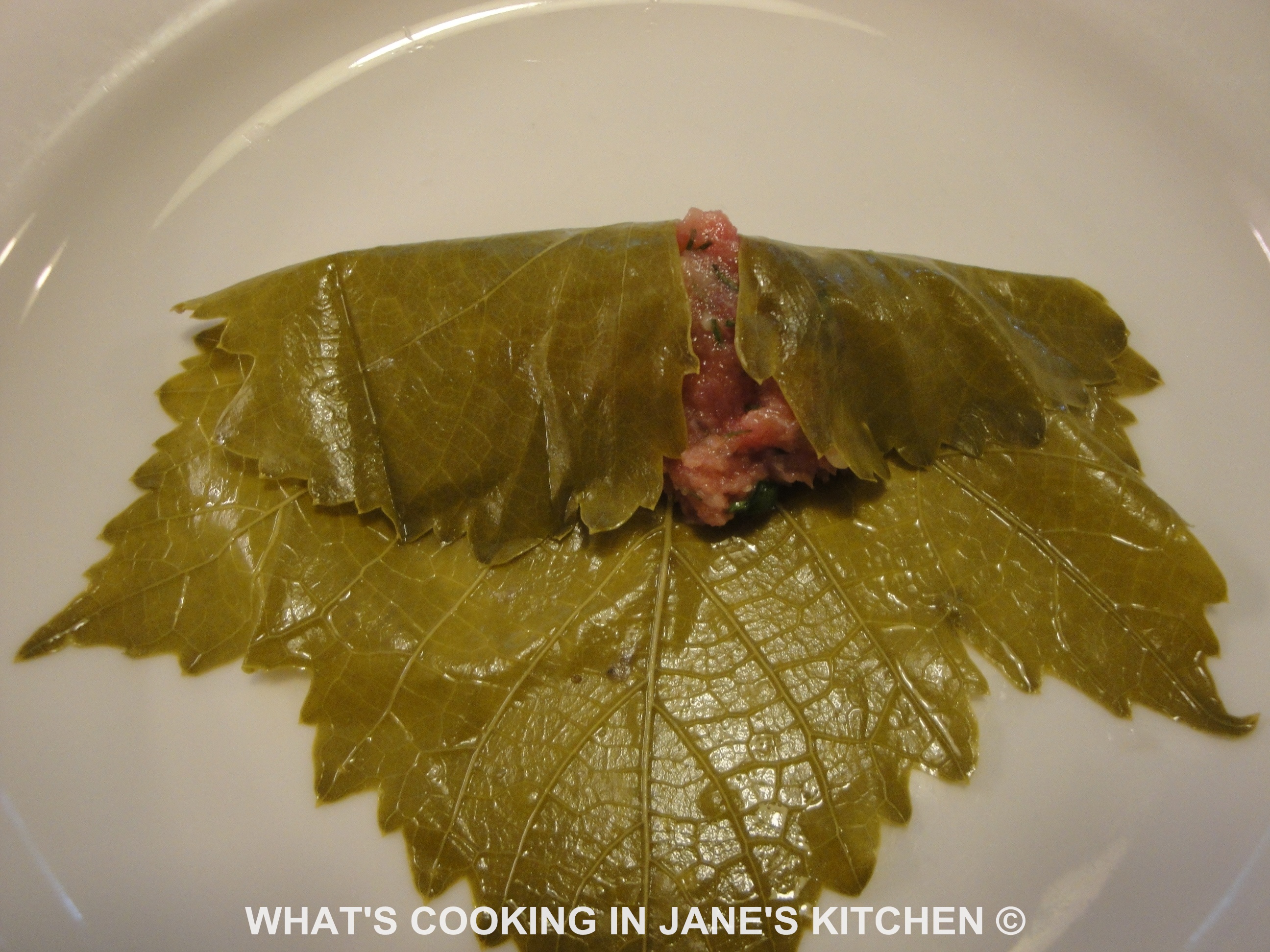
Begin folding as in the photograph.

Now fold in one side, then the other and lastly fold over last part of leaf.

Fold over again, any part that remains and squeeze lightly in the palm of your hand.

The final result should be like this. Keeping them small is important.
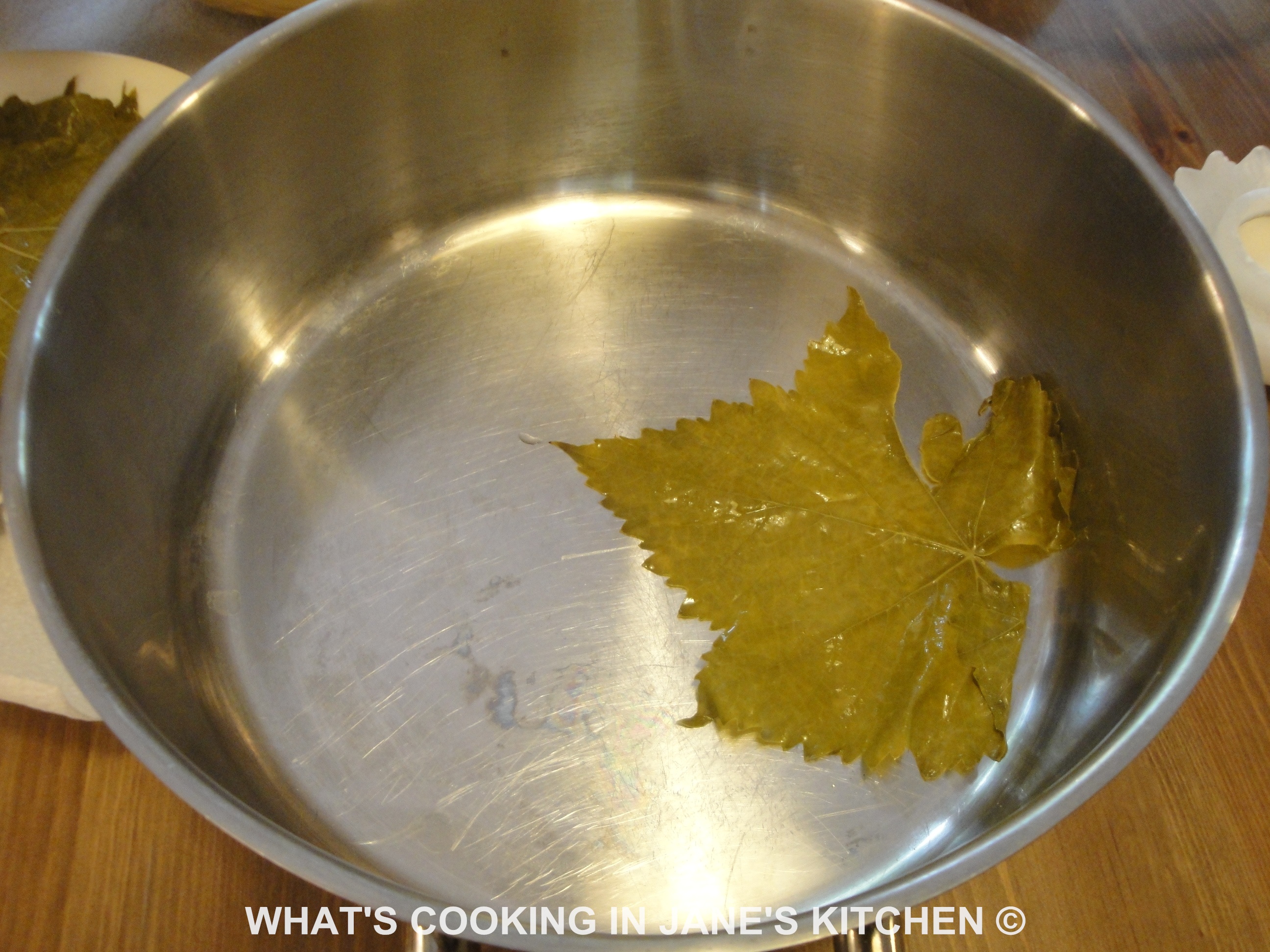
Line base of your saucepan with the coarser leaves to prevent dolmathes burning.
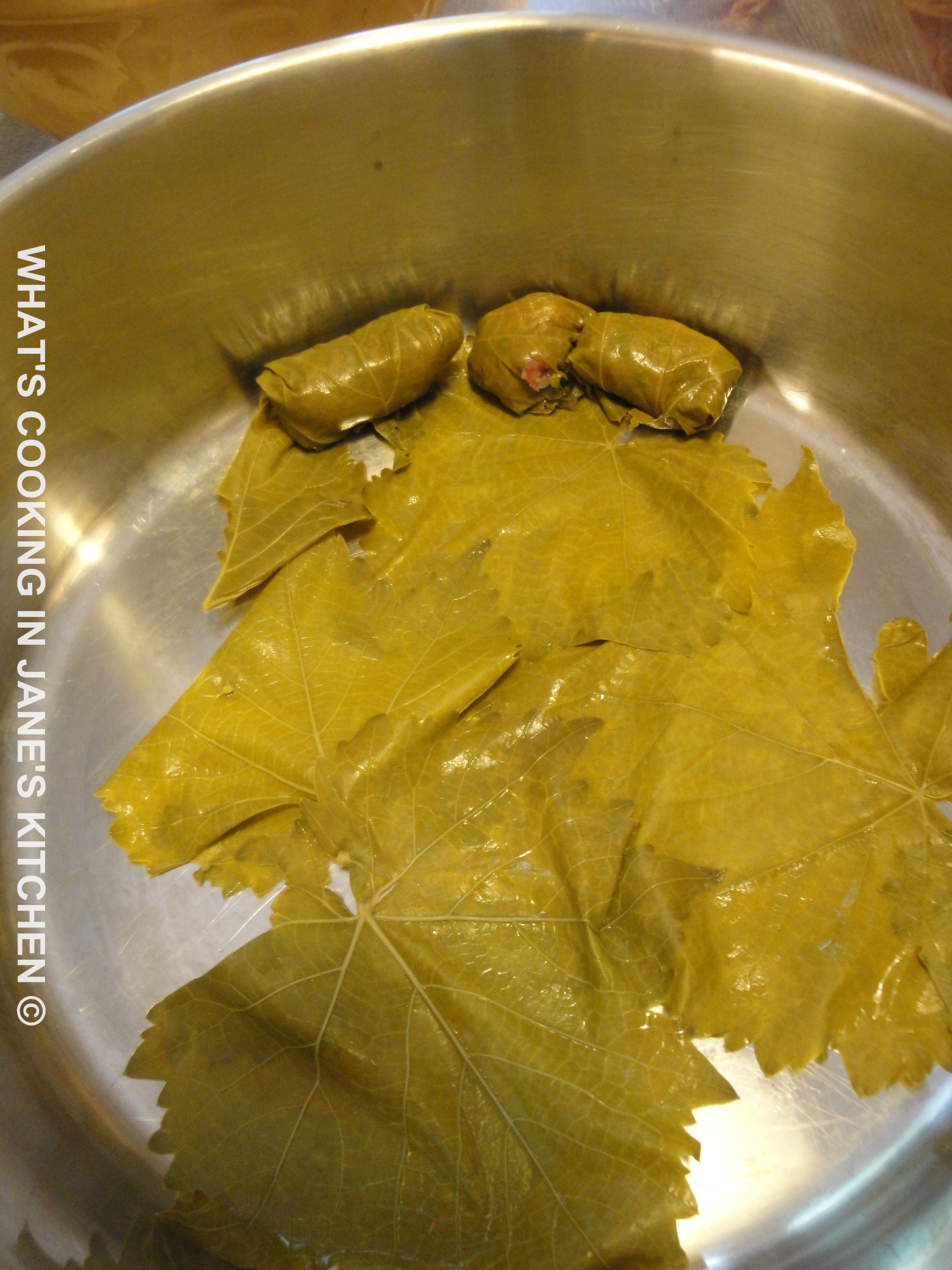
Begin to arrange them tightly in your saucepan, side by side……some don’t always come out text book
perfect!
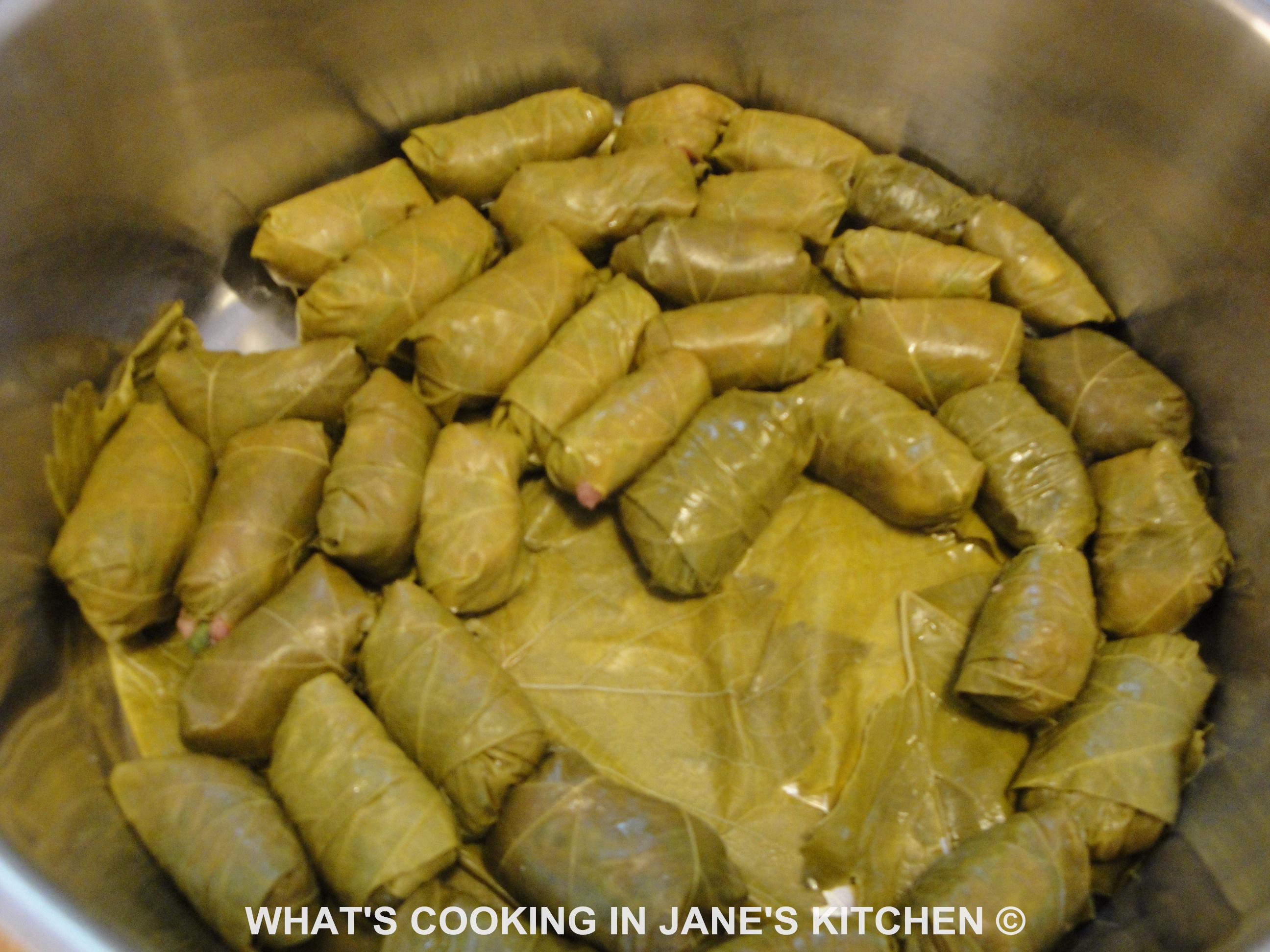
Keep adding….
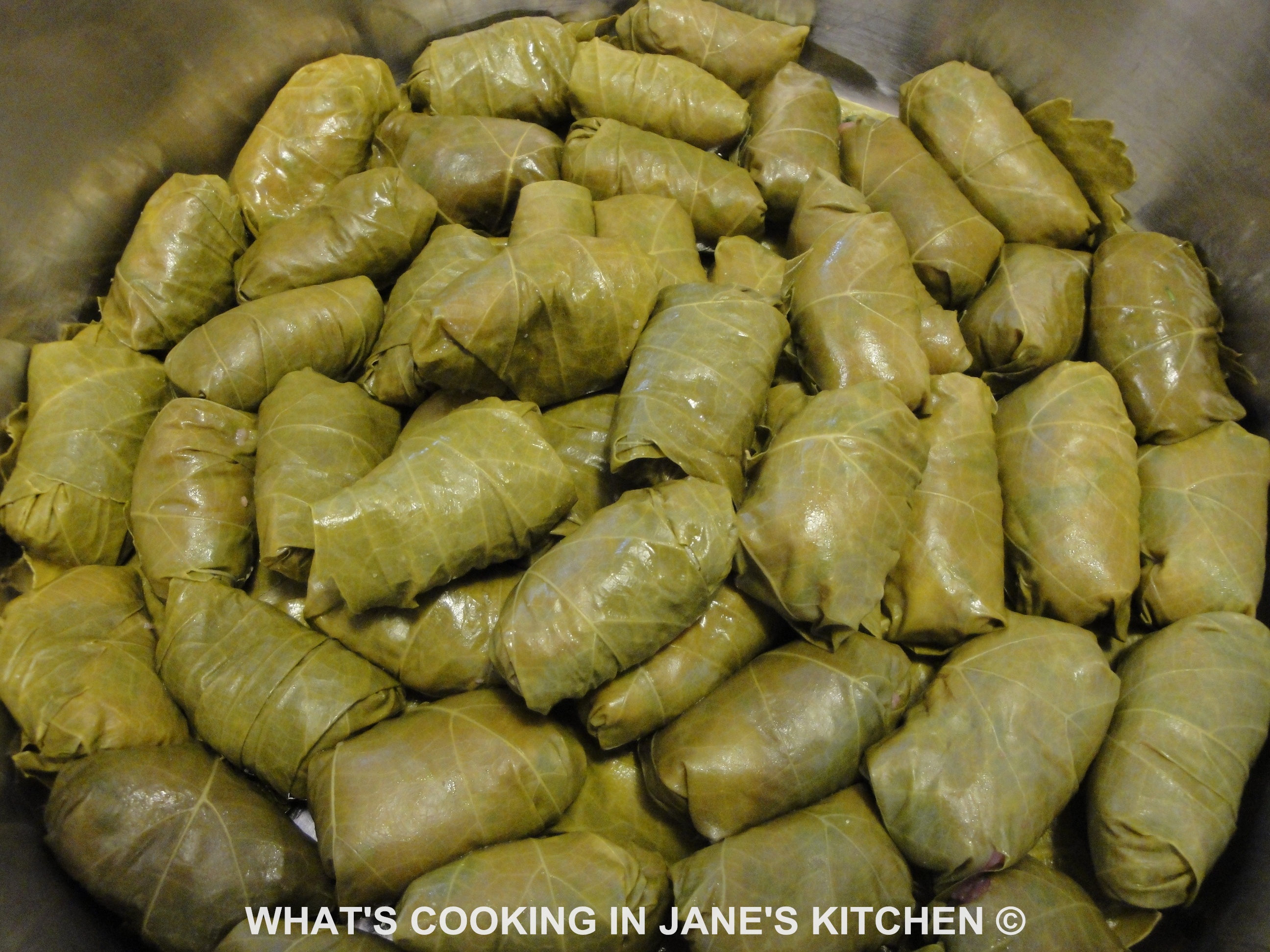
When bottom is filled, start a new layer.
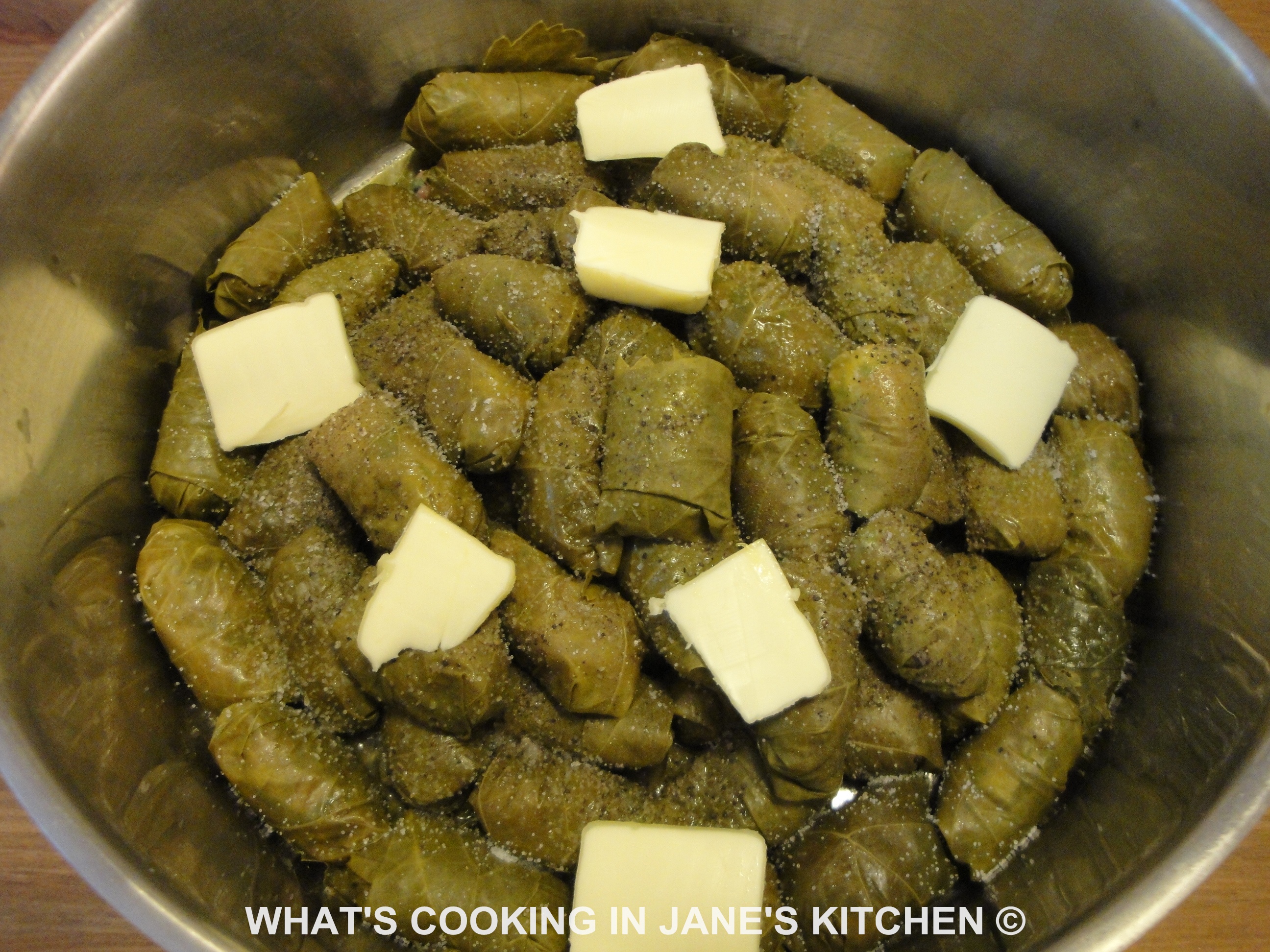
Finally cover with pieces of butter and a good grind of salt and pepper.
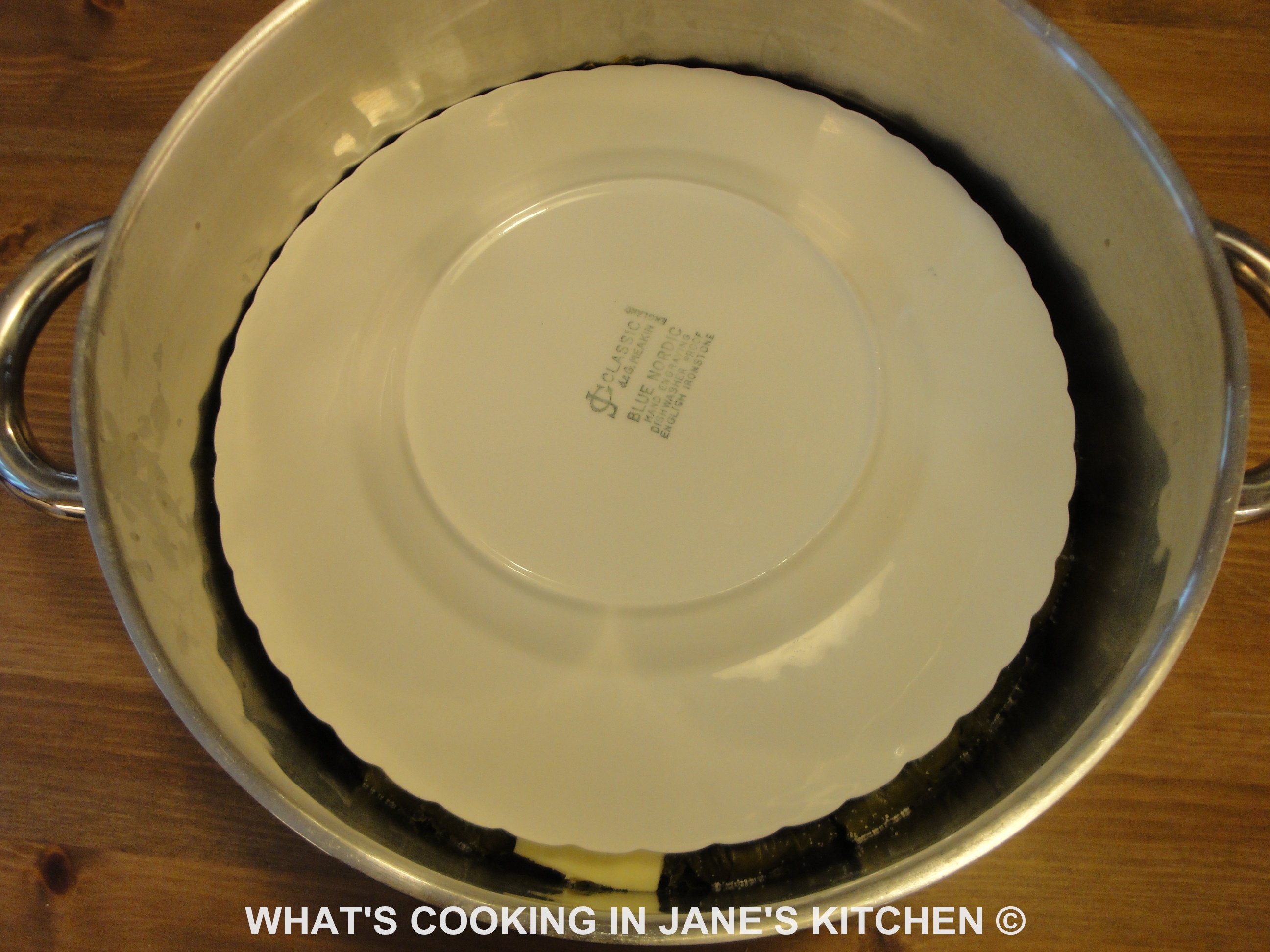
Place suitably sized plate on top to keep domades together.

Pour over boiling water, or chicken stock if available so that the water is just visible at the side of the plate
and a little olive oil.
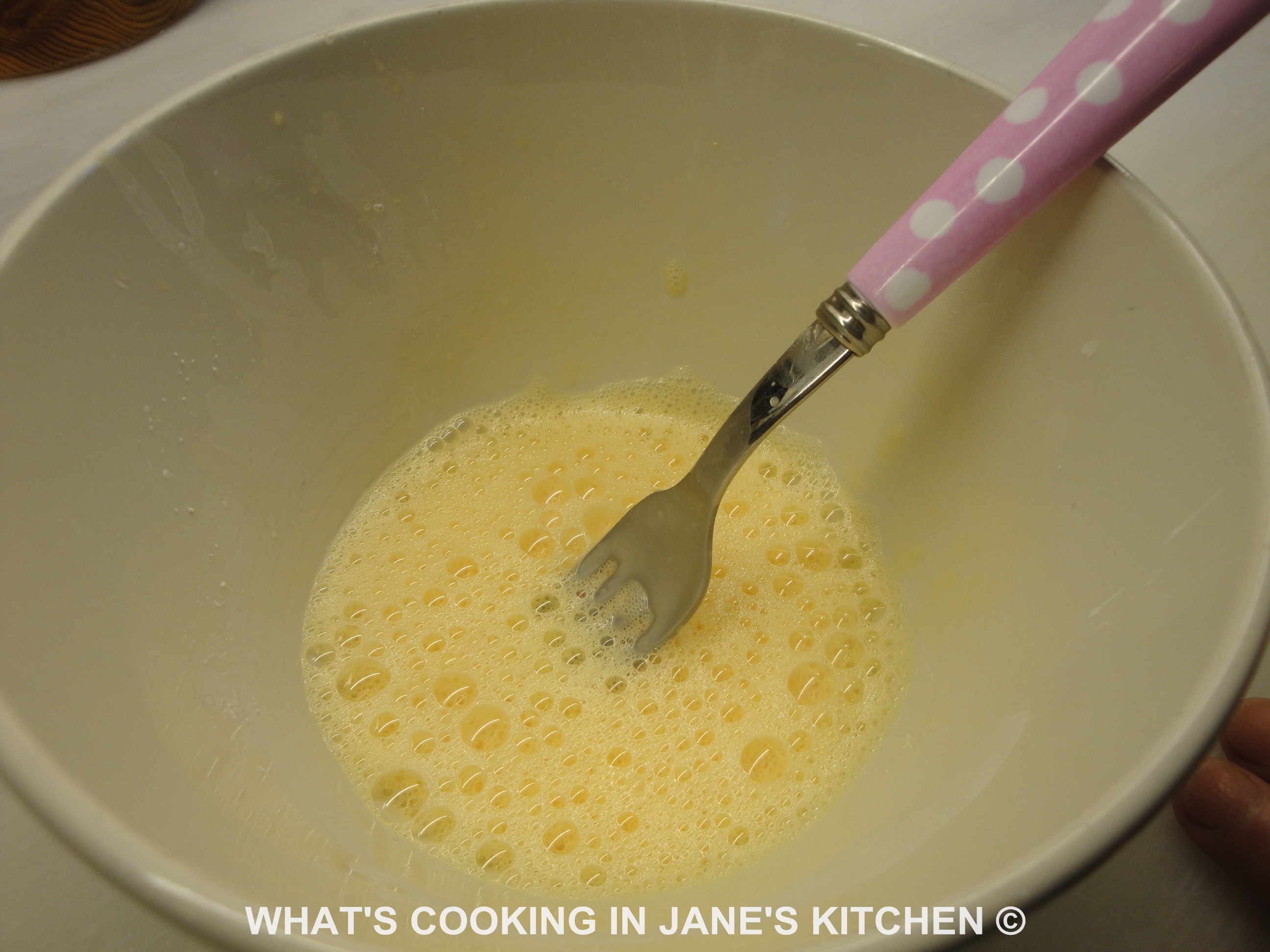
Beat eggs together lightly and add cornflour “slaked” with lemon juice.
“To Slake” is a cooking term meaning to add a liquid to a powder and mix with a fork.
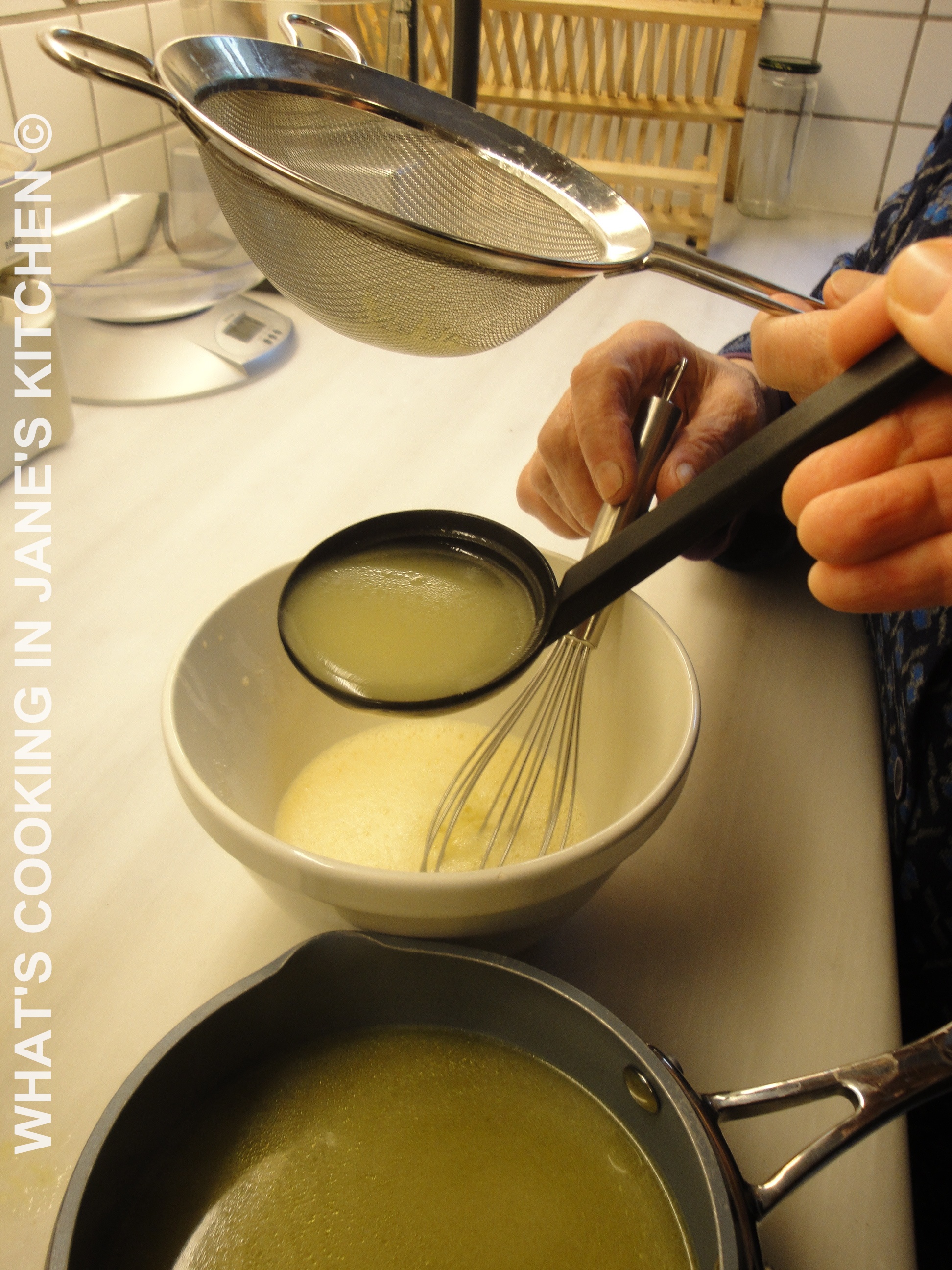
Once dolmades are cooked. Try one to test. They should melt in the mouth. Pour off liquid, keeping plate
on top and holding it down, to keep them together.
Add 2 ladles of hot liquid to egg mixture and then return to rest of liquid in saucepan, in this order, so as not
to curdle the eggs.
Place over a medium heat and stirring continuously bring up to the boil, but DO NOT
allow to boil. This is important, or eggs will curdle. You need to stay with your saucepan and be patient!
Your sauce will thicken into a lovely lemony sauce. Taste, add salt or lemon if required, or a little warm
water if too thick. The final result should be a “Coating” Sauce.
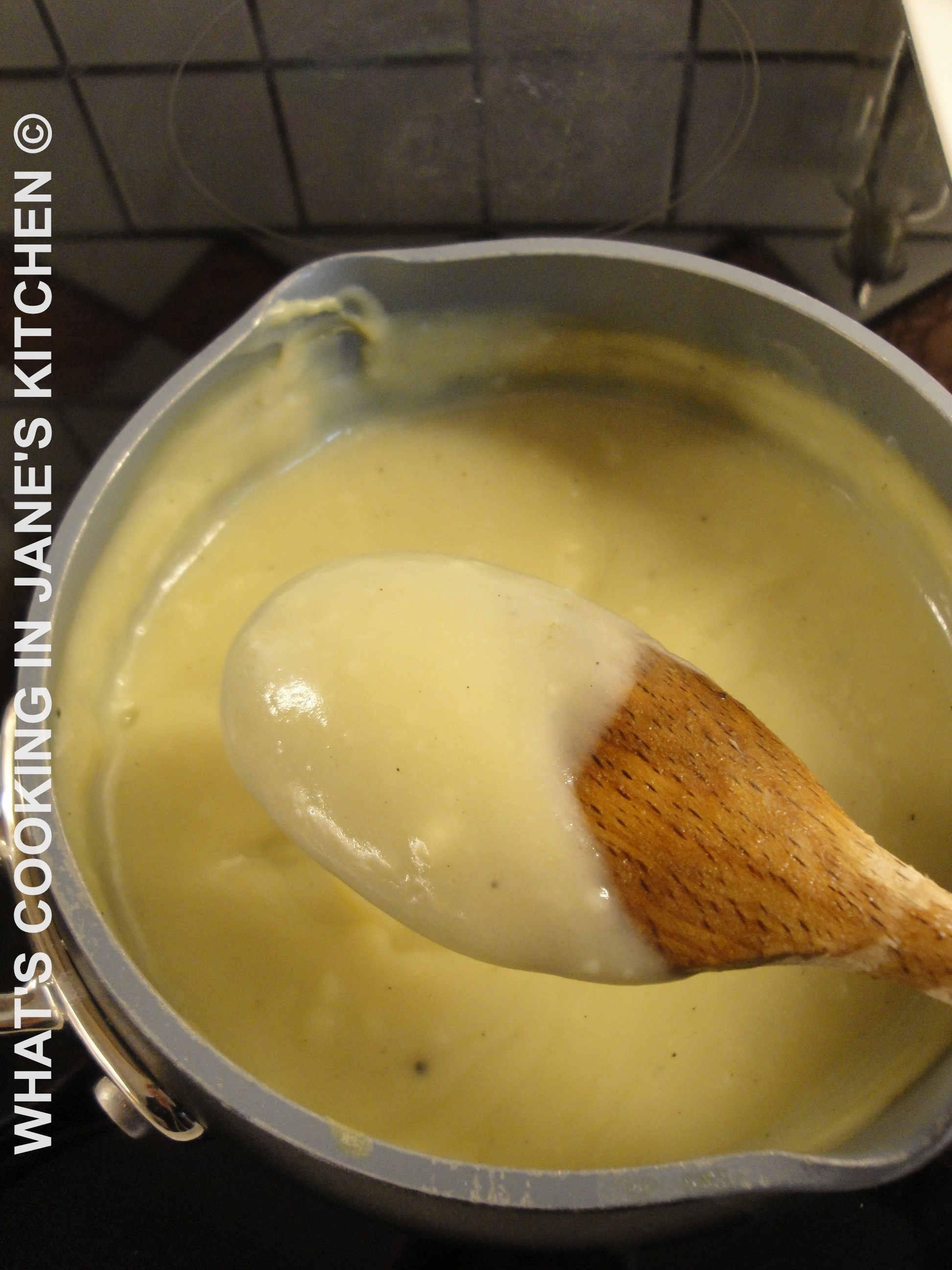
A “Coating” sauce, should cover the back of the spoon.

Arrange your dolmades on a warm serving dish.
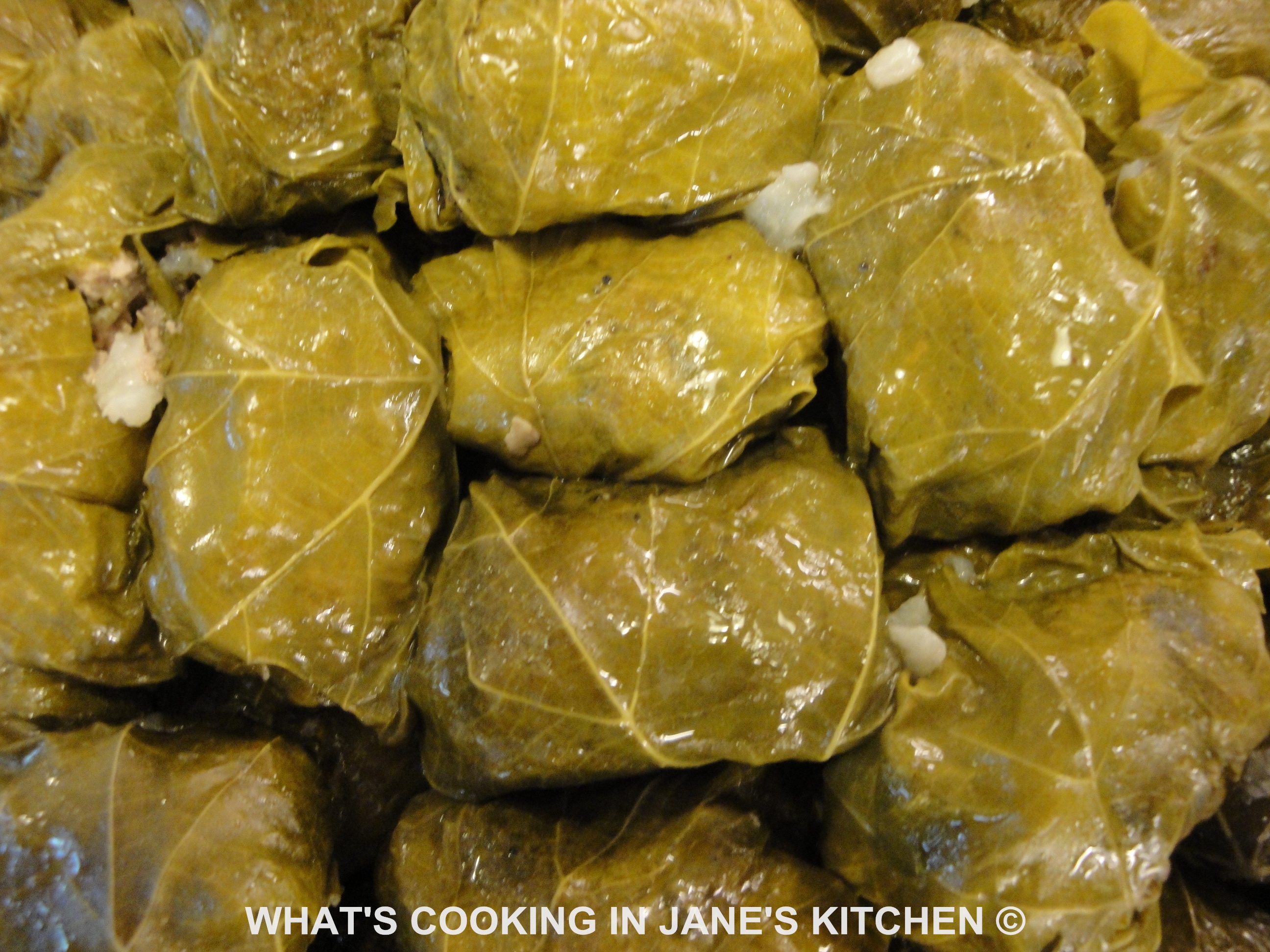
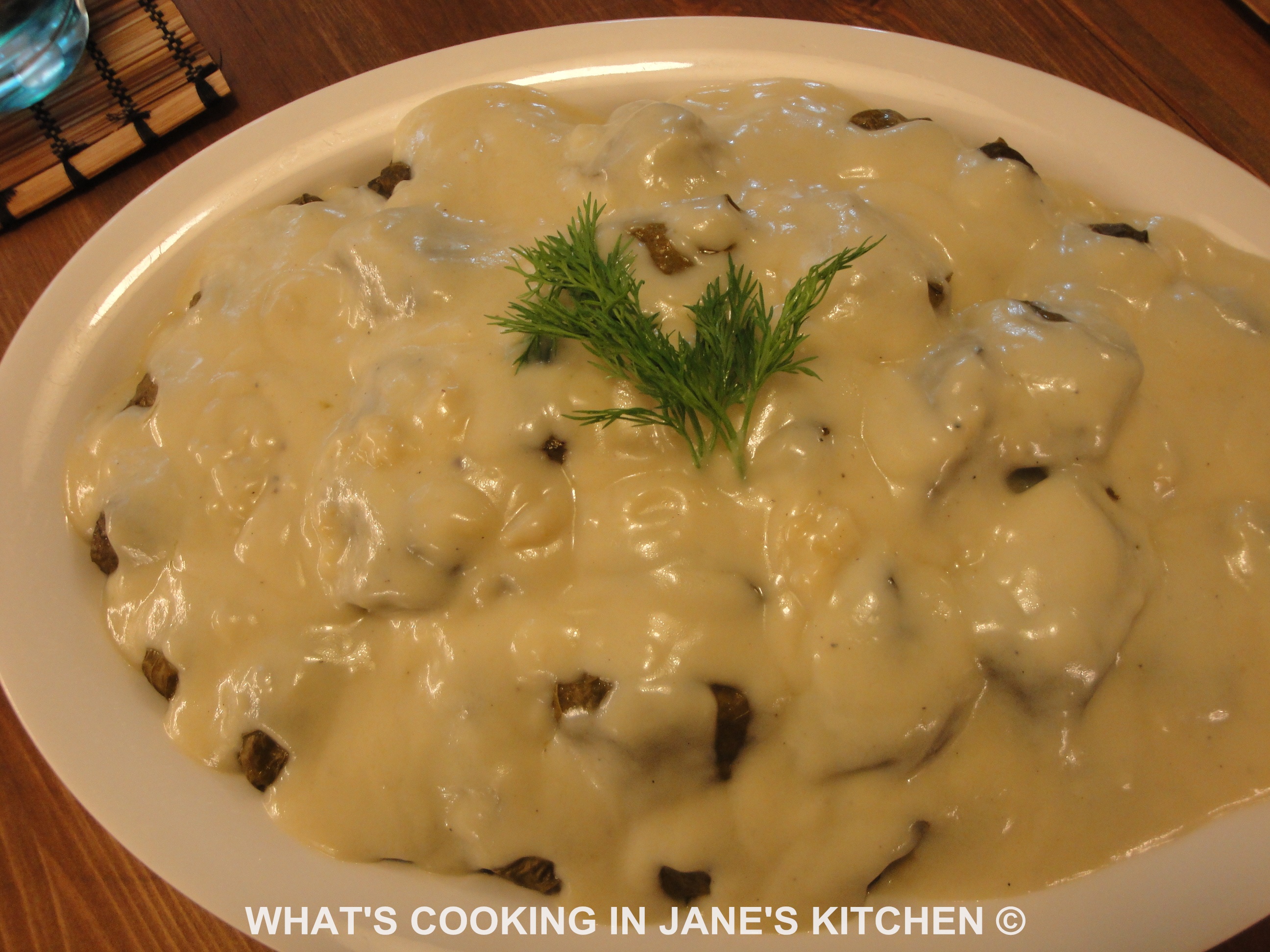
Final Result! Add sauce at last minute, just before serving or it will develope a skin.
 What's Cooking In Jane's Kitchen