Octopus Salad. ” Htapodi Xidato.” ©
Summer and “Kathari Deftera,” which marks the beginning of Lent in Greece, would not be complete with out catching or buying an Octopus!
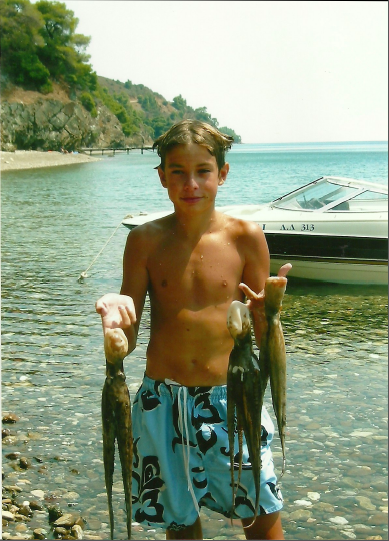
This is not for the faint hearted! My boys were taught how to do this at a young age, by the local fisherman
and by the time I got it, it was ready for the saucepan!
This recipe I dedicate to my two sons who taught me how to clean and cook Octopus!!!! And to my daughter who now is an expert at cooking it!
Have an enjoyable Clean Monday !
Καλή Σαρακοστή!


Easy
4-6 Persons
Ingredients
Preferably home caught Octopus, otherwise bought! Around 300g
3 bay leaves
1 onion
2-4 tbs Wine vinegar
4 tbs Greek Olive Oil
Sprinkling of Oregano
Freshly ground black pepper
Method
1.If you are lucky enough to catch your own Octopus, disentangle it from your spear and turn head sack inside out by inserting your fingers through the opening. Remove the contents along with the ink- sack and cut away the eyes ! The fisherman who taught us how to do this, used to remove the eyes with his teeth!!!! …..A knife will do just fine! Turn Octopus over and remove teeth from mouth, wash Octopus well in the sea and choosing a nice large flat stone start throwing it on the stone to tenderise it. This is very important or it will not be edible. You continue at least 20 throws, until the tentacles curl up and split easily at the joins.
2. If you are buying fresh, the above should already have been done, but always double check for tenderness. Otherwise, frozen is another very possible alternative. I always choose the smaller ones, preferably pink! I would rather buy two of these, than one big black one, because they are more tender……..
3. Wash well, or defrost at room temperature, wash and place in saucepan, along with onion and bay leaves. Add enough water to just cover the bottom of your saucepan (as the octopus cooks, it will also release water). Very important: Throughout cooking, keep an eagle eye on it, as it easily runs dry and the smell of burnt Octopus doesn’t go away for days!!
4. Initially the Octopus will be rigid, but, as it cooks and tenderises with the cooking it relaxes. See photograph.
5. For an Octopus weighing about 300 g it usually needs cooking for about 3/4 of an hour to an hour. Test with a sharp pointed knife, it is ready when it is soft.
6. Turn up heat and reduce liquid until there is about a tablespoon left. Then add the vinegar and cook rapidly for about two minutes. Turn the heat off and drizzle with olive oil. Sprinkle with Oregano.
7. Cut Octopus up into mouth sized pieces. If it is a large Octopus, remove suckers and skin. This is a matter of choice, but not really necessary when the Octopus is small.
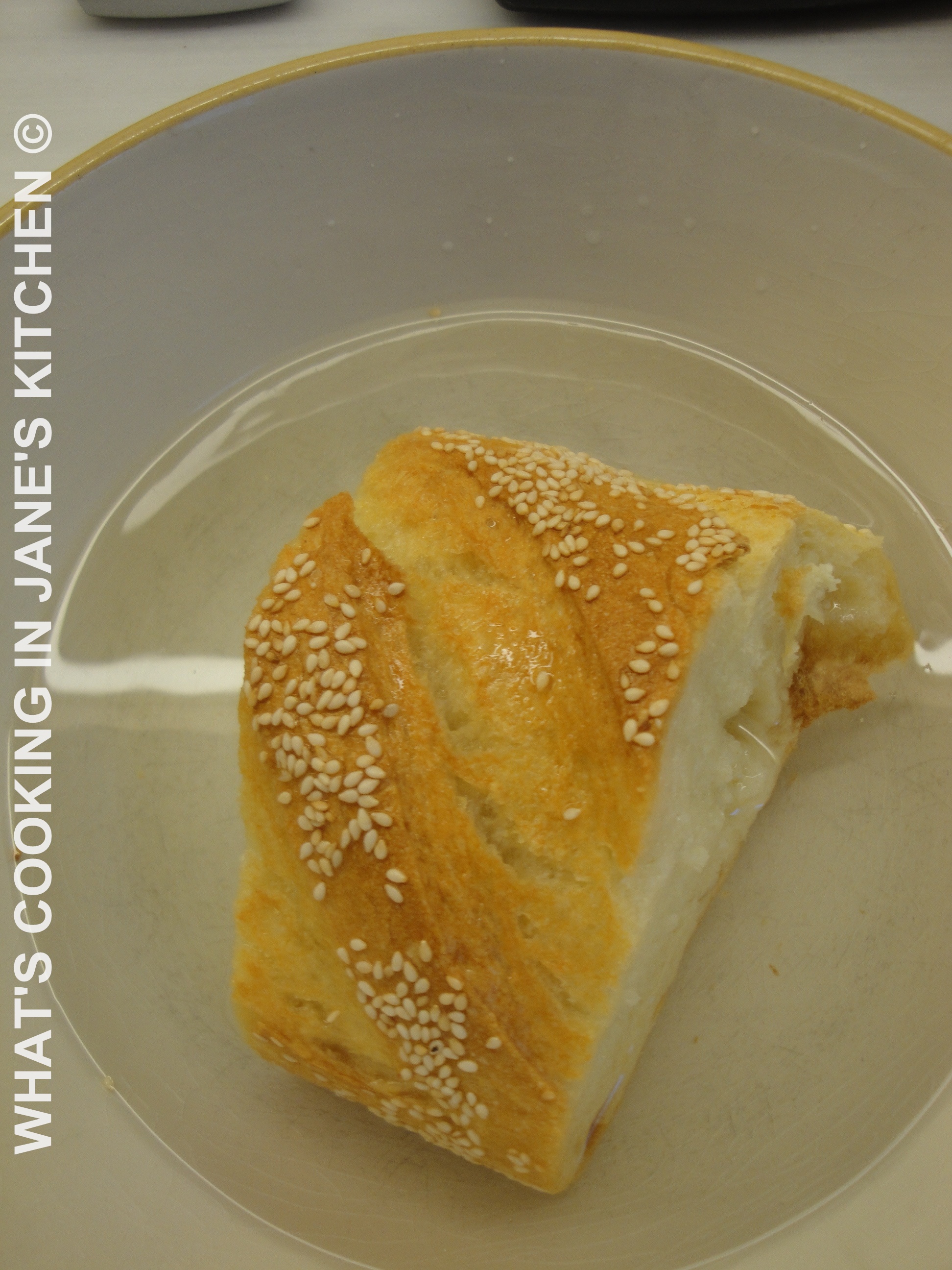
8. Serve together with other Meze, such as taramosalata, dolmades, olives and soft crusty bread and of course OUZO! “Plumari” is the best!

Having cleaned and washed your Octopus as described in ‘Method’, place in saucepan with enough liquid
to cover base, together with an onion and three bay leaves.
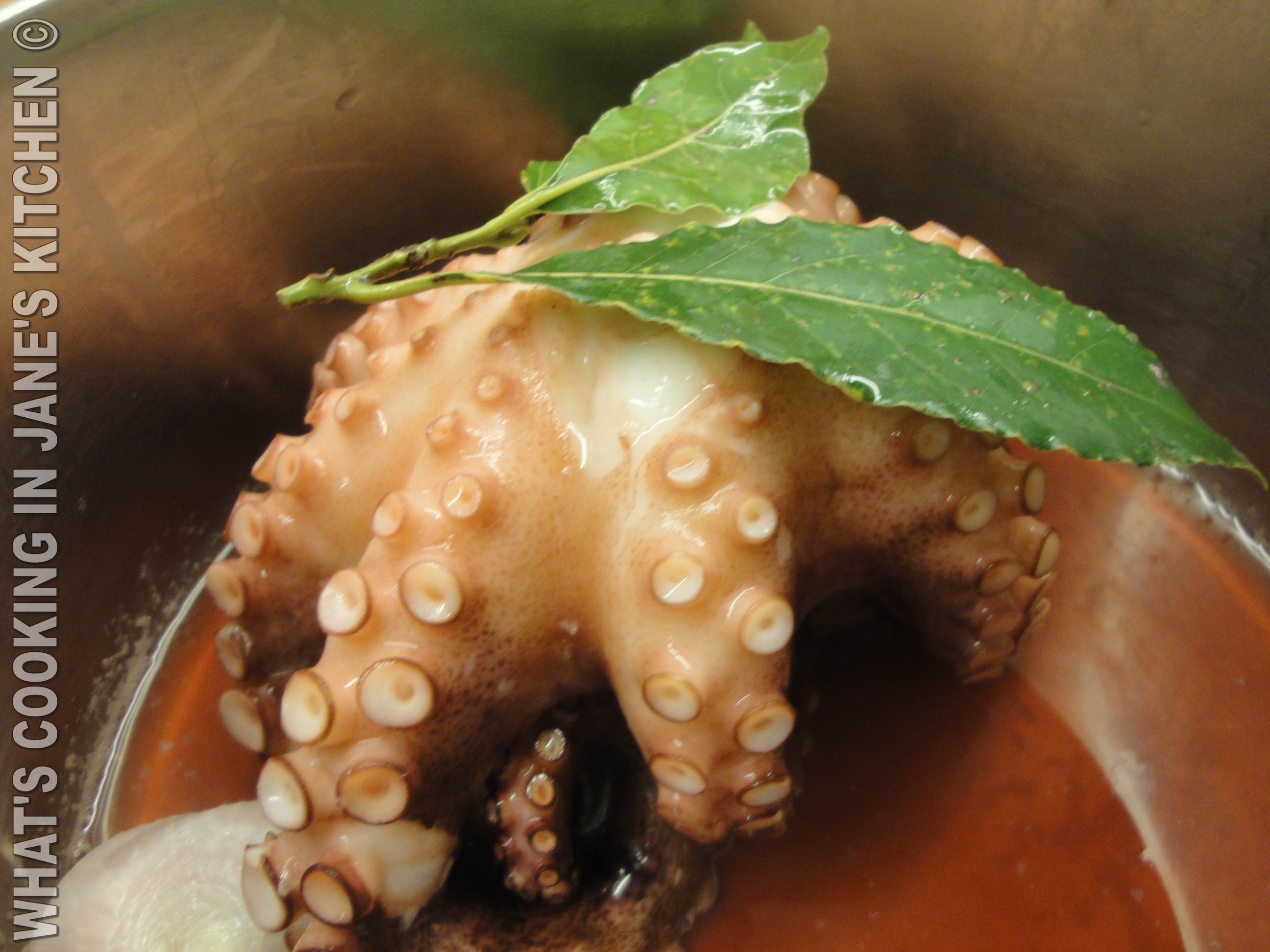
Simmer with lid on for about 3/4 hour, checking frequently water level! If it starts to dry out add a little more.
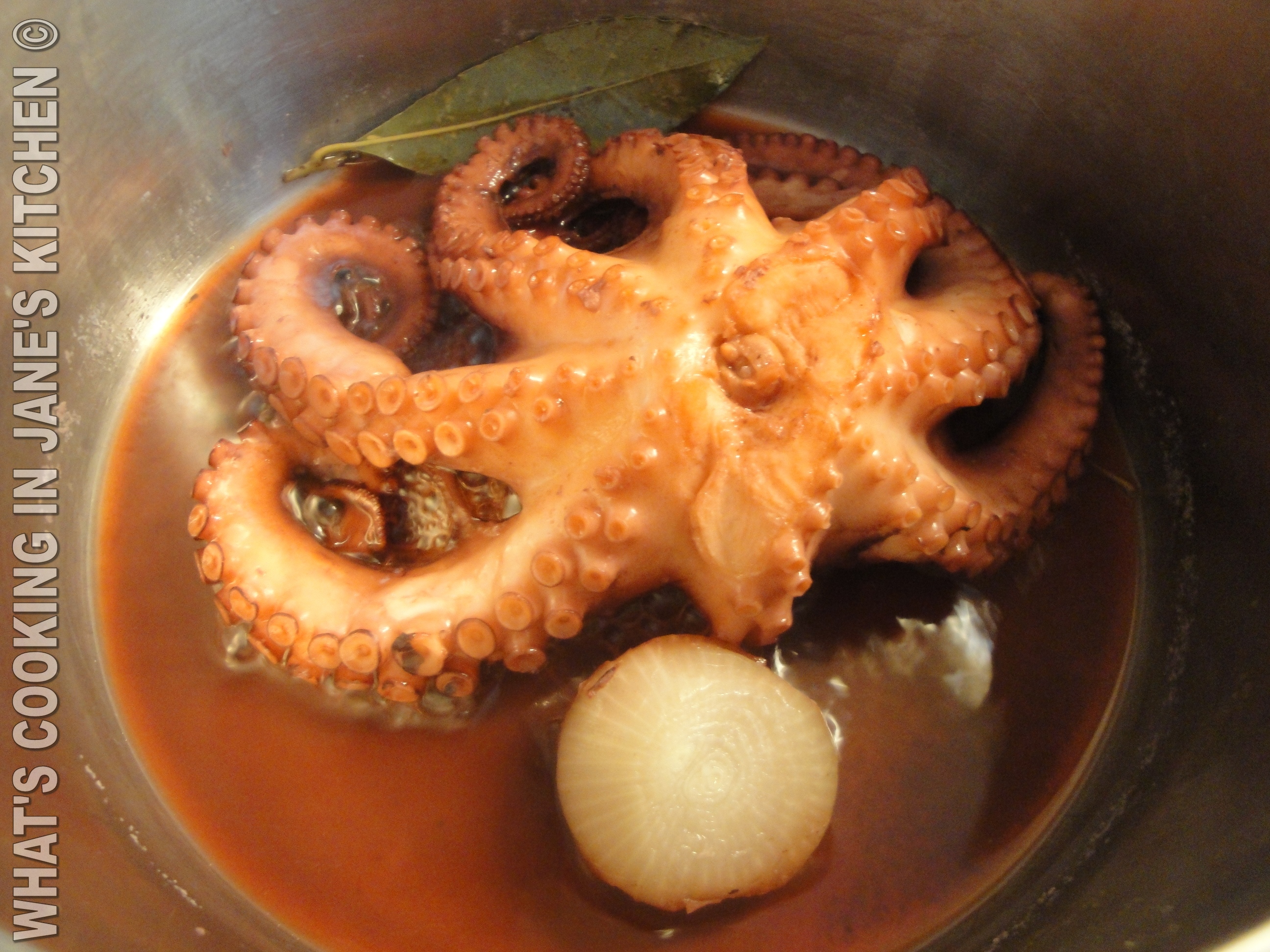
As the cooking is completed, the Octopus tenderizes and relaxes in the saucepan.
Here the mouth shows clearly, from where you cut away the teeth when cleaning.
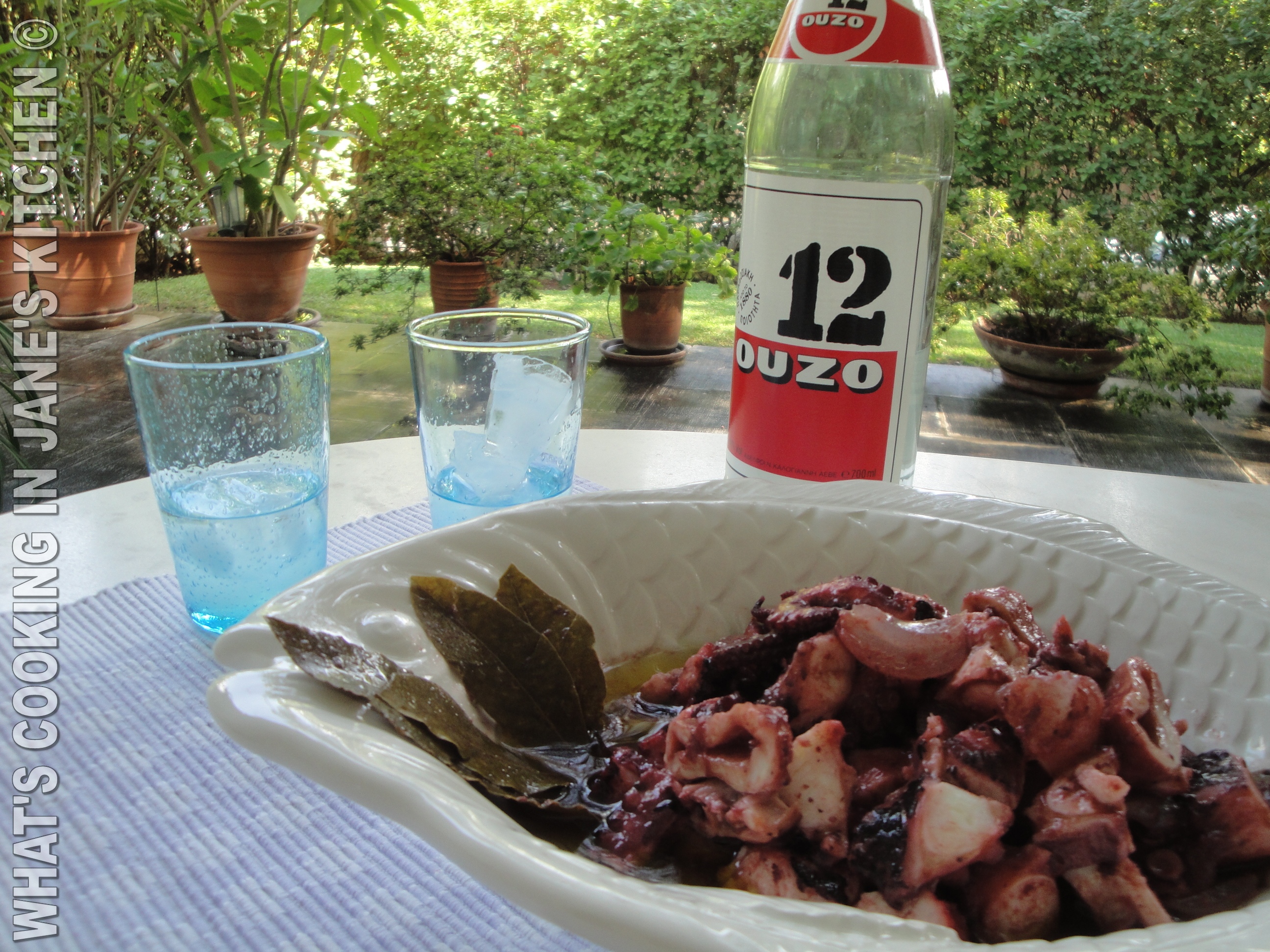
Cut up Octopus and serve in bowl with sauce and oregano sprinkled on the top.

Delicious!

Stin igia sas! Chin Chin!
Jane’s Taramosalata ©

6 Persons
Ingredients
200g ‘White’ Tarama/ Cod’s Roe, (Not bright pink, nor smoked)
1 medium onion
1/2 kilo loaf white “Fresh” bread. ( Not stale )
1-2 lemon juice
250 ml sun flower oil
50 ml olive oil
Sprig of parsley, or Kalamata Olives to decorate
Method
1. In a blender, place onion quartered and tarama/Cod’s roe and start blender running.
2. Cut bread into thick slices and place in bowl of water just for a second or two, enough to wet bread, no more.
3. Remove crusts from bread, by hand, squeeze out most of the water and add to running blender bit by bit. Blend for at least three minutes.
4. Once well blended start pouring in oil little by little. As it thickens add lemon juice and then continue adding your oil. Taste, add more lemon juice if necessary, or a teaspoon or two of warm water, if already too lemony and if the consistency is too thick.
5. Turn out into suitable serving bowl, decorate using a fork and garnish with parsley and or Kalamata olives.
The consistency is VERY important. It should be light, very similar to Mayonnaise and stand up when pushed with a spoon, so add liquids carefully, if too sharp, add water, if not sharp enough, (and I mean it should have a strong taste,) add lemon juice, if you over do the liquid, add more bread soaked in water and beat another 3 minutes at least. Total beating time, at least ten minutes!
If you don’t have a blender, use a baloon whisk and finely grate your onion before adding. I would also grate the bread into crumbs, place in sieve and lightly sprinkle with water, pressing any excess out of the sieve. Then do a lot of beating until it becomes smooth!

Place good quality Cod’s roe in blender, together with quartered onion. Blend for two minutes.
Have lemon juice ready and measure out sun flower oil.
Cut ‘Fresh’ bread into thick chunks and dip in water for one or two seconds. Remove crusts with your fingers
and squeeze out the water well. If you leave in water too long, it just becomes a glutinous mass!

This is the bread now ready to be added to the blender. Add bit by bit and wait until it is well blended, before
adding next piece.

Add oil slowly, followed by lemon juice.
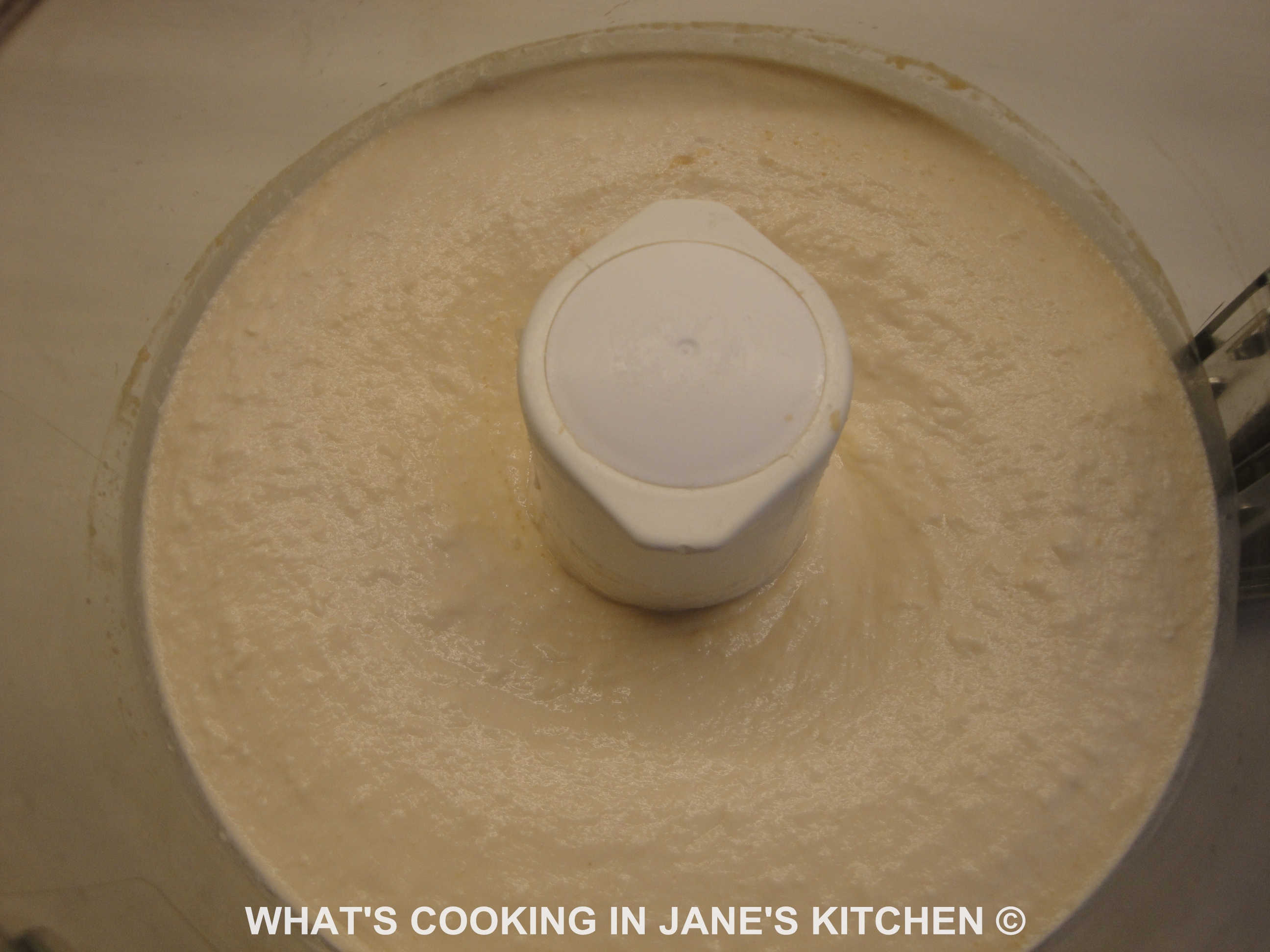
Taramosalata ready! The pale pink color is because the roe has no added coloring.

Place in serving bowl and using a fork decorate the top, drawing it to a point in the middle.decorate with
parsley or kalamata olives.
Final result! Delicious!
Artichokes Alla Polita ©
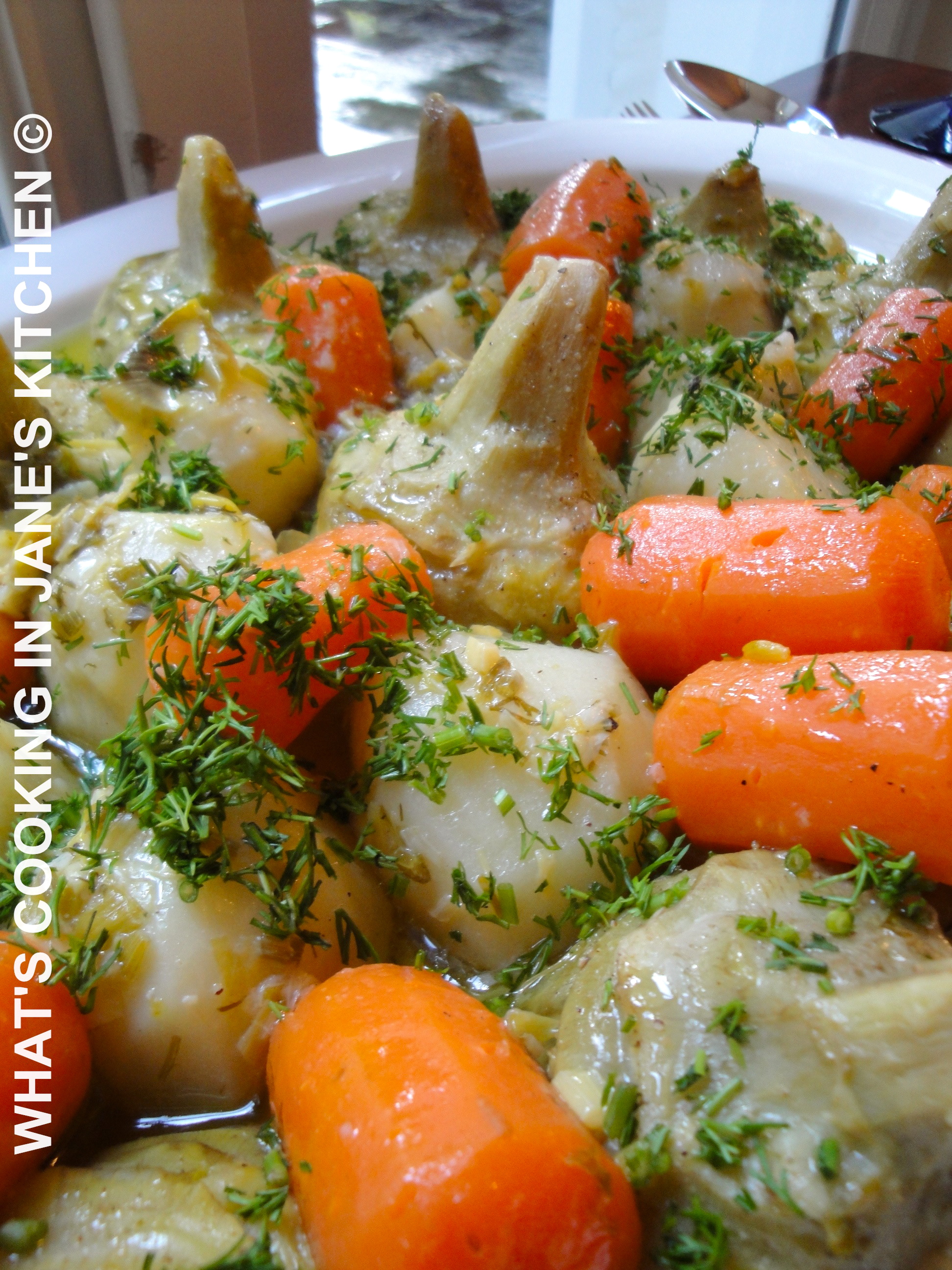
For those that love Globe Artichokes.
This recipe is for the “Diligent Cook! “
6 Persons
Ingredients
12 “Globe” Artichokes
12 Spring onions sliced
10 small potatoes turned
6 med sized carrots turned
1 bunch Fennel, stalks chopped separately
Juice of 3 lemons
2-3 tbs olive oil
Salt Pepper
Artichoke Soaking Water
1 large basin of warm water
4 tsp salt
Juice of 4 lemons
2 tbs Flour
Method
From your local Market choose fresh plump firm and closed “Globe” Artichokes. Feel them for firmness, insist on the closed leaved ones and test freshness by swaying the artichokes from the stalk! March in Greece is the best month to find good artichokes at the market, later on they become woody. You need to find the ‘Large’ kind, not the smaller Purple ones, used in “Artichokes alla Romana”
1. Prepare the “Artichoke Soaking Water”, by filling a basin with water and adding the above ingredients.
2. Next peel and ‘turn’ your carrots and potatoes into 2-3 cm oblongs or rounds. Wash and trim the spring onions and Fennel. Leave to soak briefly in cold salted water.
3. Lastly peel your artichokes. Take the leaves off one by one, until the leaves are completely yellow in color and tender.Now cut top off artichoke, along the line of indentation, as in the picture. This is important, as the artichoke hearts are what we are aiming for and should melt in the mouth. So don’t feel you are waisting the artichokes by discarding so many leaves.There is nothing worse than chewy artichokes, the hearts should melt in the mouth!
4. With a sharp serrated knife, trim away the green outer layer around the base of the artichoke and cut back the long stalks to leave only 2 cm. The final result should be all pale yellow in color.
5. Using a sharp pointed knife initially and then with the aid of a sharp tea-spoon cut away the “choke”, leaving the center of the artichoke hollow. This part which remains is called the ” heart.”
All this process is quite labour intensive, but totally worth the trouble!
6. As you finish each artichoke, rub thoroughly with a half cut lemon, squeezing the artichoke with lemon juice at the same time. This prevents the artichoke from going black.
7.In a wide based saucepan, add olive oil, sliced spring onions, ( Only the white parts ) and only the stalks of the fennel finely chopped. Reserve the leaves in water, for later.
8. Saute for 2 minutes and then add your ‘turned’ vegetables, ( Potatoes and Carrots.) Saute over a medium heat for another 2 minutes. On no account let the vegetables brown at any time.
9. Add boiling water to cover carrots, see photograph and with the lid on, leave to gently simmer until tender, 15-20 minutes. Test with the point of a sharp knife for readiness.
10. Remove vegetables, leaving the liquid in the saucepan and keep warm in a covered dish.
11. Now add your artichokes, ( reserve soaking water,) cover with GPP and seal with lid. The paper also helps them from becoming discolored.
12. Boil on med-heat, checking and shaking the pan, to make sure they are not sticking. You may need to add a little of the “Soaking Water” during cooking.
13. After 1/2 an hour, test with a knife for tenderness and if nice and soft, turn heat off.
14. Add vegetables to saucepan carefully and heat through just before serving on a very low heat. Check sauce for seasoning and lemon juice. It should be really tasty.
15. Arrange on warmed serving dish and sprinkle with finely chopped fennel, just before serving.
N.B. Should you be keeping the artichokes warm in the oven while eating the first course, have the oven very low, 50.C, you don’t want the oil in the sauce to separate out.
New Cooking Term : To ‘Turn’ vegetables, is to peel them and then shape them with a sharp knife into mouth sized smooth oblongs or rounds.
Meaning :” Choke” is the centre hard fibrous part of the artichoke.
I am so happy to have this traditional Greek recipe recorded for my family and you all!
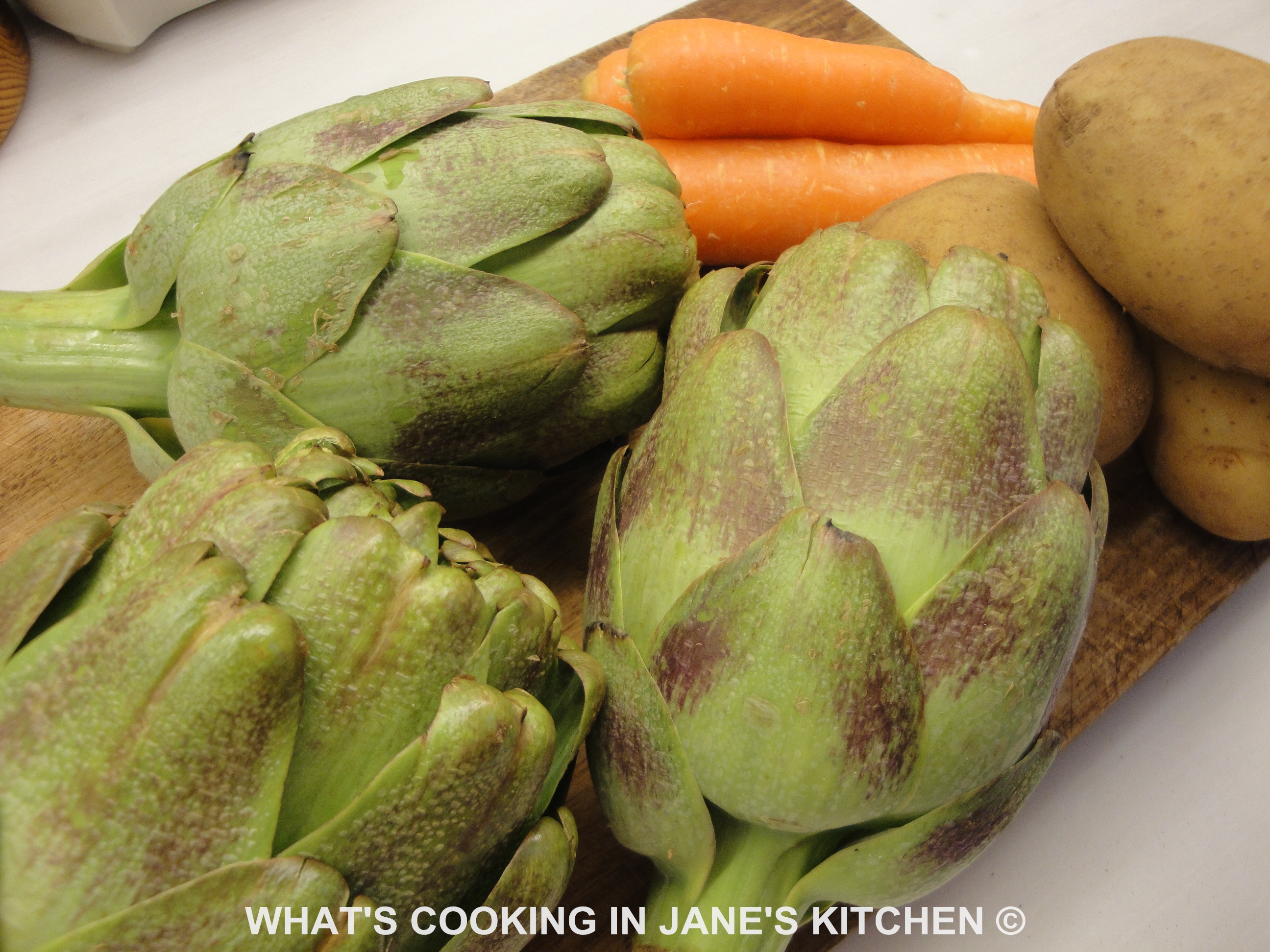
Choose round firm closed leaved artichokes.

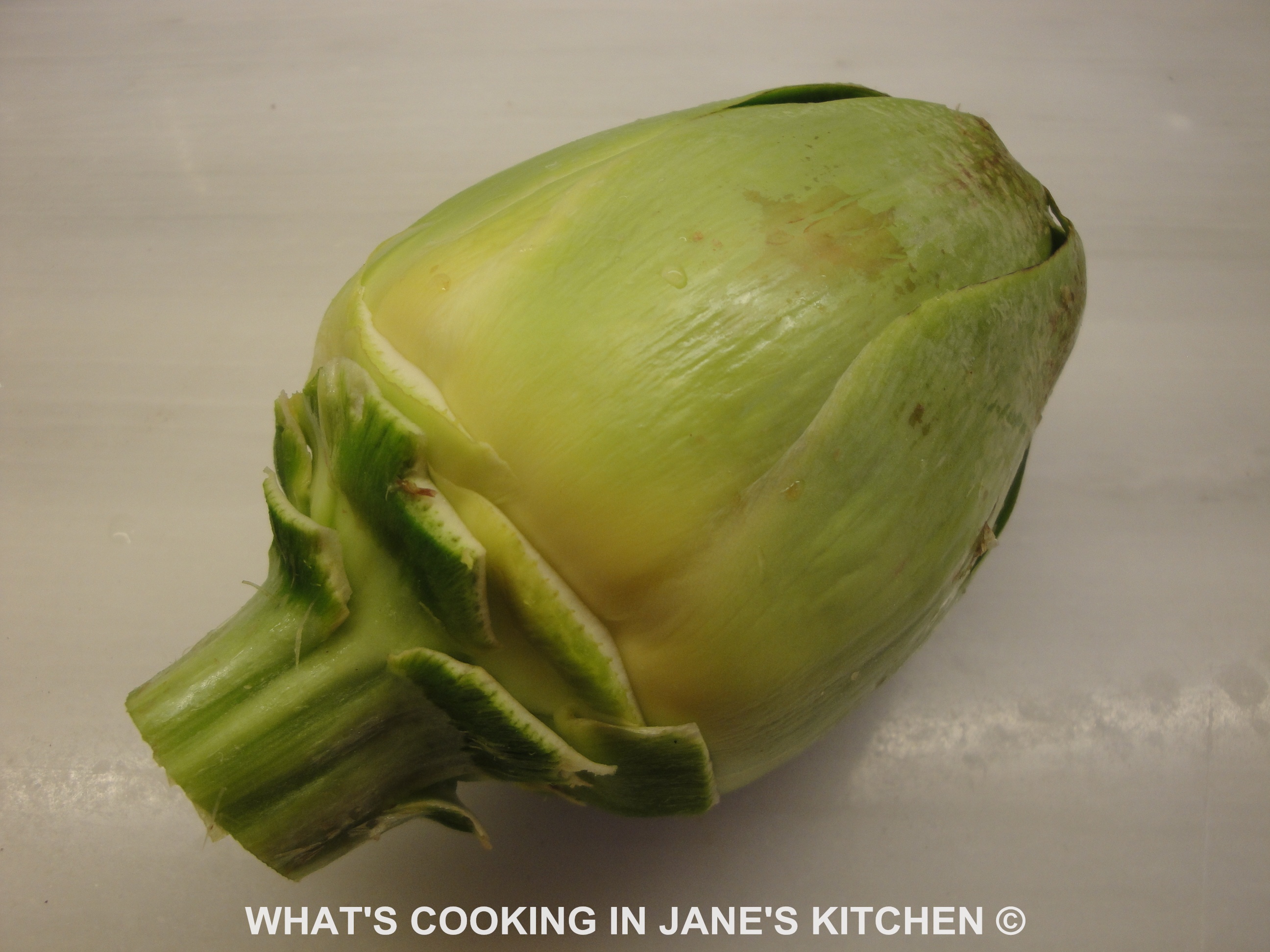
Remove leaves until you reach the yellow leaves.
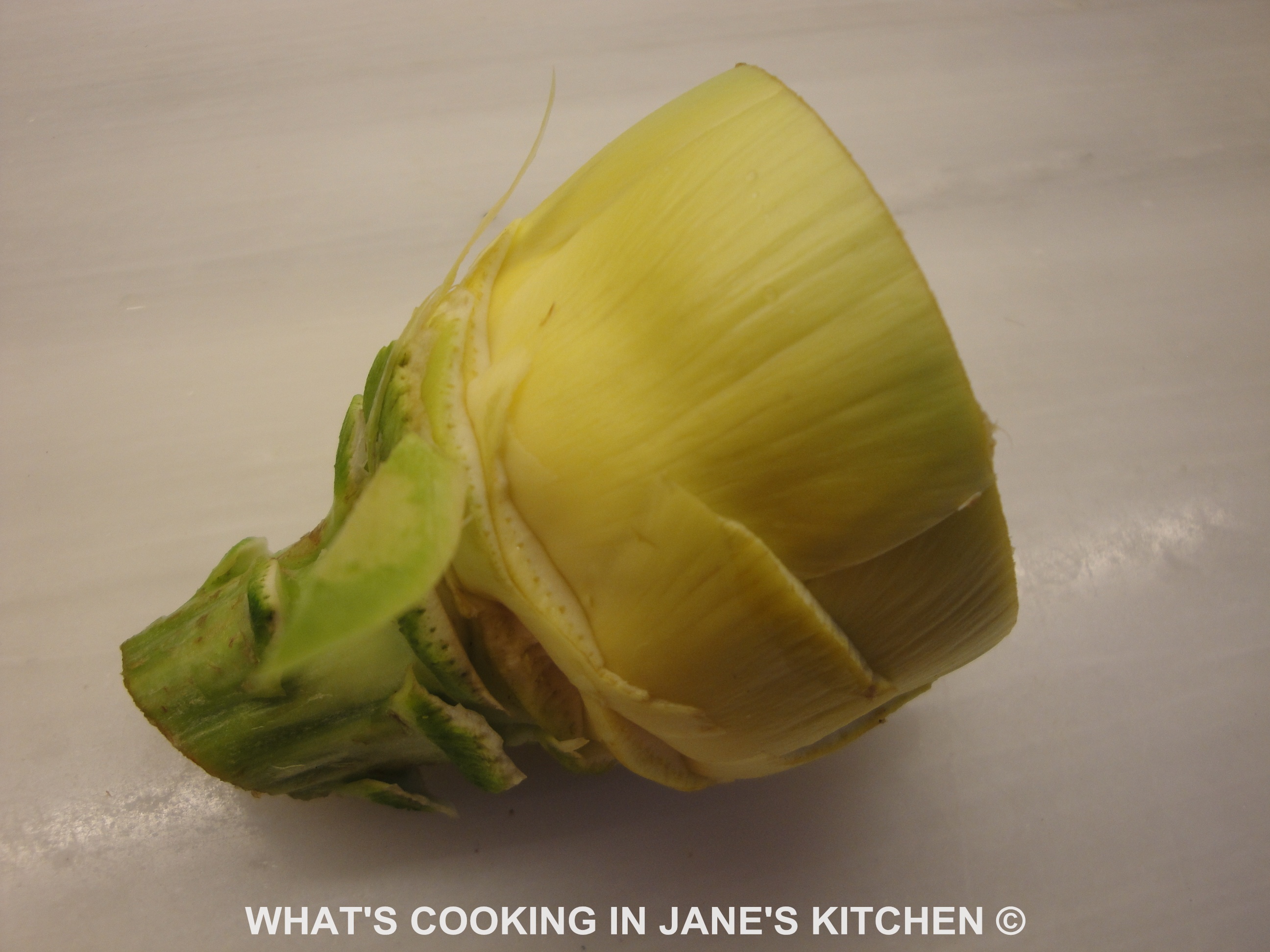
Having reached the yellow leaves, cut off about half the artichoke with a serrated knife.
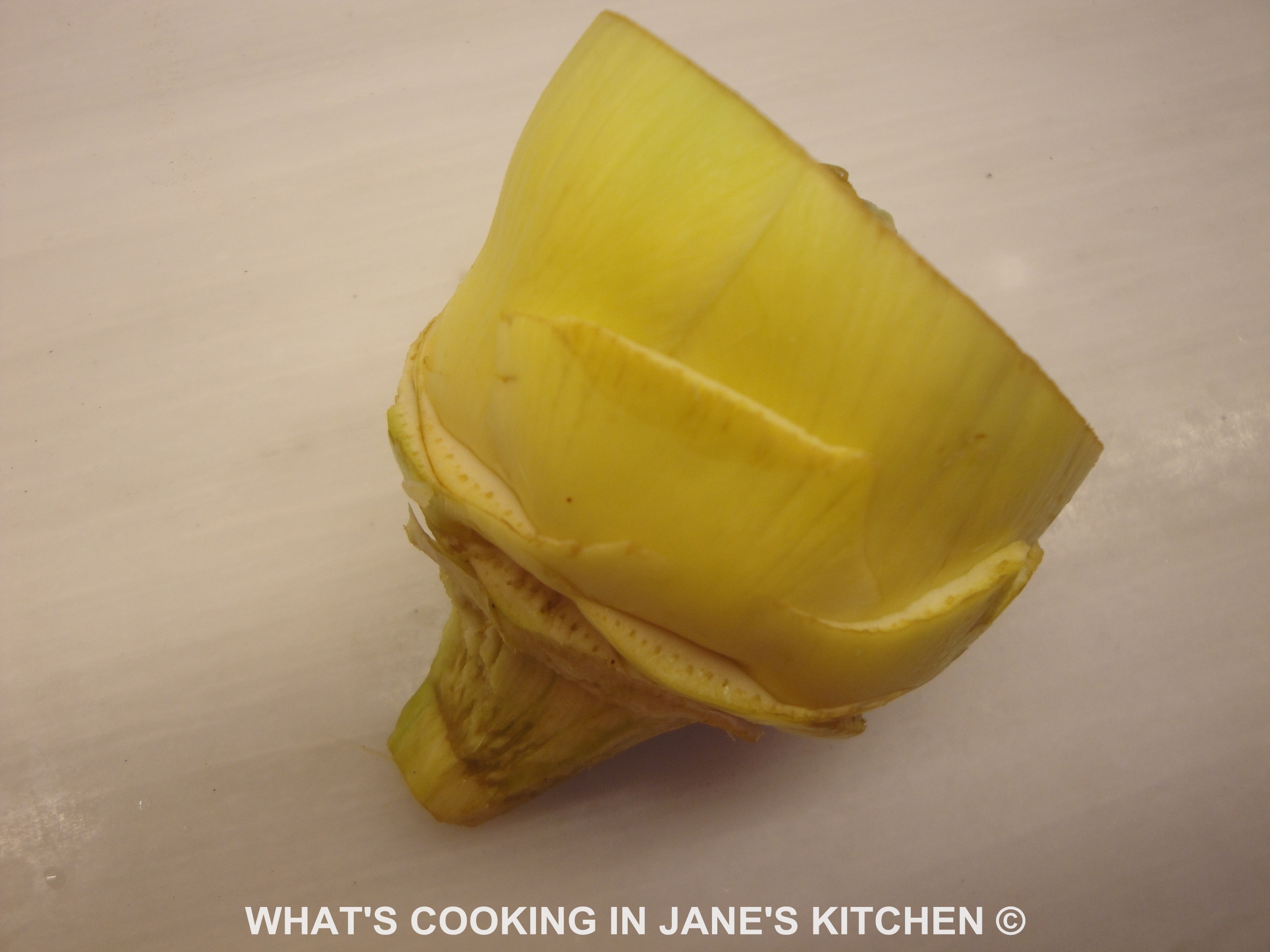
It should end up looking like this. remove green outer shell of stalk too using your sharp knife.
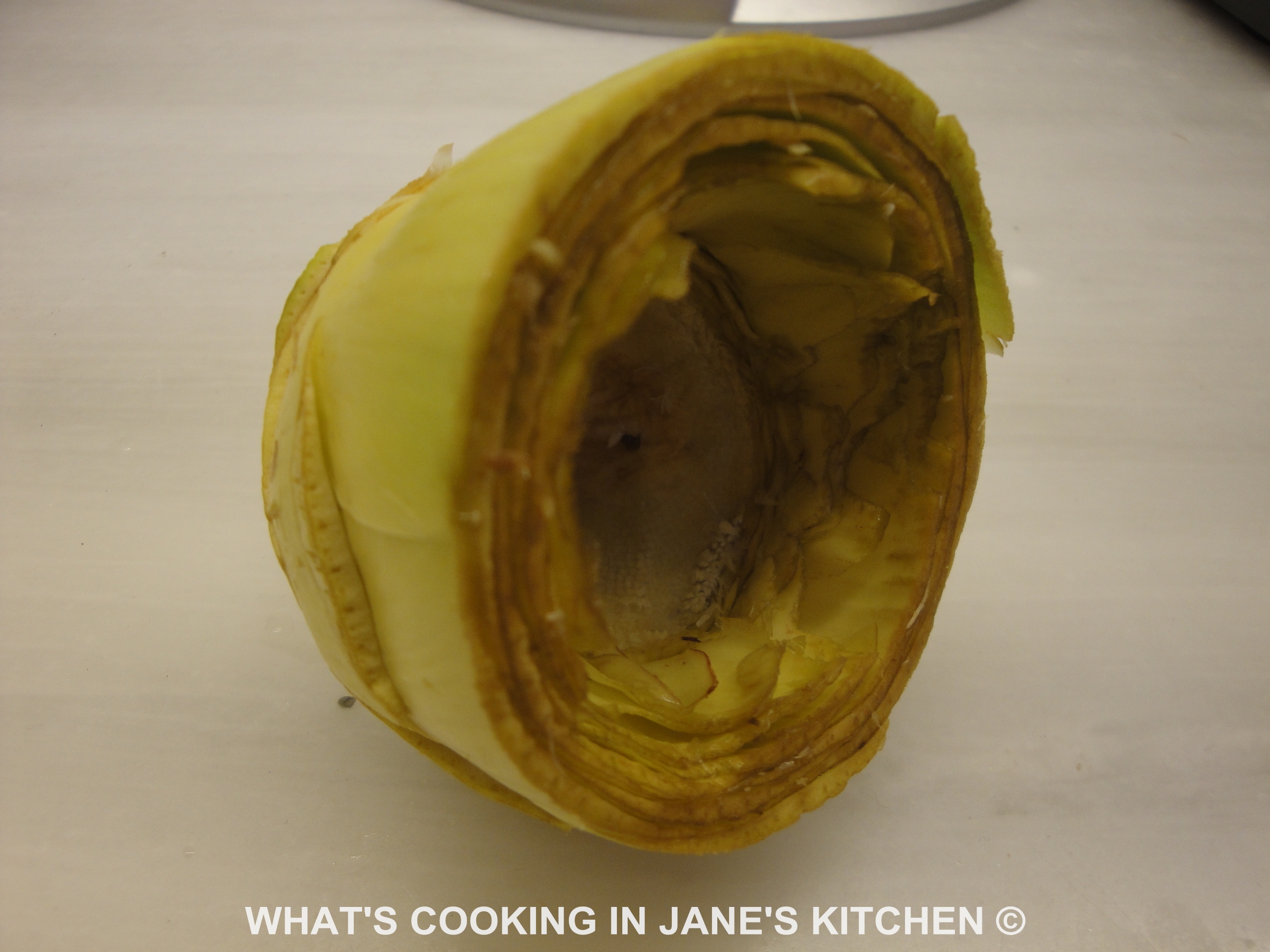
Now remove “Choke” with a sharp knife and tea spoon, leaving the inside empty.
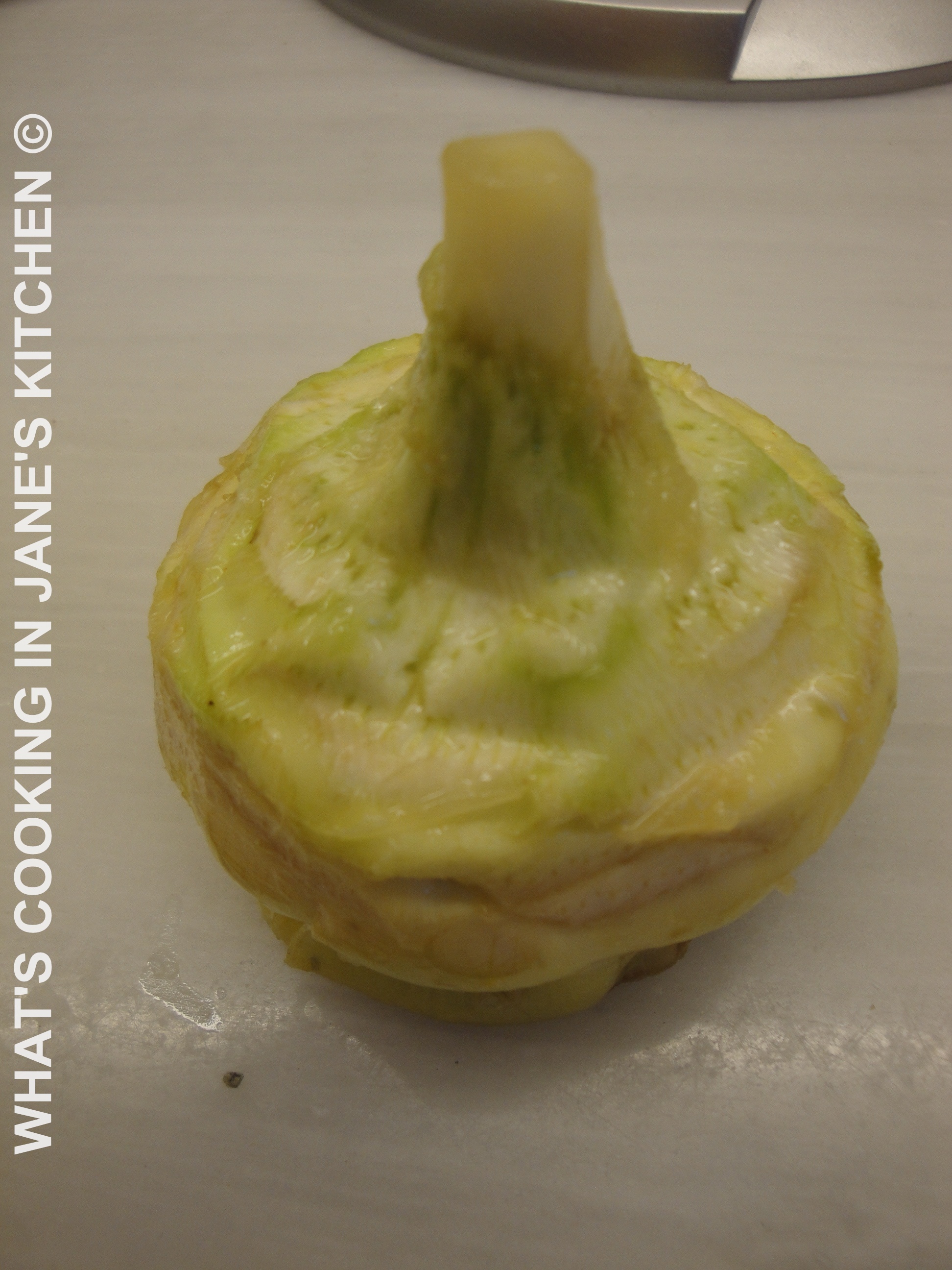
Rub immediately with lemon juice to prevent browning.
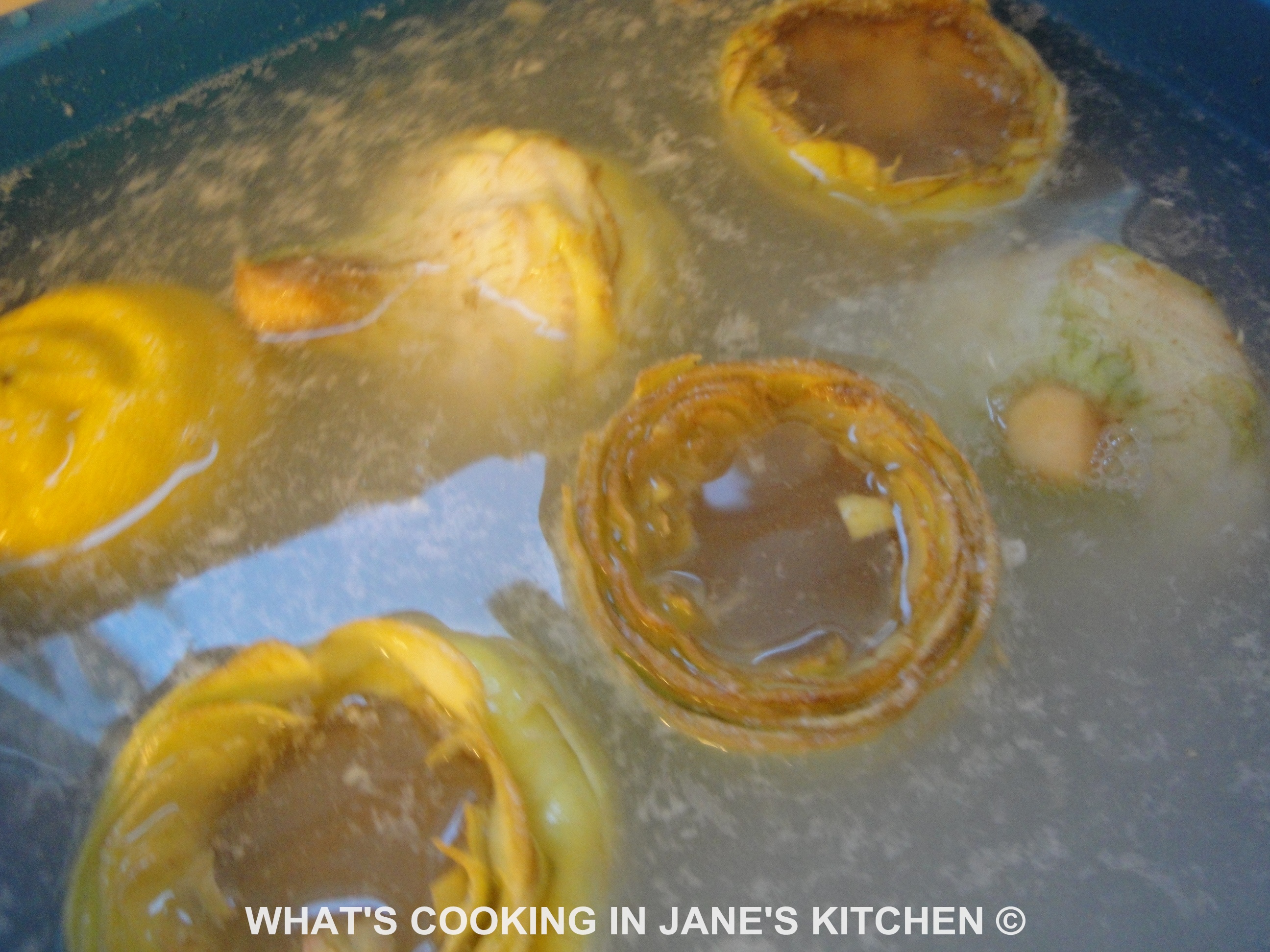
Place artichokes in soaking water so that they do not discolor.

Turn vegetables, chop spring onions and fennel stalks. Reserve leaves.

Spring onions chopped.

Reserve fennel leaves in water.

Saute fennel stalks and spring onions in olive oil.

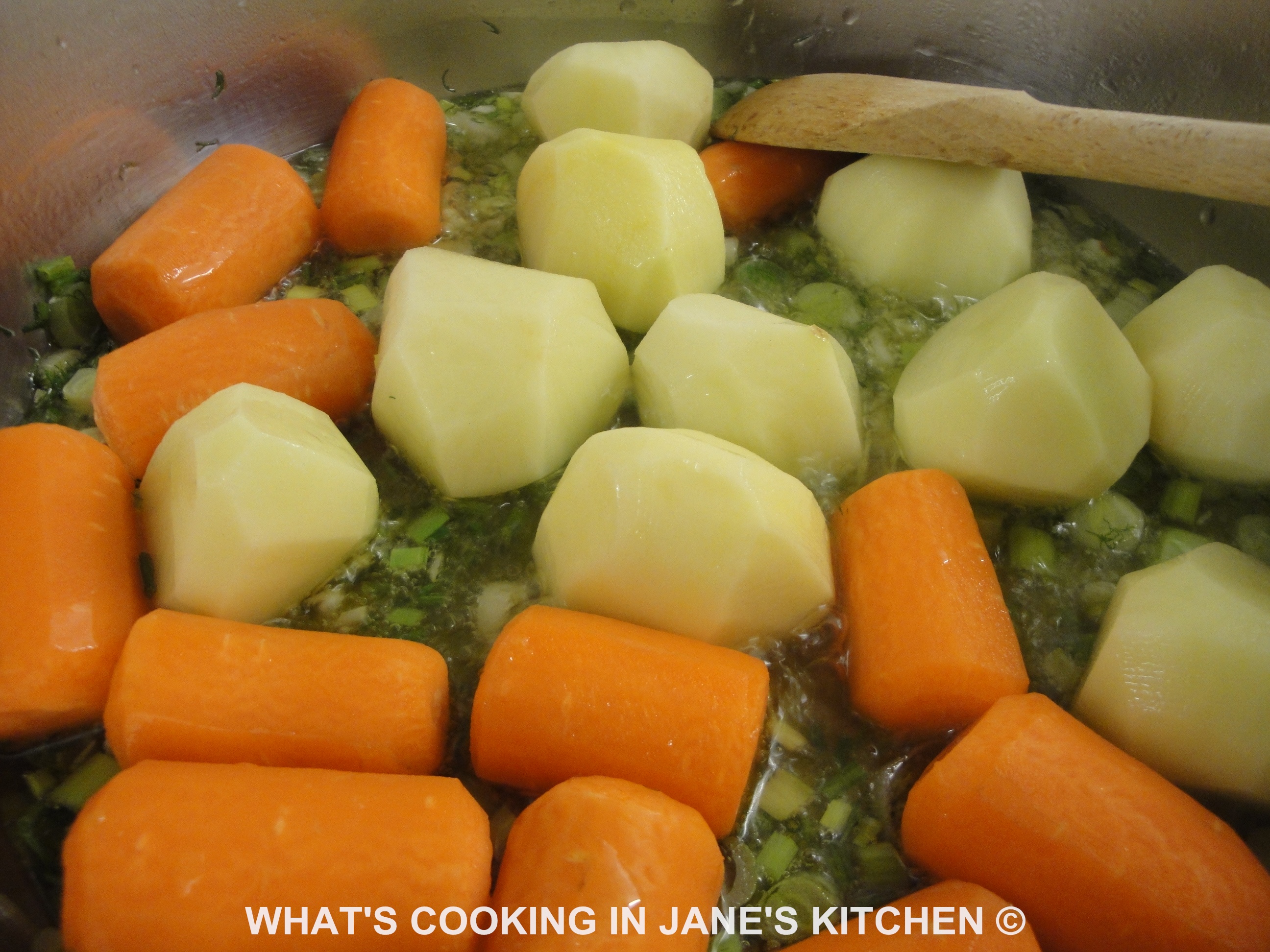
Add vegetables and saute for five minutes.
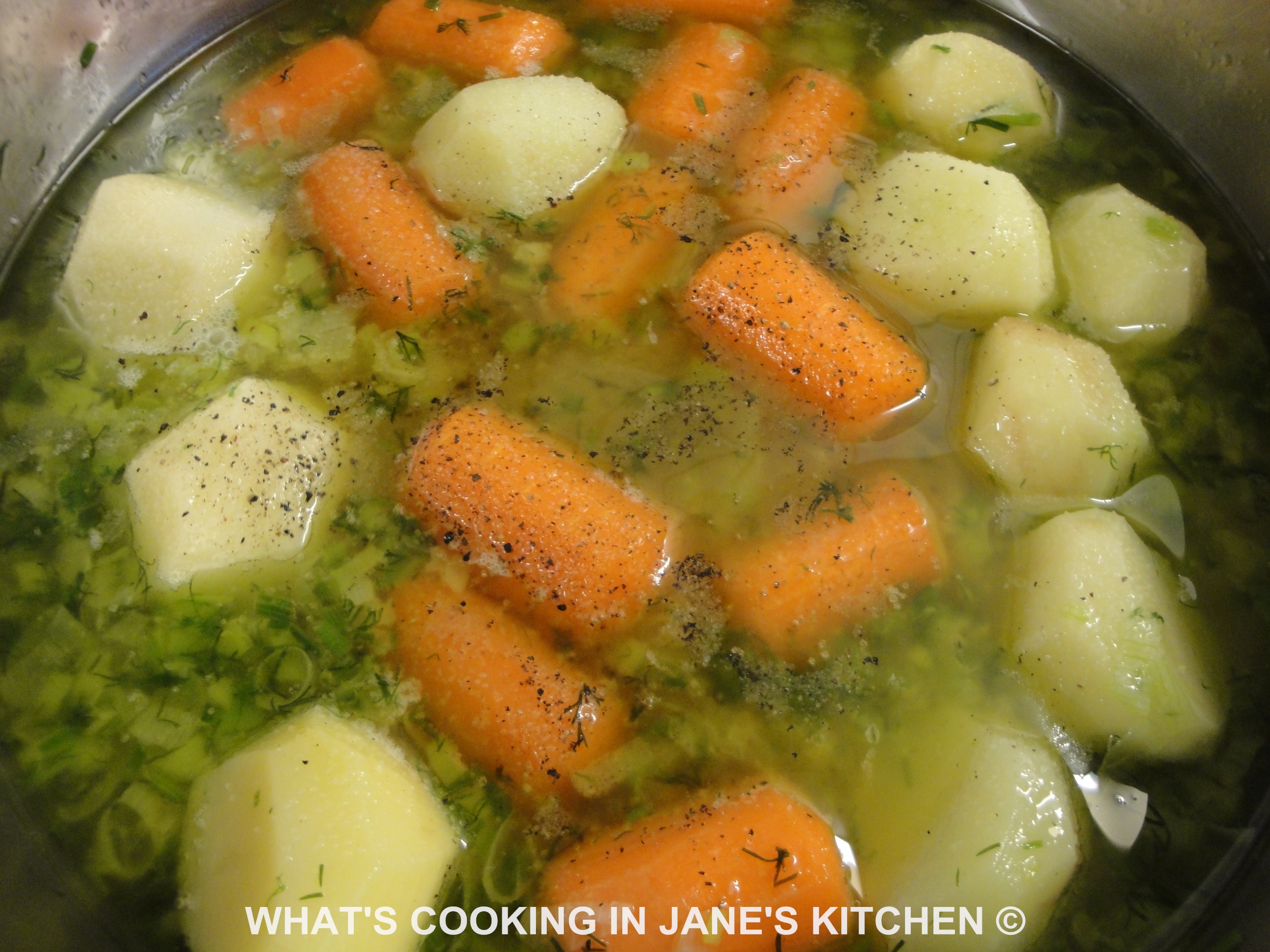
Add enough water to almost cover vegetables.Season and simmer until cooked, 15-20 minutes. Test with
tip of knife.
Remove from saucepan, leaving liquid.

Add artichoke hearts. Cover with grease-proof paper and lid. This also helps them not become discolored.

Arrange artichokes in center of warmed serving dish. Arrange the vegetables around the artichokes. If you
are not serving straight away, keep warm in oven, covered with grease proof paper. Pour over the sauce just
before serving and sprinkle with chopped fennel leaves.

Final result ! Serve straight away.
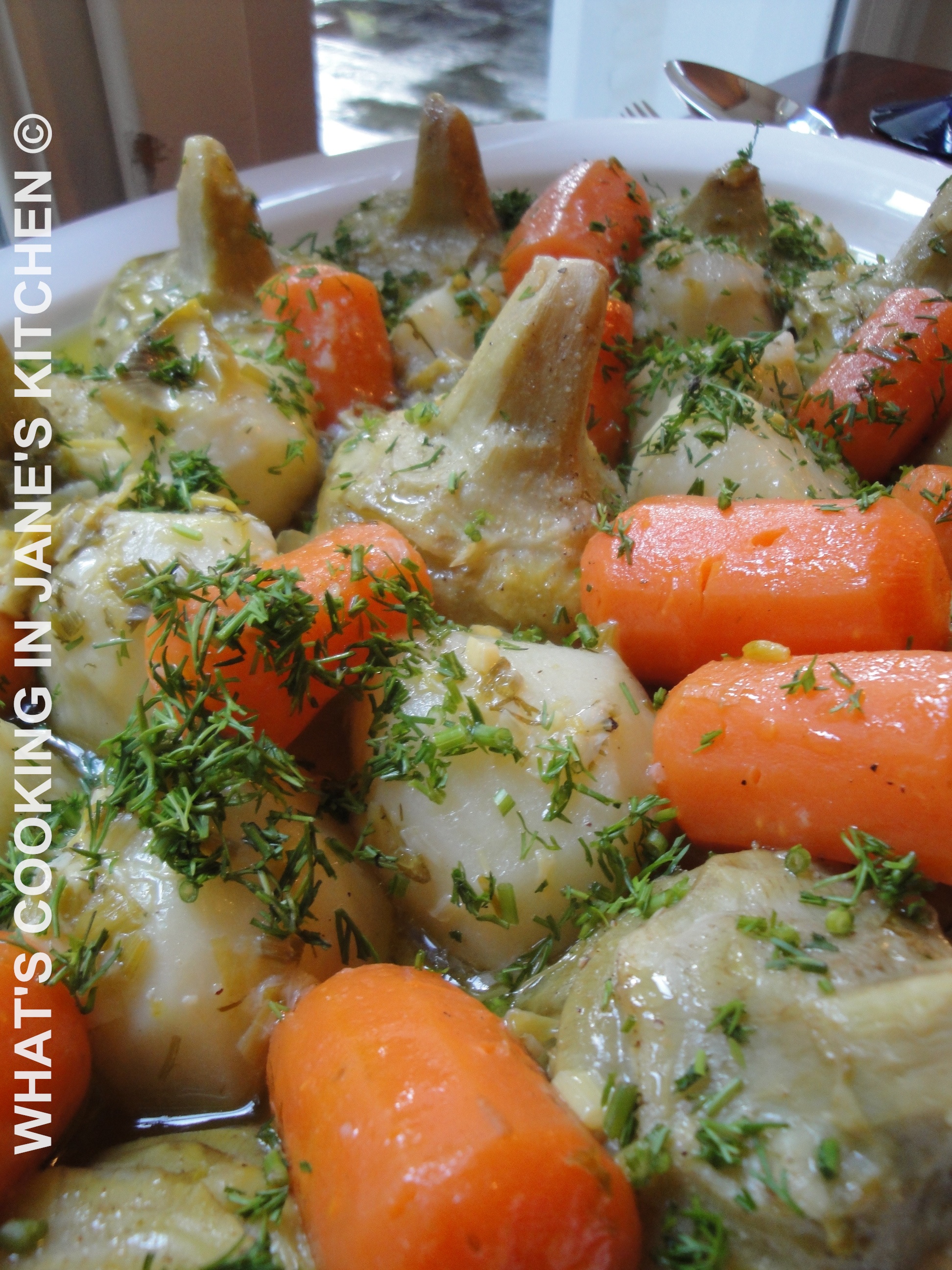
This is a unique and delicious vegetarian meal.
 What's Cooking In Jane's Kitchen